In This Article
January in Canada is unkind to hands. The furnace runs, the humidity bottoms out, and your knuckles start to resemble a dry creek bed in the Prairies. Somewhere in that misery you stand in front of a shelf of cream-coloured bars, all promising gentleness, and face a loaded question: pure goat milk soap vs goat milk honey soap. Which one earns the space by your sink?
The short answer is that it depends on what your skin is arguing about. Pure goat milk soap keeps the recipe minimal: goat milk, a plain oil base, and often nothing else. That makes it the safest lane for fragrance-sensitive skin. Goat milk honey soap adds a sugar-rich humectant, which soapmakers commonly credit with creamier lather and a more indulgent feel. It also adds one more variable.
Neither changes the fact that traditional soap is alkaline. The Canadian Dermatology Association explains that soap-based cleansers land around pH 9-10, while healthy skin sits near pH 5. That’s why technique matters almost as much as the bar.
Two honest notes before we dive in. First, this guide is built from product listings, ingredient lists and published research, not personal testing, and it won’t pretend otherwise. Second, I couldn’t confirm live Amazon.ca pricing or stock for every item. Some listings were verified on Amazon.ca and others on Amazon.com. Treat every price below as a ballpark range in CAD, and check the current Canadian listing before you buy.
Seven real bars follow: four pure, three honey.
Quick Comparison: Seven Goat Milk Soap Bars at a Glance
| Product | Type | Scent | Bar size (per listing) | Ballpark price (CAD) | Best For |
|---|---|---|---|---|---|
| Caprina by Canus Fragrance Free | Pure | Fragrance-free | 90 g (3.2 oz) | C$10-C$30 by pack size | Made-in-Canada everyday use |
| Nature by Canus Fragrance Free | Pure | Fragrance-free | 141 g (5 oz) | C$4-C$8 per bar | Longest-lasting mainstream bar |
| Legend’s Creek Farm Unscented | Pure, handmade | Unscented | 141 g (5 oz) | C$8-C$14 per bar | Sensitive skin plus handmade |
| Goat Milk Stuff Purity | Pure, handmade | Unscented | Not confirmed (2-bar box) | C$12-C$25 per box | Ingredient-list purists |
| HEMERA Goat Milk Soap with Honey | Honey | Fragrance-free | 141 g (5 oz) | C$8-C$14 per bar | Trying honey without scent |
| The Soap Haven Goat Milk Honey Soap (4 bars) | Honey | Unscented | Not confirmed | C$25-C$40 per set | A month-long honey trial |
| Beekman 1802 Honey & Orange Blossom | Honey, infused | Scented | 99 g (3.5 oz) | C$10-C$18 per bar | Fragrance lovers with resilient skin |
Look at the “Scent” column before anything else. Five of these seven bars are scent-free, which tells you where the market’s sensitive-skin demand sits. The most useful head-to-head is HEMERA Goat Milk Soap with Honey against Nature by Canus Fragrance Free, because both are 141 g and both skip fragrance. That isolates honey as the only real variable.
Beekman 1802 Honey & Orange Blossom is the outlier. It bundles honey with fragrance, so any skin reaction is harder to pin on one ingredient. Budget shoppers should note that multi-pack pricing on the Caprina by Canus Fragrance Free bars can undercut handmade options once you count cost per gram.
💬 Just one click — help others make better buying decisions too!😊
Pure Goat Milk Soap vs Goat Milk Honey Soap: The Top 7 Bars, Analyzed
Each bar below gets the same treatment: what the specs mean in practice, who it suits, and where it falls short. Review sentiment is reported only where it could be verified. Where it couldn’t, I say so rather than guess.
1. Caprina by Canus Fragrance Free Goat Milk Soap — best made-in-Canada baseline
The standout here is provenance. The listing says these bars have been made in Canada since 1998, using fresh goat milk collected from Canadian farmers. They come as 90 g (3.2 oz) bars, typically in 3- or 6-packs. The base is described as vegetable-based, made by traditional saponification, and free of parabens and phosphates.
In practice, 90 g fits a palm nicely and slips into a gym bag, though it vanishes faster than a 141 g brick. One label-reading tip: the ingredient list for the scented Caprina Original bar shows tallowate and a fragrance blend with named allergens. The fragrance-free version is therefore a different recipe, so check the variant before you buy.
Based on the spec comparison, this is where I’d point a fragrance-averse household first. It removes the biggest irritant variable without boutique pricing.
Review sentiment: I couldn’t pull a verified sample of reviews for this exact pack size, so I won’t characterize them. When you read the Amazon.ca reviews, scan for comments on bar softness and how quickly it wears down.
Pros:
- ✅ Fragrance-free without a boutique price tag
- ✅ Canadian goat milk and made-in-Canada production
- ✅ Multi-packs suit a whole household
Cons:
- ❌ Smaller 90 g bars run out faster
- ❌ Mass-produced, so less artisan character
Price and value: roughly C$10-C$30 depending on pack size (check current price). It’s strong value if you’ll actually get through a multi-pack.
2. Nature by Canus Fragrance Free Goat Milk Soap — biggest mainstream bar, longest wear
At 141 g (5 oz), this is the heavyweight of the pure category. The listing highlights fresh Canadian goat milk plus naturally occurring vitamin A, vitamin B3, potassium, zinc and selenium. It describes a traditionally saponified, fragrance-free bar.
Here’s the translation. A vitamin roster sounds impressive, but a wash-off bar contacts your skin for perhaps half a minute. The real advantage is the mild, plain formulation and the size. A bar about 1.5 times the mass of a 90 g competitor simply lasts longer, which matters more than any vitamin list.
Who is it for? Anyone who wants a scent-free daily bar with mainstream availability and predictable performance. It suits shared family showers and cottage bathrooms alike.
Review sentiment: verified review data wasn’t available to me for this listing, so I’m not summarizing it. Shoppers should check whether recent reviewers mention consistent quality between batches, since manufacturers occasionally tweak formulas.
Pros:
- ✅ Large 141 g bar lasts noticeably longer
- ✅ No fragrance to trigger sensitivities
- ✅ Simple, everyday formulation
Cons:
- ❌ Vitamin claims say little about rinse-off benefit
- ❌ Plain look and feel, nothing special
Price and value: ballpark C$4-C$8 per bar (prices may vary). It’s arguably the best cost-per-wash of the seven.
3. Legend’s Creek Farm Unscented Goat Milk Soap — handmade, verified on Amazon.ca
This is the one listing I could confirm on Amazon.ca itself. It’s a 141 g (5 oz) handmade bar marketed as unscented, cruelty-free certified and suitable for sensitive skin. The listing stresses that it contains no added essential oils that might trigger irritation.
Handmade bars often have a slightly denser, creamier feel than factory bars. They can also vary a little from batch to batch, which is part of the charm and part of the risk. If you’re sensitive, keep the wrapper or note the batch so you can compare if a bar ever feels different.
This bar suits the buyer who wants the pure goat milk soap philosophy, meaning nothing extra, but prefers small-batch craft over industrial consistency. It’s also a good first stop for anyone testing the unscented goat milk soap comparison waters before committing to a multi-pack.
Review sentiment: not verified during research, so no claims here. Check the review section for notes on lather and longevity.
Pros:
- ✅ Confirmed on Amazon.ca for Canadian shoppers
- ✅ No added essential oils or fragrance
- ✅ Generous 141 g handmade bar
Cons:
- ❌ Handmade bars can vary between batches
- ❌ Softer bars need a well-draining dish
Price and value: ballpark C$8-C$14 per bar. Fair for handmade.
4. Goat Milk Stuff Purity Goat Milk Soap — the purist’s minimalist bar
The name says it all. The listing calls it all-natural, unscented, made with fresh goat milk, handmade and gentle on sensitive skin, sold in a box of two. I couldn’t confirm bar weight from the listing excerpt, so check that before comparing cost per gram.
In practice, “Purity” positioning is a bet on ingredient simplicity. Fewer additives mean fewer potential triggers and an easier label to read. The trade-off is that you lose whatever a honey or oatmeal bar contributes to lather and feel.
Who should care? People who react to nearly everything and are running elimination experiments, adding one ingredient at a time. If you can’t tolerate scent, botanicals or colourants, a minimalist bar like this is a logical baseline before you graduate to honey.
Review sentiment: I couldn’t verify a review sample, so I’m leaving it out. Look for comments about softness in humid bathrooms, which is the usual weak spot for handmade bars.
Pros:
- ✅ Minimalist, unscented recipe positioning
- ✅ Handmade small-batch character
- ✅ Two-bar box lets you rotate or share
Cons:
- ❌ Bar weight unclear from the listing
- ❌ Higher cost per gram likely than mass-market bars
Price and value: roughly C$12-C$25 per box. Reasonable if purity matters most.
5. HEMERA Goat Milk Soap with Honey — honey without the perfume
This is the cleanest honey test in the group. The listing describes a certified handmade, fragrance-free bar in 141 g (5 oz), “unscented on purpose” so nothing extra irritates. It claims vitamins A, B6, B12 and E from goat milk, plus honey’s amino acids, fatty acids, iron and calcium.
Treat some of the marketing with healthy scepticism. The listing also suggests the soap fights eczema, but in Canada soap is regulated as a cosmetic, and therapeutic claims deserve caution. The realistic pitch is simpler: a honey-enriched, scent-free bar. That’s precisely the combination the pure goat milk soap vs goat milk honey soap debate hinges on.
Choose this if you’ve outgrown a plain bar and want to see whether honey’s humectant character improves how your skin feels after washing, without adding fragrance to the experiment.
Review sentiment: not verified during research. When you read reviews, look for mentions of stickiness or the bar softening in water, which are common honey-bar complaints.
Pros:
- ✅ Honey with zero fragrance, a clean experiment
- ✅ Handmade 141 g bar
- ✅ Simple positioning for sensitive skin
Cons:
- ❌ Eczema-style claims outrun the evidence
- ❌ Honey bars may soften faster
Price and value: ballpark C$8-C$14 per bar. Good value for a fragrance-free honey trial.
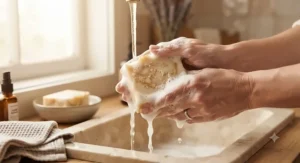
6. The Soap Haven Goat Milk Honey Soap (4-Bar Set) — best for a month-long honey trial
Four bars are a proper experiment. Skin needs time to respond, and one bar rarely gives a fair test. The listing describes handmade-in-the-USA bars with honey, unscented and fragrance-free, and free of SLS, parabens and GMOs.
The number of bars matters more than it sounds. Skin routines take a couple of weeks to judge, so a four-bar set covers a whole trial. It also lets you assign bars, one for the shower and one for handwashing, without buying twice. Note that it’s made in the USA, so confirm Canadian shipping and duties on the current listing.
This suits the shopper who has decided honey is worth trying and wants enough product to judge fairly. It also works for households that want a shared, scent-free honey bar in every bathroom.
Review sentiment: I couldn’t verify review data, so no summary. Check whether reviewers report consistent bar size, since the excerpt didn’t confirm individual weights.
Pros:
- ✅ Four bars allow a fair trial
- ✅ Unscented and free of SLS and parabens
- ✅ Suits sharing across bathrooms
Cons:
- ❌ Individual bar weight not confirmed
- ❌ US-made, so check Canadian shipping
Price and value: ballpark C$25-C$40 per set. Decent per bar if the weights are generous.
7. Beekman 1802 Goat Milk Soap, Honey & Orange Blossom — the fragrant, triple-milled indulgence
This is the infused entry. The listing describes a 99 g (3.5 oz) triple-milled bar with shea butter and botanical oils, scented with honey and orange blossom and marketed for sensitive skin. Triple-milling presses the soap into a denser bar, which generally resists mushiness and lasts longer per gram.
The tension is obvious. “Sensitive skin” and “fragrance” don’t always travel well together, and the scent is the point here. If you tolerate fragrance, this is the most sensory bar of the seven. If you don’t, it’s a poor test of honey, because you can’t tell whether a reaction came from honey, shea, botanicals or the perfume.
Buy it as a treat for resilient skin, not as your first sensitive-skin experiment.
Review sentiment: I couldn’t verify a review sample, so I’m not characterizing it. Check reviewer notes on how strong the fragrance is.
Pros:
- ✅ Dense triple-milled bar wears slowly
- ✅ Shea butter adds a richer feel
- ✅ Honey and orange blossom scent is pleasant
Cons:
- ❌ Fragrance complicates sensitive-skin use
- ❌ Smallest bar of the seven at 99 g
Price and value: ballpark C$10-C$18 per bar. Worth it as a fragrant splurge.
✨ Don’t Miss These Exclusive Deals!
🔍 Take your goat milk soap routine to the next level with these carefully selected bars. Click on any highlighted product to check current pricing and availability on Amazon.ca. A simple swap at the sink could mean softer, calmer skin all winter long!
Your First 30 Days: A Practical Usage Guide for Goat Milk Bars
A good bar can be undone by bad habits. Here’s the setup that gets the most from either kind, and it goes beyond anything on a product page.
Week one: patch test first. Rub a lathered bar on your inner forearm, rinse, and wait 24 hours before using it on your face. That’s especially wise with Beekman 1802 Honey & Orange Blossom because of its fragrance. Start with hands and body, and move to the face only if all is calm.
Lather in your hands, not on your skin. Work the bar between wet palms, then apply the lather. The Canadian Dermatology Association suggests keeping showers to about 5-10 minutes and avoiding very hot water, since warm water strips oils faster than cool. Pat dry rather than rub, and moisturize while skin is still damp.
Protect the bar. Goat milk and honey bars are softer in wet conditions. Use a draining soap dish or a raised ceramic dish so the underside dries between uses. Cut a fresh bar into two pieces and let the spare one harden in a cupboard, so it lasts longer once opened.
Common mistakes in the first 30 days:
- Using the bar on your face before a patch test
- Leaving it in a puddle of water
- Switching bars every few days, which muddies the results
- Skipping moisturizer, since soap alone won’t replace a barrier cream
Give each bar at least two weeks before judging it. That’s the only way to learn whether pure or honey suits your skin.
Choosing Between Goat Milk Soap Types: A Buyer’s Decision Framework
Choosing between goat milk soap types is easier as a checklist than as a mood. Work through these “if, then” rules in order.
- If fragrance ever bothers your skin, choose a scent-free bar: Caprina by Canus Fragrance Free, Nature by Canus Fragrance Free or Legend’s Creek Farm Unscented.
- If you want honey but no perfume, pick HEMERA Goat Milk Soap with Honey or The Soap Haven Goat Milk Honey Soap (4 bars), so honey is your only new variable.
- If you want the ritual and your skin tolerates scent, try Beekman 1802 Honey & Orange Blossom.
- If budget rules, the larger Nature by Canus Fragrance Free bar usually wins on cost per wash.
- If ingredient simplicity is your rule, start with Goat Milk Stuff Purity, then read every label.
- If you have very dry or eczema-prone skin, ask a dermatologist or pharmacist first. Soap-based bars are alkaline, and many clinicians favour pH-balanced syndet cleansers.
Priority checklist: irritation history first, scent tolerance second, budget third, texture and lather preferences last. Most buyers do it backwards and start with the pretty bar.
What Is the Difference Between Pure Goat Milk Soap and Goat Milk Honey Soap?
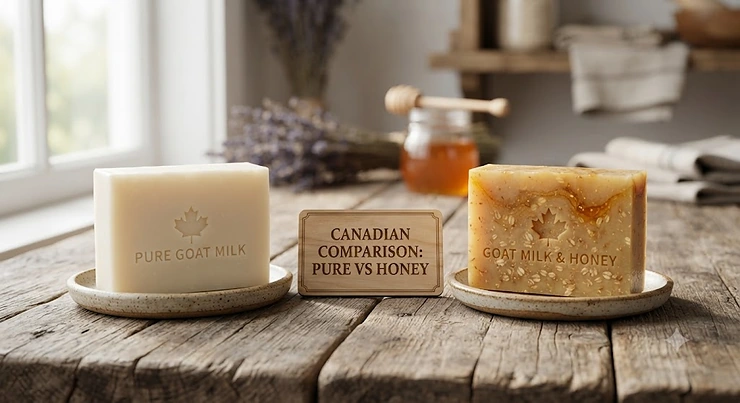
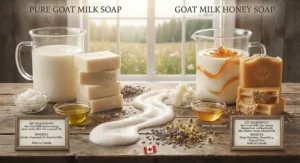
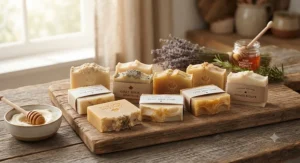
Pure goat milk soap is a traditionally saponified bar made with goat milk and a plain oil base, usually without fragrance or extras. Goat milk honey soap starts from that same base but adds honey, a sugar-rich humectant that boosts lather, adds a warmer tint, and may lend a faint natural scent.
| Feature | Pure goat milk soap | Goat milk honey soap |
|---|---|---|
| Recipe | Goat milk and a plain oil base | Same base plus honey |
| Humectant load | Glycerin from the soap-making process | Glycerin plus honey’s sugars |
| Lather | Creamy, steady | Often richer, sometimes stickier |
| Scent | Frequently none | Mild honey, sometimes fragranced |
| Best for | Reactive or fragrance-sensitive skin | Dry skin wanting extra comfort |
Look at the humectant row: even a “pure” bar isn’t humectant-free, because the glycerin created by saponification and listed on many labels is itself a classic humectant. Honey adds sugars on top, which explains the richer feel. It also explains why honey bars can soften faster in a wet dish. Pure bars win on predictability, and honey bars win on sensory comfort.
How to Choose Between Pure Goat Milk Soap and Goat Milk Honey Soap: 6 Steps
- Check your irritation history. If fragrance or botanicals have ever caused a rash, start with a pure, scent-free bar. It’s the cleanest baseline.
- Read the whole label. Look for “Parfum/Fragrance” and essential oils. “Unscented” and “fragrance-free” aren’t always identical in practice.
- Match bar size to household size. A 141 g bar lasts about 1.5 times as long as a 90 g bar, so heavy users should favour larger sizes.
- Decide if you want a humectant experiment. Honey is the variable to test, and only one variable at a time gives clear answers.
- Consider texture. Triple-milled bars like Beekman 1802 Honey & Orange Blossom resist mushiness, while handmade bars need better drainage.
- Run a two-week trial. Skin needs time to respond, so don’t judge a bar after one shower.
Follow those steps and the pure goat milk soap vs goat milk honey soap decision mostly makes itself. Most people land on pure for the face and honey for the body, or the other way around, depending on where dryness bites.
Unscented Goat Milk Soap Comparison: Reading Beyond the Label
Any honest unscented goat milk soap comparison starts with vocabulary. “Unscented” means a product isn’t meant to smell like anything, but manufacturers can use masking agents to neutralize odours. “Fragrance-free” means no fragrance ingredients are added. The listings here use both words, so read the ingredient list, not just the front.
Nature by Canus Fragrance Free and Caprina by Canus Fragrance Free say fragrance-free outright. Legend’s Creek Farm Unscented, Goat Milk Stuff Purity and The Soap Haven Goat Milk Honey Soap (4 bars) say unscented. HEMERA Goat Milk Soap with Honey says “unscented on purpose”, which is a nice phrase but not an ingredient audit.
The practical test is simple. On packaging in Canada, fragrance should appear as “Parfum/Fragrance”, as it does on the scented Caprina Original label. If you don’t see it, you’re probably fine. If you do, the bar isn’t as neutral as the front suggests.
Also expect some natural, faint milky or soapy smell from any real goat milk bar. That’s the ingredient itself, not perfume. A slightly “goaty” note after storage can signal an old bar, so buy from sellers with fast turnover.
Goat Milk Soap Variety Differences: Triple-Milled, Cold-Process and Factory Bars
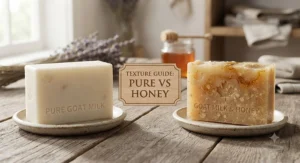
Goat milk soap variety differences come down to how the bar is made, not just what’s in it.
Factory saponified bars such as Caprina by Canus Fragrance Free and Nature by Canus Fragrance Free are consistent, affordable and widely stocked. You trade craft character for predictability, and predictability is worth a lot when you’re managing sensitive skin.
Handmade or small-batch bars like Legend’s Creek Farm Unscented, Goat Milk Stuff Purity, HEMERA Goat Milk Soap with Honey and The Soap Haven Goat Milk Honey Soap (4 bars) tend to feel creamier and more artisan. They also vary more and soften faster if left wet.
Triple-milled bars like Beekman 1802 Honey & Orange Blossom are pressed and refined for density. That density tends to make them last longer per gram, though the bar itself is smaller at 99 g.
Beyond production method, the additive stack is the other axis: plain, honey, shea butter, oatmeal or essential oils. Each addition changes lather, softness and irritation potential. So when comparing bars, ask two questions. How was it made, and what was added? Together they explain almost every difference in feel, longevity and price.
Added Humectants: Does Honey Actually Pull Its Weight?
Added humectants are the whole reason honey bars exist. Humectants attract water into the outer skin layers, and honey qualifies thanks to its high sugar content. A 2026 systematic review of clinical trials notes that honey is recognized in the International Nomenclature of Cosmetic Ingredients as having humectant, emollient and moisturizing properties. That’s a genuine, credible foundation.
Now the reasoning caveat. Those studies concern honey in cosmetic formulations, and as far as the abstract shows, they evaluate moisturizing products rather than wash-off soap. A cleansing bar spends only seconds on skin before being rinsed away. Extrapolating a leave-on benefit to a rinse-off bar is therefore an assumption, not an established result.
Where honey plausibly helps is in how the bar performs while you use it: creamier lather, and a softer feel as skin dries. And remember that “pure” bars aren’t humectant-free, since glycerin already shows up on many goat milk soap labels.
So does honey pull its weight? Modestly, in comfort and sensory terms, and I’d be cautious about anything stronger. If HEMERA Goat Milk Soap with Honey makes your skin feel less tight than Nature by Canus Fragrance Free does, that’s a real personal result worth keeping.
Scent-Free Versus Infused Bars: What You Trade Either Way
The choice of scent-free versus infused bars is really a question about risk tolerance.
Scent-free bars remove the most common cosmetic irritant category. They’re the logical choice for hands washed twenty times a day, for household sharing, and for anyone with a history of rashes. What you give up is sensory pleasure, since a plain bar smells like plain soap.
Infused bars like Beekman 1802 Honey & Orange Blossom deliver a genuine ritual. A warm, floral shower is a small luxury, especially in a Canadian February. The cost is complexity. Fragrance ingredients can be named allergens on labels, as the scented Caprina Original ingredient list shows with entries like linalool and limonene.
Here’s a practical compromise. Use scent-free bars on your face, hands and any compromised skin, and reserve an infused bar for your body if it tolerates it. Keep both and rotate them, which also stretches each bar’s life.
If you’re unsure, start scent-free. It’s far easier to add fragrance later than to work out which of eight ingredients caused a flare.
Ingredient Simplicity: Why Shorter Labels Aren’t Always Better
Ingredient simplicity is appealing, and mostly for good reason. Fewer ingredients mean fewer potential triggers and an easier audit. Goat Milk Stuff Purity and Legend’s Creek Farm Unscented lean into this idea, and it suits anyone running an elimination trial.
But shorter isn’t automatically safer. Health Canada’s safety of cosmetic ingredients page explains that it prohibits or limits ingredients that present health risks and treats soap as a cosmetic grooming aid. A short natural list can still contain something you react to, and a longer list may include a preservative that keeps the bar stable and safe.
The smarter move is to read for what you know you react to. On labels in Canada, expect INCI names such as “Caprae Lac” for goat milk. Learn a few, and label reading takes seconds.
My rule: simplicity is a starting position, not a guarantee. Begin with the shortest label that comes from a reputable maker, then add one thing, such as honey, and watch what happens.
Pure Goat Milk Soap vs Syndet Bars and Body Wash: How Do They Compare?
| Feature | Goat milk bar (pure or honey) | Syndet bar or lotion cleanser |
|---|---|---|
| Typical pH | Alkaline, around 9-10 for soap-based cleansers | Formulated nearer skin pH (5-7) |
| Fragrance options | Wide, from none to heavily scented | Often fragrance-free lines |
| Ingredient story | Short and natural-sounding | Longer, technical labels |
| Best for | Healthy or mildly dry skin, simple routines | Very dry, reactive or eczema-prone skin |
The pH row is the important one. The Canadian Dermatology Association recommends avoiding high-pH soap bars and choosing pH-adjusted, fragrance-free syndet cleansers for dry skin. That’s a fair caution for anyone with barrier problems.
Goat milk bars still have a place. Many people with normal or mildly dry skin do fine with them, and the sensory and simplicity appeal is real. If your skin is cracked, flaky or inflamed, though, talk to a healthcare professional before relying on any soap. Whether the bar is pure or honey matters far less than the pH issue.
Long-Term Cost & Maintenance
Sticker price misleads. What matters is cost per wash and how well you protect the bar between uses.
For illustration only, imagine a 90 g bar costing C$6 and a 141 g bar costing C$8. The larger bar costs roughly 5.7 cents per gram versus about 6.7 for the smaller. Those numbers are hypothetical, not Amazon prices, but they show why bigger bars like Nature by Canus Fragrance Free and Legend’s Creek Farm Unscented often win on value.
Maintenance matters even more. Soft handmade bars such as Goat Milk Stuff Purity and HEMERA Goat Milk Soap with Honey can lose a third of their life to a puddle. A draining dish, a short shower and a spare bar curing in a cupboard change that.
Triple-milled Beekman 1802 Honey & Orange Blossom tends to hold up better despite its 99 g size. Multi-packs, like The Soap Haven Goat Milk Honey Soap (4 bars) or Caprina by Canus Fragrance Free packs, also cut trips and shipping.
Total cost of ownership is bar price, minus the life you save with good habits, plus the moisturizer you may still need. Cheap bars that dry your skin can end up costing more.
Safety, Labelling and Regulations in Canada
In Canada, soap is a cosmetic. Health Canada’s regulatory information for cosmetics says cosmetics sold here must be safe and meet the Food and Drugs Act and the Cosmetic Regulations. Guidance for makers also treats handmade cosmetics sold through craft sales or home businesses as included, so small-batch doesn’t mean unregulated.
Practical implications for you:
- Read claims critically. Cosmetic products can’t legitimately promise to treat medical conditions. Eczema-fighting language on a soap listing should make you cautious.
- Look for ingredient lists. Canadian labels use INCI names, so “Parfum/Fragrance” and “Caprae Lac” are your friends.
- Watch for shifting fragrance rules. Fragrance allergen labelling requirements have been tightening, so labels may change. Check current Health Canada guidance if you have known allergies.
- Patch test, always. Regulation reduces risk but can’t predict your skin.
Some listings here are US-made or were verified on Amazon.com, such as The Soap Haven Goat Milk Honey Soap (4 bars), so confirm the Canadian listing, labelling and shipping terms before ordering. For babies or children, check with a pediatrician or pharmacist first.
FAQ
❓ How long does a goat milk soap bar last in a daily shower?
❓ Why does my honey goat milk soap feel sticky?
❓ Can I use goat milk soap on my face every day?
❓ Is unscented the same as fragrance-free?
❓ Does goat milk soap need approval in Canada?
Conclusion
So, pure goat milk soap vs goat milk honey soap: who wins? It’s a split decision. Pure bars win on predictability and are the wiser starting point if your skin is reactive. Honey bars win on comfort and lather, and they’re worth a two-week trial if you’re not fragrance-sensitive. Between them, ingredient simplicity is a helpful starting point but never a guarantee.
If I had to give a one-line plan, it would be this: begin with Nature by Canus Fragrance Free or Caprina by Canus Fragrance Free for a clean baseline. Then run a single-variable honey test with HEMERA Goat Milk Soap with Honey or The Soap Haven Goat Milk Honey Soap (4 bars). If you tolerate fragrance and want a treat, add Beekman 1802 Honey & Orange Blossom. Handmade purists should look at Legend’s Creek Farm Unscented or Goat Milk Stuff Purity.
Above all, remember that technique beats branding. Short warm showers, gentle lathering, a good dish and moisturizer on damp skin will do more for your winter skin than any single bar.
✨ Ready to upgrade your shower routine?
🧼 Compare the bars above, click any highlighted product to check current pricing and availability on Amazon.ca, and start your two-week trial today. Your skin will thank you!
Recommended for You
- Goat Milk Soap For Eczema: 7 Best Gentle Bars In Canada (2026)
- Goat Milk Oatmeal Soap: 7 Best Soothing Bars For Canada 2026
- Goat Milk And Honey Soap: 7 Best Bars For Canadians In 2026
Disclaimer: This article contains affiliate links. As an Amazon Associate, I earn from qualifying purchases. If you purchase products through these links, we may earn a small commission at no additional cost to you.
✨ Found this helpful? Share it with your friends! 💬🤗
