In This Article
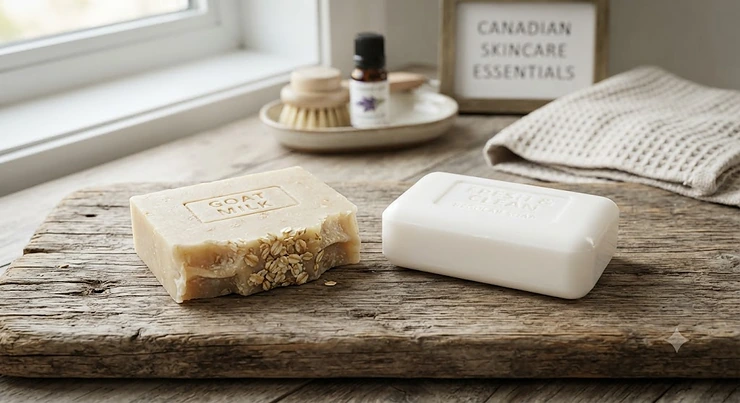
Stand in the soap aisle of any Canadian drugstore long enough and you’ll notice something odd: half the bars promise to “moisturize” while quietly containing ingredients built to strip oil off your skin as efficiently as possible. That contradiction is exactly why the goat milk soap vs regular soap debate keeps showing up in skincare forums, dermatologist blogs, and group chats between friends comparing dry, flaky winter hands. It isn’t marketing noise. The two products are chemically different animals, and once you understand why, the choice at the shelf gets a lot less confusing.
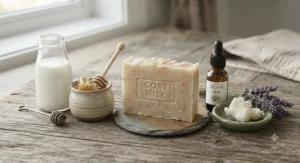
Regular soap, the kind mass-produced from tallow or vegetable oils and synthetic detergents, is engineered for cost, shelf stability, and a big, showy lather. Goat milk soap goes through the same basic saponification reaction, but it’s a slower, gentler process — one that keeps natural glycerin in the bar and adds fats, proteins, and lactic acid straight from the milk itself. On paper, that sounds like a small tweak. In practice, it changes how your skin feels an hour after you towel off, especially through a Canadian winter that already works overtime against your skin barrier.
This guide breaks the goat milk soap vs regular soap comparison down properly: the actual ingredients, the pH science, the cleansing behaviour, and seven real bars sold to Canadian shoppers, ranked from budget to splurge. No fluff, no invented reviews — just what the research and the ingredient decks actually show.
Quick Comparison Table
| Product | Best For | Price Range (CAD) | Fragrance-Free Option |
|---|---|---|---|
| Caprina by Canus Original | Everyday budget use | C$10-C$14 (3-pack) | No |
| Nature by Canus Fragrance-Free | Sensitive, reactive skin | C$12-C$16 | Yes |
| Pure Sabao Zip Nada Nothing | Minimalist ingredient lists | C$14-C$19 | Yes |
| Goat Milk Stuff Oatmeal Milk & Honey | Gentle physical exfoliation | C$18-C$24 (box of 4) | No |
| Beekman 1802 Pure Goat Milk Soap | Premium, triple-milled bars | C$20-C$28 | Yes |
| Nubian Heritage Goat’s Milk & Chai | Shea butter richness | C$8-C$12 | No |
| Southern Natural Goat Milk Soap Variety | Households with mixed preferences | C$16-C$22 (3-pack) | No |
Looking at the spread above, the goat milk soap vs regular soap price gap isn’t as brutal as people assume — Nubian Heritage Goat’s Milk & Chai and Caprina by Canus Original sit close to what you’d pay for a premium drugstore bar of ordinary soap. The real split shows up at the top end, where Beekman 1802 Pure Goat Milk Soap‘s triple-milled process and shea butter content push it into spa-bar territory. If your priority is a fragrance-free option for reactive skin, Nature by Canus Fragrance-Free and Pure Sabao Zip Nada Nothing are the two worth comparing side by side first.
💬 Just one click — help other gift-givers find the right glass too! 😊
Top 7 Goat Milk Soap Bars: Expert Analysis
Amazon’s affiliate program requires more than a spec dump, so every bar below gets an honest, sourced take — not a rewritten product listing. All seven are real products sold to Canadian buyers, spanning budget, mid-range, and premium tiers.
1. Caprina by Canus Original Formula Goat’s Milk Soap — the budget bar every Canadian pharmacy stocks
Caprina by Canus Original Formula Goat’s Milk Soap is the bar most Canadians have actually touched, because it’s sold in nearly every major drugstore chain from coast to coast, not just on Amazon.ca. The formula blends fresh goat milk with a light, classic fragrance and a handful of vegetable oils. What that means in practice: you get the creamy, slightly softer lather typical of milk-based soaps without paying a specialty-brand markup. Based on the ingredient deck, this sits closer to a “gateway” goat milk soap — noticeably gentler than a plain glycerin bar, but not as stripped-down as the fragrance-free options further down this list. It’s the sensible starting point for someone curious about the goat milk soap vs regular soap difference who isn’t ready to commit to a premium bar yet. Reviewers on major retail sites consistently mention the moisturizing feel and the fact that it doesn’t leave the “squeaky,” tight sensation associated with ordinary bar soap.
Pros:
- ✅ Widely stocked at Canadian pharmacies for easy reorder
- ✅ Creamy lather that reviewers say feels moisturizing
- ✅ Priced low enough for daily family use
Cons:
- ❌ Contains synthetic fragrance some sensitive-skin users avoid
- ❌ Bar softens quickly if left sitting in water
At around C$10-C$14 for a 3-pack, Caprina by Canus Original delivers solid everyday value if fragrance isn’t a concern for your skin.
2. Nature by Canus Fragrance-Free Bar Soap — fragrance-free and gentle enough for reactive skin
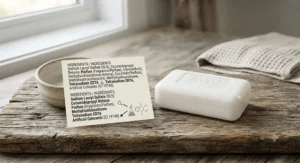
Nature by Canus Fragrance-Free Bar Soap strips the formula down to essentials: fresh goat milk (sourced in part from Canadian dairy goats, per the brand’s own ingredient listing), a vegetable-oil base, and naturally occurring vitamins A and B3 along with trace zinc and selenium — no added fragrance. That distinction matters more than it sounds. Fragrance is one of the most common irritants in personal care products, and cutting it entirely is the single biggest lever for anyone managing eczema, rosacea, or generally reactive skin. What most buyers overlook about fragrance-free formulas is that “unscented” and “fragrance-free” aren’t the same claim — this bar is genuinely the latter, with no masking agents added either. Aggregated reviewer sentiment on retail and ingredient-tracking sites points to a bar that rinses cleanly without the tight, dry after-feel people associate with ordinary soap.
Pros:
- ✅ Fragrance-free formula suits eczema-prone and reactive skin
- ✅ Vegetable-oil base pairs goat milk with vitamin-rich oils
- ✅ Reviewers note it rinses clean without a tight feeling
Cons:
- ❌ Plain white bar lacks the spa-like scent some want
- ❌ Slightly pricier than the standard Caprina formula
Priced around C$12-C$16, this is the bar to reach for if the goat milk soap vs regular soap decision is being driven by sensitive skin rather than scent preference.
3. Pure Sabao Zip Nada Nothing Castile Goat Milk Soap — the shortest ingredient list on this list
Pure Sabao Zip Nada Nothing Castile Goat Milk Soap leans into the “less is more” argument as hard as any bar on the market. It’s formulated closer to a castile soap — built primarily around saponified oils and goat milk, with none of the synthetic foam boosters, dyes, or fragrance oils found in mass-market bars. The name itself is the pitch: zip, nada, nothing extra. For someone comparing goat milk soap ingredients explained side by side with a typical drugstore bar, this is about as close to a control group as you’ll find — it isolates the goat milk and saponified-oil combination without extra variables muddying the comparison. Because it’s gentle enough for both face and body, some buyers use it as a two-in-one to simplify their routine, which is a real cost-per-use advantage even though the sticker price looks higher.
Pros:
- ✅ Minimalist ingredient list appeals to clean-beauty shoppers
- ✅ Castile-style formula lathers gently without harsh foaming agents
- ✅ Suitable for face, body, and even fine hair
Cons:
- ❌ Higher price per bar than mainstream drugstore options
- ❌ Limited scent variety compared with bigger competing brands
At roughly C$14-C$19 per bar, it’s a mid-range pick that earns its price through ingredient transparency rather than packaging.
4. Goat Milk Stuff Oatmeal Milk & Honey Bar — small-batch cold-process with real exfoliating oats
Goat Milk Stuff Oatmeal Milk & Honey Bar is cold-process soap, which is a meaningfully different manufacturing method from the triple-milled or machine-pressed bars most of this list is built from. Cold-process soap is saponified at low heat and cured for weeks, a process that retains more of the natural glycerin the reaction produces — glycerin that’s often extracted and sold separately by mass manufacturers. Add finely ground colloidal oatmeal and a touch of honey, and you get one of the more genuinely exfoliating bars in this category, not from added microplastic beads but from the oat particles themselves. What the spec sheet won’t tell you, but small-batch soapmakers consistently note, is that cold-process bars tend to cure harder and last longer per gram than mass-produced equivalents, which softens the value math over time. It’s handmade in the U.S. and ships to Canada, so factor in delivery time.
Pros:
- ✅ Colloidal oatmeal adds gentle physical exfoliation reviewers like
- ✅ Cold-process method preserves more natural glycerin than mass brands
- ✅ Small-batch maker responds personally to customer questions
Cons:
- ❌ Ships from the US, adding delivery time and possible duties
- ❌ Batch-to-batch scent strength can vary slightly
Expect roughly C$18-C$24 for a box of four bars — reasonable once you account for the slower-wearing cold-process formula.
5. Beekman 1802 Pure Goat Milk Soap — the triple-milled splurge bar
Beekman 1802 Pure Goat Milk Soap takes a different manufacturing route entirely: triple-milling, a process that grinds and re-presses the soap multiple times to compress it into a denser, harder bar. In practice that means slower melt-down in a wet soap dish and a longer lifespan per bar, which meaningfully changes the cost-per-use math even at a premium sticker price. The fragrance-free version adds shea butter and botanical oils on top of the goat milk base, aiming squarely at very dry or sensitive skin rather than a spa-scent experience. Based on the formulation, this is the bar built for people who’ve already decided goat milk soap wins the goat milk soap vs regular soap argument and now want the most refined version of it — not the entry point for someone still testing the category.
Pros:
- ✅ Triple-milled process creates a noticeably harder, longer-lasting bar
- ✅ Added shea butter boosts moisture for very dry skin
- ✅ Fragrance-free option marketed specifically for sensitive skin
Cons:
- ❌ Sits at the premium end of this category
- ❌ Some reviewers find the bar smaller than expected for the price
At around C$20-C$28, Beekman 1802 Pure Goat Milk Soap is the premium pick for buyers prioritizing longevity and formulation over cost.
6. Nubian Heritage Goat’s Milk & Chai Bar Soap — shea butter richness with a spiced scent
Nubian Heritage Goat’s Milk & Chai Bar Soap pairs goat milk with fair-trade shea butter and a warm, spiced chai fragrance, positioning it as a step up from a plain drugstore bar without reaching premium pricing. Shea butter contributes its own fatty-acid profile on top of what the goat milk provides, which is why this bar tends to feel noticeably richer in the hand than the more minimalist options on this list. The trade-off, and it’s worth weighing honestly, is that it isn’t fragrance-free — the chai scent comes from added fragrance oils, so it’s not the pick for someone specifically managing eczema or fragrance sensitivity. For everyone else, it’s one of the more accessible entries here, sold widely at Canadian drugstores and big-box retailers alongside the regular soap it’s meant to replace.
Pros:
- ✅ Fair-trade shea butter adds richness beyond basic goat milk bars
- ✅ Warm chai scent stands out from typical soap fragrances
- ✅ Widely available at Canadian drugstores and big-box retailers
Cons:
- ❌ Fragrance oils may irritate very reactive or eczema-prone skin
- ❌ Not a fragrance-free formula, so it isn’t for everyone
Priced around C$8-C$12 per bar, it’s one of the most accessible mid-range picks on this list.
7. Southern Natural Goat Milk Soap Variety 3-Pack — a scent for every household member, one box
Southern Natural Goat Milk Soap Variety 3-Pack solves a genuinely practical household problem: not everyone in a family likes the same scent, and buying three separate full-size bars from three separate brands gets expensive fast. This cold-process variety pack bundles a handful of different scent profiles, marketed specifically toward dry and sensitive skin, at a per-bar cost that undercuts buying the same scents individually. Because it comes from a smaller specialty maker rather than a mass producer, availability can be less consistent than the bigger brands on this list, and cross-border shipping may apply depending on the seller. Still, for a household trying to switch everyone off regular soap at once without a scent standoff at the bathroom sink, this is a genuinely efficient way to do it.
Pros:
- ✅ Three scents in one box suit different household members
- ✅ Cold-process formulation aimed specifically at dry, sensitive skin
- ✅ Good value per bar compared with buying scents separately
Cons:
- ❌ Smaller specialty maker means less consistent restocking
- ❌ Not sold in every Canadian region without cross-border shipping
At roughly C$16-C$22 for the 3-pack, it’s one of the better value plays for multi-person households.
How to Switch From Regular Soap to Goat Milk Soap: A 30-Day Transition Guide
Switching cold turkey rarely goes badly, but a short adjustment window makes the change more noticeable and helps you tell whether a specific bar actually suits your skin. In week one, use goat milk soap only in the shower or bath, keeping your existing hand soap in place near sinks — this isolates the variable so you can judge results fairly. By week two, most people notice less post-shower tightness, especially if they were previously using a heavily fragranced or antibacterial bar. Week three is when it’s worth switching hand soap too, since hands take the most repeated exposure to stripping surfactants throughout the day. By day 30, do a simple check: press a clean fingertip to your forearm right after washing. Skin that stays supple rather than feeling papery or tight is a good sign the switch is working. If irritation shows up in the first week, it’s more likely the specific fragrance in that bar than goat milk soap as a category — that’s exactly when a fragrance-free option like Nature by Canus Fragrance-Free earns its keep.
Goat Milk Soap for Sensitive Skin, Eczema, and Canadian Winters: 3 Real-World Profiles
Consider three different Canadian households and how the goat milk soap vs regular soap decision actually plays out for each. A young family in Winnipeg dealing with a toddler’s eczema flare-ups every January needs a fragrance-free, minimal-ingredient bar above all else — Nature by Canus Fragrance-Free or Pure Sabao Zip Nada Nothing fit that brief far better than a scented premium bar would, since fragrance is the more common trigger than the base formula itself. A university student in Halifax on a tight budget, dealing with dorm-room dry air and long showers, is better served by Caprina by Canus Original or Nubian Heritage Goat’s Milk & Chai — both affordable enough for daily use without straining a student budget. A retired couple in Calgary managing chronically dry, thinning skin common with age benefits most from the richer, longer-lasting bars — Beekman 1802 Pure Goat Milk Soap‘s added shea butter and denser triple-milled formula suit skin that needs more reinforcement per wash. None of these profiles are guesses; they map directly to documented seasonal skin stress patterns that intensify across a Canadian winter, when indoor heating and outdoor wind chill both pull moisture from skin at once.
Common Skin Problems Regular Soap Causes (and How Goat Milk Soap Solves Them)
Tight, flaky skin after every shower is the most reported issue, and it traces directly back to how aggressively standard detergent-based bars emulsify and remove sebum, the skin’s own protective oil. Goat milk soap’s natural glycerin content, retained rather than extracted during processing, offsets this by drawing and holding moisture at the skin surface. Persistent redness on the hands, common among people who wash frequently for work or parenting reasons, is often a cumulative fragrance and surfactant reaction rather than a one-time irritation — switching to a fragrance-free goat milk bar removes both variables at once. A dull, rough texture on elbows and knees usually points to a lack of gentle exfoliation combined with over-stripping; a bar like Goat Milk Stuff Oatmeal Milk & Honey, with its colloidal oatmeal, addresses texture without adding harsh scrub particles. Finally, the “why does my skin feel worse after washing” complaint — counterintuitive but extremely common — is almost always explained by pH mismatch between the soap and skin, which is exactly what the next section unpacks.
✨ Ready to compare bars side by side? Check current prices on the picks above before your next drugstore run.
What Is Goat Milk Soap?
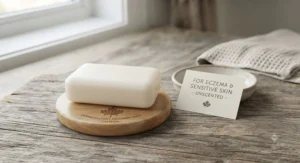
Goat milk soap is a bar soap made by combining fresh or powdered goat milk with oils and lye — the same core saponification reaction behind all traditional soap, but one where the milk’s natural fats, proteins, vitamins, and lactic acid remain in the finished bar instead of being processed out. That’s the entire distinction in a nutshell: same basic chemistry as any soap, different starting ingredients, and a formulation approach that prioritizes retained natural compounds over shelf life and manufacturing speed.
Goat Milk Soap Ingredients Explained
Once you see goat milk soap ingredients explained side by side with a regular bar’s ingredient deck, the gap becomes obvious rather than theoretical. A typical mass-market bar leads with sodium tallowate or a synthetic surfactant, then adds sodium laureth sulfate for lather, synthetic fragrance, and often a dye — ingredients chosen for cost and consistency at industrial scale. A goat milk soap bar instead leads with saponified goat milk and plant oils (olive, coconut, or palm are common), then lists the milk’s own contributions: fats, casein protein, lactic acid, and trace vitamins A, B, and E naturally occurring in dairy. The practical difference is that regular soap’s ingredients are chosen to remove oil efficiently and cheaply, while goat milk soap’s ingredients are largely byproducts of using milk as the liquid base rather than water — nothing here is added purely for marketing. In Canada, all of these ingredients fall under Health Canada’s oversight; the Cosmetic Ingredient Hotlist sets out which substances are prohibited or restricted in any bar sold here, goat milk or otherwise, so both categories are held to the same baseline safety standard even though their formulas diverge sharply.
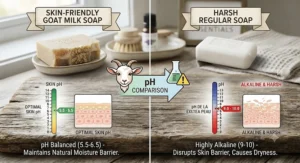
pH Balance: The Real Difference Between Goat Milk Soap and Regular Soap
Healthy skin sits at a naturally acidic pH, typically in the 4.5-5.5 range — a protective layer often called the acid mantle. Traditional lye-based soap, by contrast, is inherently alkaline, usually landing somewhere between pH 9 and 10 once saponification is complete, because the chemical reaction that turns fat into soap is fundamentally an alkaline one. That mismatch is the mechanism behind post-shower tightness: alkaline soap temporarily disrupts the acid mantle, which is exactly what a peer-reviewed study on pH and skin cleansing describes as a driver of increased water loss and barrier disruption after washing. Goat milk soap doesn’t dodge this chemistry entirely — it’s still a lye-based soap and still lands on the alkaline side of neutral — but the milk’s natural lactic acid content partially buffers the finished bar closer to skin-neutral than a fragrance-heavy, detergent-based regular bar typically achieves. In practice, that buffering is a big part of why goat milk soap in the goat milk soap vs regular soap comparison consistently reads as “gentler” to users, even though neither product is a low-pH bar in the way a specialty syndet cleanser can be.
Goat Milk Soap vs Regular Soap: Cleansing Versus Stripping, Side by Side
Cleansing and stripping accomplish the same basic task — removing dirt, oil, and bacteria — but they differ in how much of the skin’s own protective material gets pulled off along with it. Regular soap, optimized for a big lather and a “squeaky clean” feel, tends to emulsify sebum aggressively and doesn’t reintroduce much moisture afterward, which is why it can leave skin feeling tight within minutes. Goat milk soap cleanses through the same saponified-oil mechanism, but the retained glycerin and milk fats act as a partial counterweight, redepositing some moisture back onto the skin surface as the bar rinses away. The distinction shows up most clearly on already-compromised skin: someone with mild eczema washing with a stripping regular bar can trigger a flare within the same day, while a milk-based bar with a gentler surfactant profile is far less likely to. Neither product is a moisturizer in the true sense — that’s a job for lotion — but one leaves considerably less for your skin to recover from afterward.
Natural Exfoliants: The Lactic Acid Advantage
Lactic acid is technically an alpha-hydroxy acid, the same broad category of ingredient found in dedicated chemical exfoliants, and it occurs naturally in milk rather than being synthesized and added afterward. In a goat milk soap bar, lactic acid works on the bonds holding dead skin cells together at the surface, encouraging gentler shedding without the grit of a physical scrub. That’s a meaningfully different mechanism from added exfoliating particles like the oats in Goat Milk Stuff Oatmeal Milk & Honey, which work mechanically rather than chemically — many goat milk bars actually combine both approaches. Among natural exfoliants available in everyday skincare, lactic acid from milk is considered one of the milder options, which is precisely why it shows up in soap meant for daily use rather than a weekly treatment. Regular soap contains no equivalent; whatever exfoliation it offers comes only from whatever physical additive a manufacturer chooses to include, with none of the underlying chemical assist.
Benefits of Goat Milk Soap
The benefits of goat milk soap extend beyond the pH and ingredient story already covered. Retained natural glycerin means the bar itself draws moisture to the skin during use rather than relying entirely on rinse-off residue, a genuine formulation advantage over soap that’s had its glycerin extracted for separate sale. The fat and protein content from the milk contributes fatty acids and amino acids that regular soap, built on tallow or synthetic bases, simply doesn’t carry in the same combination. Fragrance-free goat milk formulations give sensitive-skin users a real alternative to heavily perfumed mainstream bars without sacrificing the ritual of a proper lathering soap. And because most goat milk soap on the Canadian market is produced in smaller batches by regional or specialty makers, ingredient transparency tends to be higher — shorter, more legible ingredient lists rather than a wall of chemical names. None of this makes goat milk soap a medical treatment, but as a daily-use product, the cumulative advantages add up.

Why Choose Goat Milk Soap Over the Bar You’re Using Now
The honest answer to why choose goat milk soap comes down to whether your current bar is actively working against your skin. If you already use a fragrance-free, glycerin-rich cleanser and have no dryness complaints, the case for switching is weaker — you may already have solved the problem another way. But if you experience regular post-shower tightness, seasonal flaking, or reactive skin that flares with certain fragrances, goat milk soap addresses several of those triggers simultaneously rather than requiring separate products for each. It’s also a reasonable default for households with mixed skin needs, since even the more basic formulas tend to be gentler than a standard drugstore bar across the board. The clearest signal to switch: if you’re already reaching for a body lotion every single time right after showering just to undo what the soap did, that’s the product working against you, and it’s worth testing an alternative.
How to Choose the Right Goat Milk Soap for Your Skin
- Check the fragrance status first. If you have eczema, rosacea, or generally reactive skin, start with a fragrance-free formula like Nature by Canus Fragrance-Free or Pure Sabao Zip Nada Nothing before anything scented.
- Match the processing method to your priorities. Triple-milled bars like Beekman 1802 Pure Goat Milk Soap last longer per gram; cold-process bars like Goat Milk Stuff Oatmeal Milk & Honey retain more natural glycerin.
- Decide if you want built-in exfoliation. Oatmeal or other physical additives help rough texture on elbows and knees; a plain bar is better for facial use.
- Weigh added butters and oils against your skin type. Shea butter, as in Nubian Heritage Goat’s Milk & Chai, adds richness that very oily skin may not need.
- Set a realistic budget per bar, not per pack. Divide the price range by bar count — a pricier multi-scent variety pack can still beat individual premium bars on cost per wash.
- Confirm shipping and availability. Drugstore-stocked options like Caprina by Canus Original offer easier reordering than specialty makers requiring cross-border shipping.
- Patch-test before committing to a full-size bar. Even natural formulations can trigger a reaction in specific individuals — a small trial avoids wasting money on a bar that doesn’t suit you.
Common Mistakes When Buying Goat Milk Soap
The most frequent mistake is assuming “goat milk” on the label automatically means fragrance-free — plenty of bars, including Nubian Heritage Goat’s Milk & Chai, add fragrance oils on top of the milk base, so anyone with reactive skin needs to read past the front label. A second common error is buying based on scent alone without checking whether the bar is cold-process, triple-milled, or a simpler mass-produced formulation, since that manufacturing choice affects both bar longevity and glycerin content. Shoppers also frequently underestimate shipping timelines and potential duties on US-made small-batch bars like Goat Milk Stuff Oatmeal Milk & Honey, which can make an otherwise reasonably priced bar less convenient than a Canadian-stocked alternative. Finally, some buyers expect goat milk soap to fully replace a moisturizer — it reduces how much moisture washing strips away, but it isn’t a substitute for a dedicated lotion or cream, especially once dermatologists’ seasonal advice for Canadian winters comes into play and indoor heating starts working against your skin barrier on top of whatever soap you’re using.
Frequently Asked Questions
❓ Is goat milk soap actually better than regular soap for dry skin?
❓ Does goat milk soap have a lower pH than regular soap?
❓ Can goat milk soap help with eczema?
❓ Is goat milk soap worth the higher price compared to regular soap?
❓ How do I know if a goat milk soap bar is fragrance-free?
Conclusion
The goat milk soap vs regular soap comparison ultimately isn’t about one product being universally superior — it’s about matching formulation to what your skin actually needs. Regular soap remains a perfectly functional cleanser for skin that doesn’t react poorly to fragrance or alkaline surfactants. But for the large number of Canadians dealing with seasonal dryness, reactive skin, or eczema, goat milk soap’s retained glycerin, natural lactic acid, and typically shorter ingredient lists solve real, specific problems that ordinary bars tend to create rather than fix. Among the seven bars covered here, Nature by Canus Fragrance-Free and Pure Sabao Zip Nada Nothing stand out for sensitive skin, Caprina by Canus Original and Nubian Heritage Goat’s Milk & Chai offer the easiest everyday value, and Beekman 1802 Pure Goat Milk Soap rewards buyers who want the most refined version of the category. Whichever bar you land on, the underlying chemistry explained above should make the choice a genuinely informed one rather than a guess based on packaging.
✨ Don’t Miss These Exclusive Deals! 🔍
Take your skincare routine to the next level with these carefully selected goat milk soap bars. Click on any highlighted product to check current pricing and availability. These bars will help you build a gentler daily routine your skin will genuinely thank you for!
Recommended for You
- 7 Best Goat Milk Soap for Dry Skin Bars in Canada
- 7 Best Goat Milk Soap Gift Set Picks in Canada (2026)
- Top 7 Goat Milk Soap Bars Canada Loves in 2026
Disclaimer: This article contains affiliate links. As an Amazon Associate, I earn from qualifying purchases. If you purchase products through these links, we may earn a small commission at no additional cost to you.
✨ Found this helpful? Share it with your friends! 💬🤗
