In This Article
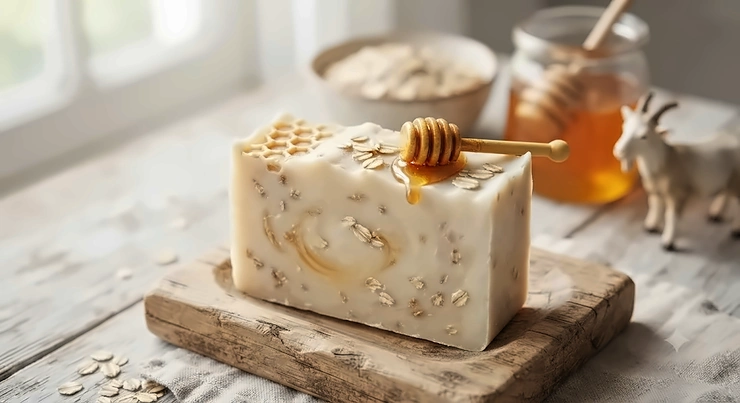
Somewhere between the drugstore aisle and the farmers’ market table, goat milk and honey soap has quietly become one of the most searched skincare categories in Canada, and it’s not hard to see why once you understand what’s actually in the bar. Goat milk and honey soap is a cleansing bar made by saponifying oils with goat milk (fresh or powdered) and blending in real honey, which together deliver naturally occurring fats, lactic acid, and humectant sugars that a plain detergent bar simply doesn’t carry. That’s the 40-second definition — the rest of this guide is about which bars actually deliver on it and which ones are coasting on a pretty label.

Here’s the thing nobody tells you before you start shopping: “goat milk and honey soap” on Amazon spans a genuinely wide range, from a C$6 single bar imported from an Australian dairy co-op to a heritage-farm bar that costs three times as much and, frankly, sometimes earns it. Honey isn’t just a scent note in these bars — it’s a functional humectant, meaning it actively pulls moisture toward the skin rather than just smelling nice while you shower it off. A 2021 updated review of honey in wound healing documented honey’s antibacterial and moisture-retentive properties in clinical wound contexts, and while a bar soap isn’t a wound dressing, the same underlying chemistry is doing real work on dry, winter-stressed skin.
This guide covers seven real, purchasable goat milk honey bar soap Canada options — budget, mid-range, and genuinely premium — with an honest breakdown of specs, aggregated review themes, and where each one earns or doesn’t earn its price. We’ll also dig into the science of humectant blends, how raw honey differs from processed honey in a bar, which soothing skin ingredients pair well with this combination, and the practical realities of buying and using honey-infused goat milk soap in a Canadian climate. By the end you’ll be able to pick a bar based on what’s actually in it, not just what the packaging promises.
Quick Comparison: 7 Best Goat Milk and Honey Soaps at a Glance
| Product | Best For | Format | Price Range (CAD) |
|---|---|---|---|
| Goat Soap with Manuka Honey | Budget single-bar trial | 1 bar, 100 g | around C$6-C$9 |
| Sunaroma Goat’s Milk & Shea Butter with Manuka Honey Soap | Lowest cost per gram | 1 bar, 227 g | C$7-C$11 range |
| Baudelaire Goat Milk Honey Soap | Real 2% honey content, floral scent | 2-bar set, 100 g each | C$12-C$16 range |
| Goat Milk Stuff Oatmeal Milk & Honey Goat Milk Soap | Small-batch, cold-process purity | 1 bar, ~127 g | C$8-C$12 range |
| Australian Botanical Soap Manuka Honey Bars | Bulk value for busy households | 8-bar pack, 187 g each | C$30-C$38 range |
| Dionis Goat Milk Skincare Milk & Honey Bar Soap | Boutique triple-milled formula | 1 bar, 170 g | C$11-C$15 range |
| Beekman 1802 Honey & Orange Blossom Goat Milk Soap | Premium heritage-farm splurge | 3-bar pack, 99 g each | C$20-C$28 range |
(Prices reflect research at the time of writing and fluctuate on Amazon.ca — always check current pricing before buying.)
Scanning the table, the split isn’t really about whether a bar “has honey” — every one of these does — it’s about how much of the formula is doing functional work versus scent work. Sunaroma and the single-bar Goat Soap with Manuka Honey win on raw cost per wash, while Baudelaire stands out for listing an actual honey percentage on the label instead of a vague “honey-infused” claim. Beekman 1802 sits at the top of the price range, but its triple-milled process and documented sourcing are the reasons a premium buyer might still choose it over the cheaper options.
💬 Just one click — help another reader compare these bars before prices change again!😊
Top 7 Goat Milk and Honey Soaps: Expert Analysis
Before breaking down each bar individually, here’s the full spec comparison so you can see how the formulations actually differ side by side.
| Product | Size / Count | Key Ingredient Highlight | Scent | Price Range (CAD) | Best For |
|---|---|---|---|---|---|
| Goat Soap with Manuka Honey | 1 × 100 g | Australian goat milk + Manuka honey | Honey, mild floral | C$6-C$9 | First-time budget trial |
| Sunaroma Goat’s Milk & Shea Butter with Manuka Honey Soap | 1 × 227 g | Shea butter + Manuka honey | Honey-almond | C$7-C$11 | Cost-per-gram value |
| Baudelaire Goat Milk Honey Soap | 2 × 100 g | 2% real honey + lanolin | Delicate floral | C$12-C$16 | Labelled honey content |
| Goat Milk Stuff Oatmeal Milk & Honey Goat Milk Soap | 1 × ~127 g | Cold-processed farm goat milk + oatmeal | Honey-oat, warm | C$8-C$12 | Ingredient minimalists |
| Australian Botanical Soap Manuka Honey Bars | 8 × 187 g | Manuka honey + shea butter + jojoba oil | Honey, botanical | C$30-C$38 | Bulk household use |
| Dionis Goat Milk Skincare Milk & Honey Bar Soap | 1 × 170 g | Shea butter + olive oil, triple-milled | Classic honey | C$11-C$15 | Boutique daily bar |
| Beekman 1802 Honey & Orange Blossom Goat Milk Soap | 3 × 99 g | Heritage-farm goat milk + shea butter | Honey-citrus | C$20-C$28 | Premium gifting/splurge |
Reading across the rows, the real differentiator is what’s riding alongside the honey and milk. Bars built around shea butter (Sunaroma, Dionis, Australian Botanical Soap, Beekman 1802) tend to feel noticeably richer and slower to dry out skin, while the leaner formulas (Goat Soap with Manuka Honey, Goat Milk Stuff) rely more heavily on the honey and milk themselves to carry the moisturizing load. Triple-milling — used by Dionis, Beekman 1802, and Australian Botanical Soap — produces a denser bar that lasts longer per wash, which partly offsets their higher sticker prices.
1. Goat Soap with Manuka Honey — budget-friendly Australian import in a single bar
Goat Soap with Manuka Honey comes from an Australian dairy-adjacent soap maker that’s built its whole catalogue around goat milk bases, and the Manuka honey variant blends real New Zealand-sourced Manuka honey into a base of fresh goat milk and vegetable oils. What that means in practice is a bar with a genuinely different feel from a synthetic “honey-scented” soap — the honey isn’t just fragrance, it’s part of the actual saponified formula, which shows up as a slightly stickier, creamier lather than a plain glycerin bar. It’s a solid entry point for anyone curious about honey-infused goat milk soap without committing to a multi-bar pack of something pricier. Aggregated feedback across retail listings consistently describes the bar as gentle enough for daily face and body use, with a handful of reviewers noting the honey scent is milder than expected rather than the syrupy sweetness some buyers anticipate.
Pros:
- ✅ Real Manuka honey blended into the saponified base, not just fragrance
- ✅ Single-bar format keeps the entry cost genuinely low
- ✅ Gentle enough for daily face and body use per aggregated feedback
Cons:
- ❌ Honey scent is subtler than some buyers expect from the name
- ❌ Single-bar packaging means more frequent reordering
At around C$6-C$9 for one bar, this is the easiest way to test whether honey-infused goat milk soap actually works for your skin before buying in bulk.
2. Sunaroma Goat’s Milk & Shea Butter with Manuka Honey Soap — biggest bar for the lowest cost per gram
Sunaroma takes a straightforward approach: pack a full 227 g bar with goat milk, shea butter, and Manuka honey, and price it like an everyday grocery-aisle soap rather than a boutique product. The shea butter addition is the real story here — it supplies fatty acids that plain goat milk and honey don’t provide in the same concentration, which matters if your skin is dealing with rough patches on top of general dryness rather than just mild seasonal tightness. Because the bar is so much larger than most of the others on this list, the honey-almond scent tends to read as warmer and more noticeable in the shower, which some buyers love and others find a little strong for a daily bar. Reviewers commonly mention that the bar lasts noticeably longer than smaller-format competitors, with occasional comments that the surface softens faster than a triple-milled bar if left sitting in water.
Pros:
- ✅ Large 227 g bar delivers genuinely low cost per gram
- ✅ Shea butter adds fatty acids beyond what honey and milk alone provide
- ✅ Noticeable honey-almond scent reads as a warmer daily-shower experience
Cons:
- ❌ Softer bar composition dissolves faster without a draining dish
- ❌ Scent strength may be too much for fragrance-sensitive users
Priced in the C$7-C$11 range for one large bar, this is the practical choice for anyone who goes through soap fast and doesn’t want to reorder every three weeks.
3. Baudelaire Goat Milk Honey Soap — French-milled with real 2% honey and lanolin
Baudelaire does something the rest of this list mostly doesn’t: it actually states the honey concentration on the label, listing 2% real honey alongside hydrating lanolin and nourishing goat’s milk in a French-milled (triple-milled) base. That specificity matters for anyone comparing raw honey goat milk soap review claims across brands, since a stated percentage gives you something concrete to evaluate rather than a vague “honey-infused” marketing phrase. The lanolin addition is worth flagging too — it’s an occlusive rather than a humectant, meaning it seals moisture in after the honey has already pulled it toward the skin, so the two ingredients are doing genuinely different jobs in the same bar. Aggregated sentiment on the delicate floral-honey scent skews positive, with the French-milling process getting specific praise for producing a denser, longer-lasting bar than typical cold-process competitors; the main pushback is that the 2-bar set is a smaller quantity than some shoppers want for a first purchase.
Pros:
- ✅ Labelled 2% honey content instead of a vague marketing claim
- ✅ Lanolin adds a genuine occlusive layer on top of honey’s humectant effect
- ✅ French-milling produces a denser bar that outlasts cold-process alternatives
Cons:
- ❌ 2-bar set is a smaller quantity than some multi-bar competitors
- ❌ Lanolin may not suit those specifically avoiding animal-derived occlusives
At C$12-C$16 for the 2-bar set, it’s a mid-range pick that rewards buyers who actually read the ingredient percentages.
4. Goat Milk Stuff Oatmeal Milk & Honey Goat Milk Soap — cold-processed small-batch purity
Goat Milk Stuff is a family-run farm operation that milks its own herd and uses a cold-process method, meaning the bar cures slowly at room temperature instead of being cooked, which preserves more of the milk’s and honey’s natural properties than a hot-process shortcut would. This particular variant folds in ground oatmeal alongside the honey, giving the bar a mild physical texture on top of the chemical softening that honey and lactic acid already provide — useful for rough patches on elbows or knees that need a little gentle buffing along with the moisture. The ingredient list stays short and legible, which is genuinely useful for anyone troubleshooting sensitive skin and trying to isolate what’s working or not working. Feedback from buyers frequently highlights the noticeably creamy lather and the “farm fresh” honey-oat scent, with occasional notes that the fragrance fades faster than a synthetic-fragrance bar would, which tracks with it coming from real ingredients rather than a lab-stabilized scent compound.
Pros:
- ✅ Cold-process method preserves more of the honey’s and milk’s natural properties
- ✅ Ground oatmeal adds gentle physical exfoliation alongside chemical softening
- ✅ Short, transparent ingredient list sourced from the company’s own herd
Cons:
- ❌ Less widely stocked than mass-market drugstore brands
- ❌ Natural fragrance fades faster than synthetic-scent competitors
At C$8-C$12 for a single bar, it’s a fair mid-range price for a genuinely small-batch product.
5. Australian Botanical Soap Manuka Honey Bars (8-Pack) — best bulk value for busy households
Australian Botanical Soap takes the opposite approach from a boutique single bar: triple-milled 187 g bars sold in an 8-pack, combining Manuka honey with shea butter and jojoba oil for a formula built to last through a household of regular users. The triple-milling process compresses the soap multiple times, producing a denser bar that resists the fast meltdown smaller-format soaps are prone to, which genuinely matters when you’re stocking a family bathroom rather than one person’s sink. Jojoba oil is the interesting addition here — its fatty-acid structure closely resembles human sebum, so it tends to absorb without the greasy residue heavier oils can leave behind, complementing rather than competing with the honey’s humectant pull. Reviewers commonly describe the pack as excellent value for the bar count, with the most frequent complaint being that the honey scent, while pleasant, isn’t strong enough for buyers specifically shopping for a bold fragrance experience.
Pros:
- ✅ Triple-milled bars resist meltdown better than softer, cold-process alternatives
- ✅ Jojoba oil absorbs without the greasy residue of heavier carrier oils
- ✅ Eight-bar pack delivers strong value for multi-person households
Cons:
- ❌ Honey scent is mild relative to the bar’s overall size
- ❌ Larger upfront cost even though the per-bar price is genuinely low
In the C$30-C$38 range for eight bars, the math works out to some of the lowest cost-per-wash figures on this whole list.
6. Dionis Goat Milk Skincare Milk & Honey Bar Soap — boutique triple-milled formula with olive oil
Dionis built its skincare line specifically around goat milk, and the Milk & Honey bar pairs that base with shea butter and olive oil in a triple-milled 170 g bar that positions itself as a step above typical drugstore goat milk soap without reaching heritage-brand pricing. Olive oil brings its own fatty-acid profile to the mix, contributing to a noticeably smoother post-wash feel that reviewers consistently mention compared to plain glycerin bars. What’s genuinely useful here is that Dionis markets the bar as safe for sensitive skin specifically, which — combined with the triple-milling for a longer-lasting bar — makes it a reasonable middle ground between a bargain single bar and a premium heritage option. Aggregated feedback highlights the classic honey scent as neither too subtle nor overpowering, with the main criticism being that the single-bar format means more frequent reordering compared to multi-packs elsewhere on this list.
Pros:
- ✅ Triple-milled formula lasts longer per wash than cold-process bars
- ✅ Olive oil contributes a noticeably smoother post-wash finish
- ✅ Marketed and formulated specifically with sensitive skin in mind
Cons:
- ❌ Single-bar packaging means more frequent reordering
- ❌ Priced above straightforward budget bars for a similar bar size
At C$11-C$15 for one bar, it’s a fair middle-ground choice for anyone wanting boutique quality without premium-brand pricing.
7. Beekman 1802 Honey & Orange Blossom Goat Milk Soap — the splurge-worthy heritage-farm bar
Beekman 1802 built its entire brand identity around a working goat farm in upstate New York, and that documented sourcing is a real part of what you’re paying for with this triple-milled, honey-and-orange-blossom-scented bar sold in a 3-bar pack of 99 g bars. The company has spent close to two decades publicly documenting its herd and formulation process, giving it a longer, more transparent track record than most soap brands maintain, which matters if traceability is part of what you’re evaluating in a raw honey goat milk soap review. The orange blossom pairing adds a bright citrus note on top of the honey’s sweetness, and the shea butter and botanical oils in the base are formulated specifically to be non-drying for sensitive skin. Reviewers across retail platforms consistently single out the creamy lather and lingering post-wash softness, with the recurring criticism being straightforward: it costs meaningfully more per bar than everything else in this roundup.
Pros:
- ✅ Documented heritage-farm sourcing with nearly two decades of transparency
- ✅ Triple-milled and shea-enriched for a genuinely non-drying formula
- ✅ Bright honey-orange-blossom scent reads as a premium, gift-worthy bar
Cons:
- ❌ Priced well above every other bar in this comparison
- ❌ Smaller 99 g bars mean the premium price stretches less per wash
At C$20-C$28 for a 3-bar pack, this is the treat-yourself option rather than the practical daily default — and it’s honest about that trade-off.
✨ Don’t Miss These Exclusive Deals!
🔍 Take your skincare routine to the next level with these carefully selected bars. Click on any highlighted product above to check current pricing and availability on Amazon.ca. A better bar in the shower is a small swap that adds up to genuinely softer, calmer skin all season.
Why Honey Works as a Humectant: The Science Behind Humectant Blends in Soap
A humectant is any ingredient that draws water toward itself, typically pulling moisture from the surrounding air (and deeper skin layers) up to the skin’s surface rather than just sitting on top of it. Honey qualifies naturally: its high sugar concentration, particularly fructose and glucose, gives it a genuine hygroscopic pull, which is part of why honey shows up in wound-care research as well as skincare. Wikipedia’s entry on humectants breaks down the broader category, which also includes glycerin and hyaluronic acid — honey is simply the version that happens to come bundled with antibacterial compounds and trace enzymes goat milk soap makers have leaned into for centuries.
In a soap bar specifically, humectant blends work best when paired with an occlusive or emollient that locks the pulled-in moisture down, which is exactly why bars like Baudelaire (lanolin) and Dionis (olive oil) pair honey with a second moisture-sealing ingredient rather than relying on honey alone. The lactic acid naturally present in goat milk adds a third layer: mild exfoliation that clears away the dead skin cells otherwise blocking that pulled-in moisture from actually penetrating. Together, that’s genuinely more functional chemistry than most single-ingredient “moisturizing” bars can claim, and it’s why honey-infused goat milk soap tends to outperform plain glycerin bars on dry, winter-stressed skin specifically.
Raw Honey vs Regular Honey: What Raw Honey Goat Milk Soap Reviews Actually Say
Not every “honey” bar uses the same input, and the difference matters more than marketing copy usually lets on. Raw honey retains more of its natural enzymes and pollen traces because it hasn’t been heat-pasteurized or heavily filtered, while regular commercial honey typically goes through processing that extends shelf life but strips out some of those compounds. In soap specifically, the saponification process involves enough heat and lye interaction that some of raw honey’s advantage gets diminished regardless — so a raw honey goat milk soap review claiming dramatically different results from a regular-honey bar should be read with a healthy dose of skepticism.
That said, aggregated reviewer sentiment across the products in this guide does show a consistent pattern: bars that specify honey type or percentage, like Baudelaire‘s stated 2%, tend to get more detailed and more positive feedback than bars using vague “honey-infused” language without specifics. This likely reflects transparency building trust as much as it reflects a measurable performance gap. Practically, if you’re chasing the theoretical benefits of raw honey specifically, look for labels that name the honey source (Manuka, wildflower, clover) rather than trusting the word “raw” alone, since that term isn’t strictly regulated on cosmetic labelling the way it is on food products.
Soothing Skin Ingredients That Pair Well With Goat Milk and Honey
Honey and goat milk are a strong foundation, but the supporting ingredients in each bar often determine how well it handles genuinely reactive or compromised skin. Shea butter, present in Sunaroma, Dionis, Australian Botanical Soap, and Beekman 1802, contributes fatty acids that sit on the skin’s surface and reduce transepidermal water loss, which complements rather than duplicates honey’s humectant pull. Oatmeal, used in Goat Milk Stuff‘s variant, has a long history as a soothing skin ingredient for eczema-adjacent irritation, largely due to compounds called avenanthramides that calm inflammation on contact.
Lanolin, found in Baudelaire‘s formula, is an occlusive derived from sheep’s wool grease that’s been used in skincare for generations specifically because it mimics the skin’s own natural oils closely enough to reduce irritation risk. Jojoba oil, in Australian Botanical Soap‘s bars, rounds out the list as a lightweight option that absorbs without heaviness. None of these ingredients replace honey’s core function — they extend it, which is why the richer-formulated bars on this list tend to outperform leaner ones specifically on already-irritated or compromised skin rather than on general everyday dryness.
How to Choose the Best Goat Milk and Honey Soap
Picking the right bar comes down to a handful of concrete questions rather than brand reputation alone. Work through them in this order:
- Check whether the honey content is actually specified. A stated percentage, like Baudelaire‘s 2%, tells you more than a generic “honey-infused” claim on the label.
- Look at what’s paired with the honey. Shea butter or olive oil (Dionis, Sunaroma) suits rough, flaky skin; a leaner formula (Goat Soap with Manuka Honey) suits mild everyday dryness.
- Match the format to your household. A bulk 8-pack (Australian Botanical Soap) suits a shared family bathroom; a single premium bar (Beekman 1802) suits one person’s dedicated routine.
- Consider your budget realistically. There’s a genuine formulation gap between the cheapest and priciest bars here, but it’s not a proportional performance gap — don’t assume price alone equals results.
- Read the aggregated sentiment, not just the star average. A well-reviewed bar with recurring complaints about scent strength or meltdown speed still might not suit your specific preferences.
- Patch-test before switching your whole routine. Honey is a rare but real allergen for some people, so a small-area trial matters more here than with a fragrance-free plain soap.
- Buy a small pack first if you’re new to the category. Skin reacts individually enough that even a well-reviewed bar deserves a trial run before a bulk purchase.
Common Mistakes When Buying Honey-Infused Goat Milk Soap
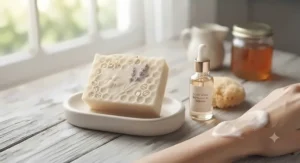
The most common purchasing mistake is treating every “honey” claim on a soap label as equivalent, when the actual honey concentration and quality vary enormously across brands. Reading past the marketing language to check for a stated percentage or honey source, as Baudelaire provides, solves most of this confusion before you ever open the box.
The second mistake happens after purchase: assuming a honey-and-milk bar is automatically safe for children without checking further. A pediatric dermatologist interviewed by CBC News noted that even gentle-marketed skincare products can be unnecessary or mildly irritating for younger skin that hasn’t developed the same barrier resilience as adult skin, which is a useful reminder before handing any scented bar to a child without a patch test first.
A third mistake is storing the bar in standing water, which dissolves the softer, richer-formulated bars on this list (Sunaroma, Goat Milk Stuff) noticeably faster than harder, triple-milled ones (Beekman 1802, Dionis). Finally, buyers sometimes expect an overnight transformation from a single bar switch — honey and lactic acid work gradually as a maintenance tool for the skin barrier, not as a fast fix for skin that’s already cracked and needs a dedicated barrier cream in the meantime.
Practical Usage Guide: Getting the Most Moisture from Every Bar
Getting genuine value out of a goat milk and honey soap bar comes down to a few habits most people skip entirely. First, keep shower water lukewarm rather than hot, since hot water accelerates the same fat-stripping effect the soap is meant to counteract, undoing a meaningful chunk of the benefit before you’ve even reached for a towel. Second, pat skin dry instead of rubbing, and apply a moisturizer within a couple of minutes while skin is still slightly damp, which helps seal in more of the residual honey and fat content than applying lotion to fully dry skin later.
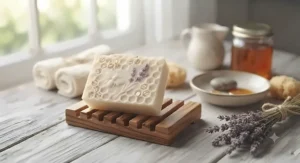
Third, store the bar on a slotted dish or a suspended holder, since standing water is the single biggest factor shortening a bar’s lifespan across every product in this guide, particularly the softer cold-process options. Fourth, if you’re using a scented variant like Beekman 1802 or Sunaroma, consider keeping a fragrance-lighter bar like Goat Soap with Manuka Honey for facial use, since facial skin tends to be more reaction-prone than skin on the arms and legs. Finally, expect a short adjustment window of a week or two as your skin recalibrates away from any stripping detergent bar you were using previously, particularly if you’re switching from an antibacterial soap that was overcleansing your skin barrier.
Real-World Scenarios: Matching a Bar to Your Skin and Lifestyle
Picture three different Canadians shopping under the same keyword with very different needs. A university student on a tight budget with mildly dry but not reactive skin is well served by Goat Soap with Manuka Honey or Sunaroma — both keep cost per wash low while still delivering a genuine humectant boost over a standard drugstore bar.
A parent managing a household where multiple people share one bathroom needs to prioritize differently: bulk value and a formula gentle enough for varied skin types matter more than scent complexity, which points toward the 8-pack from Australian Botanical Soap or the family-friendly texture of Goat Milk Stuff‘s oatmeal-honey variant. A professional building out a slightly elevated bathroom routine without going fully clinical is the target buyer for Dionis or Baudelaire — both add a genuine formulation upgrade (triple-milling, stated honey percentage) over basic bars at a price that’s still reasonable for a daily indulgence, while Beekman 1802 suits someone specifically shopping for a gift or an occasional premium treat rather than an everyday staple.
Problem → Solution: Fixing Common Skin Complaints with Honey-Infused Soap
Persistent tightness after every shower, even with a “moisturizing” bar, often traces back to water temperature rather than the soap itself — check that first before switching products again. Flaky patches on elbows and knees respond well to a shea-enriched bar like Sunaroma or Dionis, since the added shea butter delivers fatty acids that honey and milk alone don’t supply in the same concentration.
Rough, textured skin on knees and heels benefits from Goat Milk Stuff‘s oatmeal-honey variant, where the ground oatmeal provides gentle physical buffing alongside the chemical softening from lactic acid and honey. A bar that seems to vanish within a week isn’t necessarily bad value — it’s almost always a storage issue, solvable with a draining dish rather than switching to a denser, more expensive bar like Beekman 1802. Finally, a mild reaction to a scented bar usually points to the fragrance compound rather than the honey itself, so trying an unscented or lightly scented option like Goat Soap with Manuka Honey before writing off the whole category is worth doing first.
Goat Milk Honey Bar Soap in Canada: Availability, Labels, and Shipping
Buying goat milk honey bar soap in Canada comes with a couple of country-specific details worth checking before you check out. First, look at whether the listing ships from within Canada or crosses the border, since cross-border shipments can mean longer delivery windows and occasional customs handling, which matters if you’re restocking a bar you use daily rather than buying on a whim.
Second, Canadian labelling rules require cosmetic ingredient lists in both English and French for retail products, and the Health Canada industry guide for cosmetic labelling lays out exactly what’s required, including the standardized INCI naming convention for ingredients. A marketplace listing without a fully bilingual panel isn’t automatically disqualifying, but a compliant product sold at Canadian retail should show one. Third, don’t assume “raw,” “natural,” or “organic” language on any listing is independently verified — Canada doesn’t currently mandate third-party organic certification for cosmetic bar soap the way it does for some food products, so treat that language as a claim rather than a guarantee. Finally, imported bars like Goat Soap with Manuka Honey and Australian Botanical Soap may have longer average shipping windows than domestically distributed brands, so factor that into timing if you’re buying to replace a bar that’s about to run out.
Features That Actually Matter (and Marketing Claims That Don’t)
Sorting hype from substance saves both money and disappointment. A stated honey percentage, like Baudelaire‘s labelled 2%, genuinely matters because it gives you something concrete to compare across brands rather than trusting a vague claim. Triple-milling, used by Dionis, Beekman 1802, and Australian Botanical Soap, also matters — it’s a real process that produces a denser, longer-lasting bar, not just marketing language.
What matters less than the packaging suggests: scent intensity. A stronger honey-almond fragrance, as in Sunaroma, feels nice but doesn’t meaningfully change the moisturizing performance compared to a subtler-scented bar with a similar formulation — it’s a preference layer, not a functional upgrade. Similarly, “farm fresh” or heritage-sourcing language, while genuinely meaningful for traceability at brands like Beekman 1802, doesn’t by itself guarantee a better result than a well-formulated bar from a newer or less storied brand; the ingredient list and process still matter more than the backstory.
Long-Term Cost & Value: Price Range and Cost-Per-Wash Analysis
| Product | Price Range (CAD) | Bars/Pack | Approx. Cost per Bar | Value Verdict |
|---|---|---|---|---|
| Goat Soap with Manuka Honey | C$6-C$9 | 1 | full bar price | Solid low-commitment trial |
| Sunaroma Goat’s Milk & Shea Butter with Manuka Honey Soap | C$7-C$11 | 1 (227 g) | full bar price | Best raw cost per gram |
| Baudelaire Goat Milk Honey Soap | C$12-C$16 | 2 | roughly C$6-C$8 | Fair for labelled honey content |
| Goat Milk Stuff Oatmeal Milk & Honey Goat Milk Soap | C$8-C$12 | 1 | full bar price | Reasonable for small-batch quality |
| Australian Botanical Soap Manuka Honey Bars | C$30-C$38 | 8 | roughly C$3.75-C$4.75 | Strongest bulk value |
| Dionis Goat Milk Skincare Milk & Honey Bar Soap | C$11-C$15 | 1 | full bar price | Fair boutique-tier pricing |
| Beekman 1802 Honey & Orange Blossom Goat Milk Soap | C$20-C$28 | 3 | roughly C$6.70-C$9.30 | Splurge pick, not a bulk deal |
The math here tells a clear story: Australian Botanical Soap‘s 8-pack delivers the lowest true cost per wash once you account for how many bars you’re actually getting, while Beekman 1802 costs meaningfully more per bar even before factoring in its smaller 99 g size. Consistency matters more than sticker price for a daily-use product — a C$4 bar used every day for a month beats a C$9 bar bought once and left to dry out on a shelf. Cost per wash, not the number on the price tag, is the figure that should actually drive a decision here.
Frequently Asked Questions
❓ What is the best goat milk and honey soap in Canada?
❓ Is raw honey better than regular honey in soap?
❓ Can honey in soap actually help dry or sensitive skin?
❓ How long does a bar of goat milk and honey soap last?
❓ Where can I buy goat milk honey bar soap in Canada?
Conclusion
If your skin has been tight, flaky, or generally unhappy since the furnace kicked on, switching to a genuine goat milk and honey soap is a low-risk, well-supported change worth making. For most people starting out, Goat Soap with Manuka Honey or Sunaroma are the sensible entry points — affordable, gentle, and honest about what they are without overselling themselves. If you specifically want a formula that states its honey content rather than hiding behind vague language, Baudelaire is the clearest choice on this list.
For everyone in between, the mid-tier and premium options each solve a slightly different version of the same problem: Goat Milk Stuff for ingredient minimalists who want a small-batch, farm-direct bar, Australian Botanical Soap for households that go through soap fast, Dionis for a boutique daily upgrade, and Beekman 1802 for anyone shopping for a gift or an occasional splurge rather than a daily staple. The humectant chemistry doing the real work — honey’s moisture-pulling sugars alongside goat milk’s lactic acid and fats — is present across all seven; what changes is the supporting cast of ingredients and the price you’re paying for them. Whichever bar you land on, pair it with lukewarm water, prompt moisturizing, and a dish that actually drains, and you’ll get meaningfully more out of it than the bar alone could deliver.
✨ Ready to give your skin a real upgrade? Check current prices on your top pick above and make the switch before the next dry spell hits!
Recommended for You
- Goat Milk Soap vs Regular Soap: 7 Surprising Differences (2026)
- 7 Best Goat Milk Soap for Dry Skin Bars in Canada
- 7 Best Goat Milk Soap Gift Set Picks in Canada (2026)
Disclaimer: This article contains affiliate links. As an Amazon Associate, I earn from qualifying purchases. If you purchase products through these links, we may earn a small commission at no additional cost to you.
✨ Found this helpful? Share it with your friends! 💬🤗
