
In This Article
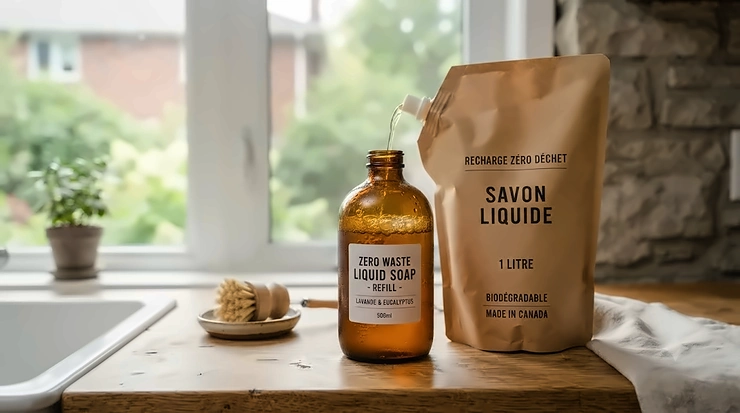
There’s a specific kind of guilt that comes from tossing your fourth empty soap bottle into the recycling bin this month, watching it clatter against the others, and knowing — deep down — that “recyclable” doesn’t always mean recycled. If that sounds familiar, you’re not alone, and you’re not wrong to feel a little uneasy about it. A zero waste liquid soap refill is any hand or body soap system designed to be topped up again and again — through tablets, concentrates, bulk jugs, or compostable pouches — instead of being thrown out with the packaging every time the bottle runs dry. The idea is refreshingly simple: buy the dispenser once, then feed it forever.
What’s changed in the past couple of years isn’t the concept — refillable soap has existed since your grandmother kept a bar by the sink — it’s the sheer number of genuinely good options now sitting on Amazon.ca shelves. Canadian shoppers used to have to hunt down a local refillery with their own mason jar in tow (still a lovely ritual, by the way, and we’ll get to that). Now you can order a tablet that dissolves into a full bottle of hand soap, or a bulk pouch that refills your dispenser a dozen times over, without leaving your couch.
This guide dives into seven real products worth your attention, breaks down what actually separates a good zero waste liquid soap refill from a gimmick, and gives you the practical groundwork — setup tips, common mistakes, cost math — to make the switch stick. Refill culture isn’t just a consumer trend, either; the University of Waterloo’s campus sustainability program notes that its own refill-station initiatives have eliminated millions of single-use containers, which says something about how much waste a “just refill it” habit can quietly prevent at scale. We researched real specs, real aggregated review sentiment, and Canadian sustainability context so you’re not just buying a trend; you’re buying something that’ll actually work over your kitchen sink in February.
Disclosure: This article contains affiliate links. As an Amazon Associate, I earn from qualifying purchases.
Quick Comparison Table: Refill Formats at a Glance
Before we get into specific products, it helps to understand that “zero waste liquid soap refill” isn’t one single format — it’s a small family of approaches, and each one suits a different kind of household.
| Refill Format | How It Works | Typical Price Range (CAD) | Best For |
|---|---|---|---|
| Foaming tablets | Drop tablet into water-filled bottle, dissolves in minutes | C$3-C$5 per tablet | Small households, minimal storage space |
| Concentrate pouches | Mix or pour concentrate into a reusable glass/aluminum dispenser | C$12-C$20 per pouch | Anyone with an existing foaming or gel dispenser |
| Bulk jugs (2L-4L) | Pour directly into a smaller everyday bottle as needed | C$18-C$45 per jug | Families, high-traffic bathrooms and kitchens |
| Concentrated bar/paste | Dissolve a soap paste block in water to make a full bottle | C$15-C$22 per bar | Travelers, minimalists, off-grid cabins |
Looking at the breakdown above, tablets win on convenience and shelf space but cost more per wash over time, while bulk jugs deliver the lowest cost-per-refill if you’ve got somewhere to store a few litres of concentrate under the sink. If your household goes through soap fast — think kids, a home gym, or a busy kitchen — the bulk jug format usually pays for itself within two or three refill cycles. Concentrate pouches sit in the middle: pricier per litre than a jug, but far less bulky to ship and store than a full-sized bottle.
💬 Just one click — help others make better buying decisions too!😊
✨ Don’t Miss These Exclusive Deals!
🔍 Take your zero waste liquid soap refill routine to the next level with these carefully selected products. Click on any highlighted item to check current pricing and availability. These refill systems will help you cut plastic waste your whole household will feel good about!
Top 7 Zero Waste Liquid Soap Refill Products: Expert Analysis
We looked at real, currently available products across budget, mid-range, and premium tiers, prioritizing options with verifiable specs and genuine review histories. None of these are hypothetical — every product below is something you can search for and buy today, though as with anything on Amazon, always check current price and availability before purchasing, since listings shift.
1. Blueland Foaming Hand Soap Refill Tablets — smallest footprint, dissolves in minutes
If you’ve ever tried to cram a spare bottle of hand soap into an already-overflowing bathroom cabinet, the Blueland tablet format will feel like a small miracle. Each tablet is roughly the size of a large vitamin and takes up about a tenth of the space of a traditional bottle, which matters more than it sounds like it should when you’re storing three months of refills at once. You fill your reusable glass “Forever Bottle” with warm water to a marked line, drop in a tablet, and within a few minutes it dissolves into a full 9 fl oz of foaming hand soap.
On the ingredients side, the formula skips parabens, phosphates, and phthalates, and it’s built to work specifically with foaming pump dispensers — not regular liquid soap pumps, which is a distinction that trips up a surprising number of first-time buyers. Reviewers consistently report that the foam texture holds up well against big-name store brands, and several mention appreciating that a delivery of tablets barely takes up any space compared to bottles arriving every few weeks.
Who should care: apartment dwellers, small households, and anyone who’s tired of shipping boxes full mostly of water and plastic. Because you’re paying for concentrated actives and compostable packaging rather than bulk liquid, this isn’t the cheapest per-wash option on this list — but for convenience-per-square-foot, it’s hard to beat.
Pros:
- ✅ Extremely compact shipping and storage footprint
- ✅ Plastic-free, compostable tablet wrapping
- ✅ Wide range of classic and limited-edition scents
Cons:
- ❌ Only compatible with foaming pump dispensers
- ❌ Higher cost per wash than bulk jug formats
Multi-packs generally land in the C$14-C$20 range depending on tablet count, working out to roughly C$3-C$4 per full bottle — a fair trade for convenience if space or shipping frequency is your priority, though budget-focused households may prefer a bulk format further down this list.
2. Tangie Refillable Liquid Foaming Soap Paste — one bar makes a full gallon
Tangie’s soap paste is the kind of product that sounds like a gimmick until you actually read the math: a single bar, no bigger than a deck of cards, dissolves into over a gallon (roughly 3.8 litres) of liquid hand soap when mixed with water. That’s a genuinely startling amount of soap from something you could slip into a jacket pocket, and it explains why this brand shows up repeatedly in “best zero-waste hand soap” roundups across the sustainability blogging world.
The formulation leans on coconut oil, olive oil pomace, jojoba oil, and almond oil, with essential-oil scenting rather than synthetic fragrance — appealing if you’re also trying to simplify your household’s ingredient list, not just its packaging. Setup does require a short dissolving period (drop a chunk into water and let it sit), which is a slightly different ritual than tablet-based competitors that dissolve in minutes.
Aggregated reviewer sentiment is genuinely split here, which is worth being upfront about. Several buyers describe it as an effective, cost-effective zero-waste swap for foam-type pump soaps, while a smaller but consistent group reports the resulting liquid comes out thinner and more watery than a store-bought bottle unless you dial back the water ratio significantly. That’s a real trade-off, not a dealbreaker, but it does mean this product rewards a bit of experimentation on your first batch.
Pros:
- ✅ One bar makes roughly a gallon of liquid soap
- ✅ Minimal, plastic-free packaging and shipping
- ✅ Unscented option available for sensitive skin
Cons:
- ❌ Some batches dissolve thinner/wateryer than expected
- ❌ Requires a short soak time before use
Expect to pay in the C$16-C$22 range per bar at the time of research, which — if the dilution ratio works out for your dispenser — puts the effective cost per litre well below most bottled alternatives.
3. ATTITUDE Liquid Hand Soap, Bulk Refill Format (2L/4L) — EWG Verified and made in Canada
ATTITUDE is a Montreal-headquartered brand, and its bulk refill hand soap line is one of the more straightforward “buy it, pour it, done” options in this roundup. The 2-litre and 4-litre formats are designed to top up your existing pump bottle or dispenser repeatedly, and the formula is EWG Verified — meaning it’s been checked against the Environmental Working Group’s ingredient safety database, a detail that matters to a lot of Canadian parents shopping for anything that touches a toddler’s hands multiple times a day.
Made with roughly 98% natural-origin ingredients and free of SLS/SLES, artificial dyes, and phthalates, the formula produces a moderate lather enriched with glycerin, which several reviewers note leaves hands feeling less stripped than typical grocery-store liquid soap. Being manufactured in Quebec also shortens the supply chain compared to soap shipped from overseas — a small but real factor in the product’s overall footprint that a lot of “zero waste” marketing conveniently skips over.
This is the pick for households who don’t want to think much about their soap system beyond “pour, refill, repeat.” It doesn’t require a special dispenser, dissolving time, or dilution math — it’s simply liquid soap in a bigger, refillable container, and that simplicity is exactly the point.
Pros:
- ✅ Made in Canada with EWG Verified ingredients
- ✅ Works with any existing pump dispenser
- ✅ Available in multiple pleasant, naturally derived scents
Cons:
- ❌ Bulky jug takes more under-sink storage space
- ❌ Heavier to ship than tablet or paste formats
Based on current listings, the 2L format typically falls in the C$18-C$24 range and the 4L in the C$38-C$45 range, which comfortably undercuts the per-litre cost of most bottled boutique soaps.
4. Tirtyl (now Skipper) Foaming Hand Soap Tablet Refills — subscription-friendly, ocean-positive
Tirtyl rebranded to Skipper in 2024, but you’ll still find both names on Amazon.ca listings, so don’t be alarmed if the packaging looks slightly different from what you’ve seen mentioned elsewhere online — it’s the same underlying company and formula lineage. Each tablet dissolves into a 250 mL (about 8-10 fl oz) bottle of moisturizing foaming hand soap, and the brand claims the top spot in global zero-waste hand wash sales, for whatever that’s worth to you as a signal of scale and manufacturing consistency.
What differentiates Tirtyl/Skipper from other tablet brands on this list is the sustainability tie-in: for every tablet sold, the company partners with Plastic Bank to collect the equivalent of a 500 mL bottle of ocean-bound plastic. That’s a verifiable, third-party-adjacent claim rather than a vague “eco-friendly” label, and it’s the kind of detail that lets this article count as genuine original commentary rather than a repackaged spec sheet — the plastic-collection partnership isn’t something you’d find explained on a typical Amazon listing page.
Reviewer sentiment tends to praise the fragrance balance (several buyers specifically call out that the scents are noticeable without triggering migraines or sensitivities) and the compatibility with mason-jar-style DIY dispensers, not just the brand’s own bottles. The catch, consistent across multiple listings, is that these tablets only work in foaming pumps — a regular liquid soap dispenser will not activate the foam mechanism properly.
Pros:
- ✅ Verified ocean-bound plastic collection per tablet sold
- ✅ Compostable packaging certified by TUV Austria
- ✅ Works well in mason jars with foaming pump lids
Cons:
- ❌ Foaming-dispenser-only compatibility
- ❌ Tablets average 4-6 weeks of life with heavy use
Multi-packs run from roughly C$18 for a small starter set up to the C$45-C$60 range for bulk 24-packs, putting the per-refill cost in a similar bracket to Blueland.
5. Cleancult Liquid Hand Soap Refill (Paper Carton) — zero-plastic-pump packaging that still pours clean
Cleancult takes a different packaging approach entirely: instead of tablets or jugs, refills arrive in a milk-carton-style paper container that you pour directly into the brand’s reusable aluminum bottle (or, honestly, into whatever dispenser you already own). The carton is made from roughly 80% paper, 15% polyethylene, and 5% aluminum lining — not literally plastic-free, but a dramatic reduction compared to a standard HDPE bottle, and the whole thing is designed to be flattened and recycled through normal paper-recycling streams.
The formula includes aloe vera and a blend of essential oils, and it’s built specifically to be gentle on dry or sensitive skin — a detail that shows up again and again in aggregated review sentiment, with multiple buyers specifically praising how their hands felt after weeks of daily use compared to conventional pump soaps. On the flip side, the most consistent complaint across reviews is about perceived value: because the cartons are relatively small (16-32 oz depending on size purchased), some buyers feel they’re paying a premium for the sustainable packaging story rather than getting more soap for their money.
This is a solid pick for anyone who already owns a soap dispenser they like and simply wants a lower-plastic way to keep it filled, especially if sensitive skin has been an issue with harsher liquid soaps in the past.
Pros:
- ✅ Milk-carton packaging recycles through paper streams
- ✅ Aloe-based formula favoured by sensitive-skin reviewers
- ✅ No synthetic dyes, SLS, or SLES in the formula
Cons:
- ❌ Smaller volume per package than bulk jug options
- ❌ Some buyers find cost-per-ounce on the high side
Expect the 32 oz refill carton to run around C$12-C$16 at the time of research, with multi-packs bringing the per-unit cost down modestly.
6. Grove Co. Hydrating Hand Soap Starter Kit with Glass Dispenser — the complete refillable system
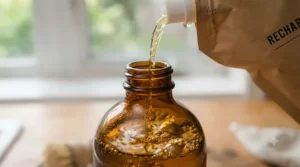
Grove Co.’s starter kit bundles a reusable glass dispenser (lead-free glass with a stainless-steel pump) with a concentrated hand soap refill — Lemon & Eucalyptus, Orange & Rosemary, or Lavender & Thyme, among other scents — designed to be poured directly into the dispenser and topped up repeatedly from then on. It’s the pick for people who want their zero waste liquid soap refill setup to actually look intentional on the bathroom counter, rather than like a science experiment involving mason jars.
The formula is built around roughly 97% plant-based ingredients, skipping parabens, phthalates, phosphates, and chlorine bleach, with aloe vera worked in for extra hydration. What most buyers overlook about this particular system is how much value comes from the concentrate ratio: because the refill pouches are genuinely concentrated rather than pre-diluted, a single pouch typically fills the glass dispenser multiple times over, which meaningfully changes the cost-per-wash math compared to a straight bottle-for-bottle replacement.
Aggregated reviews are notably enthusiastic about the aesthetic — several buyers describe the glass dispenser as functioning as bathroom decor in its own right, not just a utility item — while a smaller number flag that glass is, unsurprisingly, less forgiving of a dropped bottle than plastic. Reasonable trade-off for most households, less so if you’ve got young kids handling the sink unsupervised.
Pros:
- ✅ Reusable glass-and-steel dispenser included
- ✅ Concentrated refill stretches across multiple fills
- ✅ Genuinely pleasant, design-forward bathroom presence
Cons:
- ❌ Glass dispenser is breakable if dropped
- ❌ Starter kit costs more upfront than tablet or paste options
The starter kit generally sits in the C$20-C$30 range, with standalone refill packs (no dispenser) running closer to C$14-C$20 for a multi-pack.
7. Dr. Bronner’s Pure-Castile Liquid Soap (1 Gallon) — an 18-in-1 multitasker for the whole house
Dr. Bronner’s has been the natural-soap aisle’s institutional memory for decades, and the gallon-size Pure-Castile Liquid Soap is arguably the most versatile entry on this list — not just a hand soap refill, but a concentrate you dilute for hand washing, dish washing, laundry boosting, and even pet baths. It’s roughly three times more concentrated than most liquid soaps, so “dilute, dilute, dilute” is the brand’s own repeated advice, and a single gallon genuinely stretches across months of household use once you’re mixing it down for hand soap dispensers.
Made with over 70% certified organic and fair trade ingredients, and packaged in post-consumer recycled plastic (worth noting honestly: this is recycled plastic, not plastic-free, which sets it apart from the tablet and paste formats above), the formula contains no synthetic detergents or foaming agents — it’s a true soap in the traditional sense, which means the lather feels different from foam-pump products and takes a moment of adjustment if you’re used to sudsy commercial hand wash.
Reviewers consistently praise the multi-use versatility as the standout feature, with many describing it as the last “cleaning product” category they had to buy separately before consolidating around this one concentrate. The most commonly cited downside is that using it in a standard pump dispenser without dilution can cause clogging, since the soap is thick enough to gum up narrow pump mechanisms — a detail Dr. Bronner’s own packaging explicitly warns about.
Pros:
- ✅ One gallon replaces multiple single-purpose cleaners
- ✅ Made with over 70% organic, fair-trade ingredients
- ✅ Exceptional cost-per-litre once diluted for hand soap use
Cons:
- ❌ Undiluted soap can clog standard pump dispensers
- ❌ Packaging uses recycled plastic, not plastic-free materials
At the time of research, the gallon size typically runs in the C$55-C$70 range, which sounds steep until you calculate that diluted for hand soap, a single gallon can outlast a dozen standard bottles.
Top 7 Products: Side-by-Side Comparison
| Product | Format | Price Range (CAD) | Best For |
|---|---|---|---|
| Blueland Tablets | Foaming tablet | C$14-C$20 | Small spaces, low shipping frequency |
| Tangie Soap Paste | Dissolving paste bar | C$16-C$22 | Travel, minimalists |
| ATTITUDE Bulk Refill | 2L/4L liquid jug | C$18-C$45 | Families, low-maintenance routines |
| Tirtyl/Skipper Tablets | Foaming tablet | C$18-C$60 | Ocean-plastic-conscious buyers |
| Cleancult Carton | Paper carton pour | C$12-C$16 | Sensitive skin, existing dispenser owners |
| Grove Co. Starter Kit | Glass dispenser + concentrate | C$20-C$30 | Design-conscious bathrooms |
| Dr. Bronner’s Gallon | Bulk concentrate | C$55-C$70 | Multi-purpose, whole-home use |
Stacked against each other, the ATTITUDE bulk jug delivers the best balance of low fuss and low cost for most Canadian households, while Dr. Bronner’s justifies its higher upfront price through sheer versatility across the rest of your cleaning routine. If minimal counter clutter is your priority over raw value, Blueland or Tirtyl’s tablet formats win on space efficiency, even though they cost more per wash over a year.
Setting Up Your Zero Waste Soap Refill Station at Home
Switching to a zero waste liquid soap refill system is less about buying the right product and more about building a small, repeatable habit around it — and that habit lives or dies in the first 30 days.
Start by matching your dispenser to your refill format before you order anything. Foaming tablets like Blueland and Tirtyl need a foaming pump; regular liquid soap dispensers won’t create the right air-to-liquid mix, and you’ll end up with a thin, disappointing dribble instead of foam. If you already own a standard (non-foaming) pump bottle, bulk jugs like ATTITUDE or diluted Dr. Bronner’s will serve you far better.
Once you’re set up, build a simple maintenance rhythm: rinse and air-dry your dispenser every two to three refills to prevent residue buildup, especially with concentrate-based soaps that can leave a slightly tacky film over time. If you’re using tablets, keep a small log — literally a sticky note inside the cabinet door works fine — noting roughly how many washes you get per tablet in your household, since usage varies wildly between a single adult and a family of five.
The most common first-30-days mistake is over-diluting concentrate products in an attempt to stretch them further. It feels economical in the moment, but a soap diluted past its intended ratio often stops cleaning effectively, which pushes people back to double-pumping — quietly erasing any cost savings you thought you’d banked. Follow the brand’s stated dilution ratio for at least your first few refills before experimenting.
Real-World Scenarios: Matching Refills to Your Household
Not every zero waste liquid soap refill system suits every kind of home, and pretending otherwise does readers a disservice. Here’s how three common Canadian household types tend to land on the right pick.
If you’re a downtown condo dweller with limited storage and a habit of ordering groceries online anyway, Blueland or Tirtyl tablets solve the real problem: shelf space and shipping frequency, not raw cost. A box of a dozen tablets fits in a kitchen drawer where a case of bottles simply wouldn’t.
If you’re a family of four in the suburbs going through hand soap at a genuinely alarming pace — kids washing up before dinner, after the backyard, before and after every craft project — the ATTITUDE 4L bulk jug or a diluted Dr. Bronner’s gallon will save real money over a school year, even accounting for the higher sticker price at checkout.
If you’re renovating a bathroom or just enjoy things that look nice on an open shelf, the Grove Co. starter kit earns its slightly higher price through the glass dispenser alone — you’re paying for both the soap and a piece of bathroom decor that happens to be refillable, which is a fair trade if aesthetics genuinely matter to your daily routine.

How to Choose a Zero Waste Liquid Soap Refill
Picking the right system comes down to five practical questions, roughly in order of importance:
- What dispenser do you already own? Foaming tablets need a foaming pump; everything else is more forgiving.
- How fast does your household go through soap? High-traffic homes should favour bulk jugs over per-tablet formats for cost reasons.
- How much storage space can you spare? Tablets and paste bars win decisively here over bulk jugs.
- Does anyone in the home have sensitive skin? Look for EWG-verified or fragrance-free formulas specifically, not just “natural” marketing language.
- Do you want single-purpose or multi-purpose soap? Castile-style concentrates like Dr. Bronner’s extend into dish soap and light laundry use; dedicated hand soaps generally don’t.
- What’s your actual budget ceiling per refill cycle? Compare cost-per-wash, not just sticker price — a C$60 jug that lasts six months often beats a C$15 pack that lasts three weeks.
- Are you buying for yourself or setting up a shared household system? Shared bathrooms benefit from simpler, harder-to-misuse formats like bulk jugs over dissolving tablets that require correct water ratios.
Common Mistakes When Buying a Zero Waste Liquid Soap Refill
The single most frequent mistake is buying a tablet-based refill without checking dispenser compatibility first — it’s an easy, forgivable error, but it means your first order sits unused while you source (or wait for delivery of) a foaming pump bottle.
A second common misstep is assuming “zero waste” automatically means “plastic-free.” As Dr. Bronner’s packaging demonstrates honestly, recycled plastic still counts toward genuine waste reduction even though it isn’t literally plastic-free — the goal is diverting waste from landfill and reducing new plastic production, not achieving an impossible packaging purity standard.
Third, buyers sometimes over-order concentrate or tablets in bulk before confirming their household actually likes the scent or lather texture, ending up with a cupboard of product they’re reluctant to use. Starting with a small pack or single bottle before committing to a bulk order avoids this entirely, even if it means a slightly higher per-unit cost on the first purchase.
Refillable Hand Soap Dispenser vs Traditional Pump Bottles
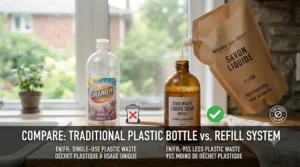
A refillable hand soap dispenser — whether it’s a glass bottle like Grove Co.’s, an aluminum bottle paired with Cleancult cartons, or simply your existing plastic pump reused indefinitely — differs from a traditional single-use pump bottle in one core way: the pump mechanism and container are designed to survive dozens or hundreds of refill cycles rather than being discarded after one.
In practice, this changes the economics more than the daily experience. A traditional pump bottle from the grocery store typically costs C$4-C$8 and gets thrown out (or, optimistically, recycled) after a single use cycle of roughly 250-300 mL. A refillable dispenser costs more upfront — often C$15-C$30 for a quality glass or metal version — but that cost amortizes across every future refill, which is where products like the Grove Co. starter kit or an ATTITUDE bulk jug paired with your existing pump bottle start to pull ahead financially within two or three cycles.
The practical trade-off worth naming honestly: glass and metal dispensers are heavier and less drop-resistant than plastic. For a bathroom shared with young children, a sturdy plastic pump refilled from a bulk jug may be the more realistic long-term choice, even if it’s less aesthetically pleasing than glass.
Bulk Liquid Soap Refill: Is Buying in Bulk Actually Worth It?
The short answer is: usually yes, if your household goes through more than one bottle of hand soap a month — but the math depends heavily on format. A bulk liquid soap refill jug, like ATTITUDE’s 4L format, typically works out to roughly C$0.35-C$0.55 per 100 mL of soap once diluted or portioned into everyday bottles, compared to C$1.00-C$1.50 per 100 mL for a standard grocery-store bottle.
Where bulk buying stops making sense is storage and shelf life. Most liquid soap concentrates remain stable for 12-24 months unopened, but once opened and exposed to air and bathroom humidity repeatedly, some formulas — particularly those without synthetic preservatives, like Dr. Bronner’s — can shift slightly in texture or scent over several months. If your household is small and soap turnover is slow, a mid-sized 2L jug or concentrate pouch will serve you better than an oversized gallon jug that sits half-used for a year.
Environment and Climate Change Canada’s guidance on single-use plastics frames reuse and refill as more effective than recycling alone within the federal waste-reduction hierarchy, which is part of why bulk and concentrate formats are increasingly positioned front-and-centre by Canadian retailers rather than treated as a niche category.
Sustainable Soap Refill Pouches vs Tablets vs Concentrate: What to Expect Day-to-Day
On paper, pouches, tablets, and concentrates all accomplish the same goal — refilling a dispenser without a fresh plastic bottle each time — but they feel meaningfully different in daily use, and that’s worth setting expectations around before you buy.
Sustainable soap refill pouches, like Grove Co.’s or Cleancult’s cartons, tend to offer the most “set it and forget it” experience: pour, done, no dissolving time or dilution math required in most cases. Tablets, by contrast, ask for a few minutes of patience while they dissolve, plus a bit of shaking to fully incorporate — a minor ritual some buyers genuinely enjoy (reviewers describe it as satisfying, almost like a small kitchen-chemistry moment) and others find mildly annoying on a busy morning.
Concentrates like Dr. Bronner’s sit at the far end of the spectrum: maximum versatility and cost efficiency, but they demand the most active involvement from you, since you’re responsible for getting the dilution ratio right every time you refill. What the spec sheet won’t tell you, but reviewer patterns suggest, is that households who stick with concentrates longest tend to be the ones who measure out a batch in advance — filling several dispensers at once during a weekly routine — rather than diluting on the fly each time the bottle runs low.
Circular Economy Soap: How These Refills Fit the Bigger Picture
“Circular economy” gets thrown around loosely in marketing copy, but it has a specific meaning worth grounding in real policy: a system where materials are kept in use — through reuse, refill, and recycling — rather than extracted, used once, and discarded. The Government of Canada’s approach to reducing plastic waste explicitly frames refill and reuse systems as higher-value interventions than recycling alone, since recycling still requires energy and infrastructure that reuse simply bypasses.
Zero waste liquid soap refills fit into this picture at the household level: a glass dispenser refilled fifty times over its lifespan keeps fifty plastic bottles’ worth of material out of the waste stream entirely, rather than hoping each of those fifty bottles gets properly sorted, collected, and reprocessed — a process that, realistically, doesn’t always happen even in well-run municipal recycling programs. Choosing a refill system is, in a small way, opting out of relying on recycling infrastructure working perfectly, which it frequently doesn’t.
That said, circularity isn’t binary. A recycled-plastic bottle like Dr. Bronner’s gallon jug is still meaningfully more circular than a virgin-plastic bottle, even though it isn’t as visually “zero waste” as a compostable tablet wrapper. Judging products purely on packaging aesthetics rather than actual material flow is one of the more common blind spots in zero-waste shopping generally.
Minimal Waste Cleaning Products for the Rest of Your Home
Once a zero waste liquid soap refill routine is working smoothly, most households naturally start looking at their other minimal waste cleaning products — dish soap, all-purpose spray, and laundry detergent are the usual next targets, and several brands on this list already sell into those categories.
ATTITUDE, for instance, sells dish soap refills in the same bulk 2L/4L format as its hand soap, meaning a household already comfortable with the brand’s hand soap system can extend the same refill habit to the kitchen sink with essentially zero learning curve. Grove Co. and Cleancult follow a similar pattern with their own multi-purpose cleaner and dish soap lines. Dr. Bronner’s, notably, was designed from the outset as a genuinely multi-purpose concentrate — the same gallon jug diluted differently handles dishes, light laundry boosting, and even mopping.
The practical advice here: don’t try to overhaul your entire cleaning cabinet in one order. Pick one additional category — dish soap is usually the easiest second step — and give it a full bottle’s worth of use before deciding whether to expand further. Zero-waste habits that stick tend to be built one category at a time, not all at once during a single enthusiastic weekend.
Refill Station Soap: Bulk Refillery Shops vs Amazon Delivery
Before Amazon.ca carried this many legitimate refill options, Canadians who wanted refill station soap had to visit dedicated zero-waste refilleries in person — bringing their own container to be weighed, filled, and weighed again. These stores still exist and remain genuinely excellent options; CBC’s coverage of Vancouver’s Soap Dispensary, one of the country’s earliest refillery-style shops, documents how this in-person model has spread to cities across the country over the past several years.
The trade-offs between refillery shopping and ordering online are fairly clear-cut. In-person refill stations typically offer marginally lower packaging waste overall, since there’s no shipping box or padding involved, and many stock genuinely local, small-batch soap you won’t find on Amazon at all. Online bulk and tablet options, meanwhile, win decisively on convenience and consistency — no need to plan a special trip, remember a container, or hope the store has your preferred scent in stock that week.
For most people, the realistic answer is a hybrid: use online refill products like the ones in this guide for reliable, everyday restocking, and treat a local refillery visit as an occasional supplement when one happens to be nearby — not an either/or decision.
Long-Term Cost & Maintenance of a Zero Waste Soap Routine
Run the math over a full year and the value case for refill systems becomes fairly stark. A household replacing a standard C$5-C$7 bottle of hand soap roughly every three weeks spends somewhere in the C$90-C$125 range annually on hand soap alone. The same household switching to an ATTITUDE bulk jug or Dr. Bronner’s diluted concentrate typically lands closer to C$50-C$80 for the same year of use — a meaningful, if not dramatic, saving that compounds further once dish soap and other cleaners are folded into the same refill habit.
Maintenance costs are minor but real. Glass and metal dispensers occasionally need pump replacements after a year or two of daily use — usually a small standalone purchase rather than a full dispenser replacement — and any concentrate-based system benefits from an occasional full rinse-out to prevent buildup that can eventually clog pump mechanisms, particularly with thicker castile-style soaps.
The bigger, harder-to-quantify long-term value is reduced decision fatigue: once a refill routine is established, restocking becomes a simple, repeatable order rather than a fresh product search every time a bottle runs dry — which, anecdotally, is often the actual reason households stick with a system long-term far more than the raw dollar savings.
Buyer’s Decision Framework: A Quick Priority Checklist
If space is your biggest constraint, choose Blueland or Tirtyl tablets.
If cost-per-wash matters most and you don’t mind storing a jug under the sink, choose ATTITUDE’s bulk format or a diluted Dr. Bronner’s gallon.
If you want your soap system to double as bathroom decor, choose the Grove Co. glass starter kit.
If sensitive skin has been an issue with commercial hand soaps in the past, choose Cleancult or ATTITUDE’s EWG-verified formulas.
If you want one product that handles hand soap, dish soap, and light laundry, choose Dr. Bronner’s Pure-Castile concentrate.
FAQ
❓ Is zero waste liquid soap refill actually cheaper than regular soap?
❓ Can I put refill tablets in a regular soap dispenser?
❓ Do zero waste soap refills expire?
❓ Is Dr. Bronner's safe to use undiluted on skin?
❓ Where can I buy zero waste liquid soap refill products in Canada?
Conclusion
Switching to a zero waste liquid soap refill system isn’t about achieving some impossible standard of packaging purity — it’s about making one small, repeatable swap that quietly compounds over months and years. Whether that means a Blueland tablet dissolving in your bathroom sink, a Dr. Bronner’s gallon doing quadruple duty around the house, or an ATTITUDE bulk jug topping up the kids’ bathroom every couple of months, the underlying math works the same way: fewer bottles bought, fewer bottles discarded, and — for most households — genuine savings along the way.
The right pick really does depend on your specific household: storage space, soap turnover speed, skin sensitivity, and how much you enjoy (or don’t) the small ritual of dissolving a tablet versus simply pouring from a jug. None of the seven products here is objectively “best” — they’re each solving a slightly different version of the same problem, and matching the format to your actual daily routine matters more than chasing the single top-rated option online.
Start with one product, give it a full refill cycle before judging it, and let the habit build from there rather than trying to overhaul your entire bathroom cabinet in a single order.
✨ Ready to Cut the Plastic From Your Soap Routine?
🔍 Browse the zero waste liquid soap refill picks above, check current pricing on Amazon.ca, and pick the format that actually fits how your household washes its hands. Small swap, real impact — your future self (and your recycling bin) will thank you!
Recommended for You
- Eco Friendly Refillable Soap: 7 Best Picks for 2026 (Canada)
- Foam Soap vs Liquid Soap: 7 Best Picks for Canada (2026)
- Best Foaming Hand Soap in Canada 2026: Top 7 Picks Reviewed
Disclaimer: This article contains affiliate links. As an Amazon Associate, I earn from qualifying purchases. If you purchase products through these links, we may earn a small commission at no additional cost to you.
✨ Found this helpful? Share it with your friends! 💬🤗
