In This Article
Top 7 Aleppo Soap vs Marseille Soap Picks: Expert Analysis
Availability on Amazon.ca shifts by seller, size and season, so confirm the exact pack before ordering. Where I couldn’t find a meaningful pool of reviews, I say so rather than guess.
1. Alépia Aleppo Soap 40% Laurel (190 g) — the laurel-heavy luxury bar
This is the bar for people who want the laurel to be the main event. The maker lists sodium olivate and sodium laurate, with laurel at 40% of total oils, plus about 5% water and traces of lye. The INCI list is just four names long.
In practice, a 40% laurel share means a more pronounced herbal scent, a costlier bar, and a soap that is commonly marketed to oily or reactive complexions. The producer also states that its Aleppo soaps are refined for at least nine months, which is the slow end of the tradition. Based on the spec sheet, this suits someone who already knows they like laurel. It is not the best first purchase for the curious.
On reviews, I couldn’t find a meaningful independent review pool for this specific bar. Its credibility rests on the ingredient list and its listing in the Cosmébio natural-cosmetics directory.
Pros:
- ✅ Very high laurel share for a bold herbal profile
- ✅ Short, transparent four-name ingredient list
- ✅ Slow nine-month refining per the maker
Cons:
- ❌ Strong scent can overwhelm laurel newcomers
- ❌ Premium pricing and patchy retail stock
At the time of research, 40% bars sat roughly in the C$15–C$25 range. The value verdict: worth it only if you want high laurel. For most people, a 12–20% bar delivers the tradition for less.
2. Tadé Aleppo Soap 20% Laurel (200 g) — the sweet-spot laurel share
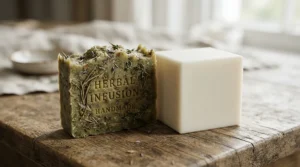
Tadé’s 20% bar is the Goldilocks pick of the Aleppo side. The listed INCI is olive fruit oil, laurel fruit oil, water and sodium hydroxide. Retailers describe the soap as palm-free and note that laurel is 20% “when cooked,” meaning it is measured at the cauldron stage.
What does that mean at the sink? Enough laurel for the characteristic green-herbal note, but a firmer, gentler-feeling bar than the 35–40% versions. Specialist retailers position this strength toward sensitive or reactive skin. Treat that as marketing positioning rather than a clinical promise. Reviewers of the Tadé range generally praise how the bars feel on skin, though the review count per individual bar is small. Some mention using one bar for both face and body.
Expect low lather out of the box, which is normal for Aleppo soaps without coconut or palm oil. A cleansing mitt or sisal glove fixes that.
Pros:
- ✅ Mid-range laurel share suits most routines
- ✅ Palm-free with a clean four-name INCI
- ✅ Range steps up or down if you want to adjust
Cons:
- ❌ Low lather without a mitt or sisal glove
- ❌ Small review pool for this exact SKU
Prices commonly land around C$12–C$20. The value verdict is strong. This is the bar I’d point most first-timers toward.
3. Najel Aleppo Soap 12% Laurel — the gentle, low-risk entry
If you’re dipping a toe in, Najel 12% is the low-commitment route. The listing describes 88% olive oil and 12% laurel oil in a 100 g bar. It also notes the soap loses about 30% of its water during the first nine months, which explains why a properly aged Aleppo bar feels so dense.
The 12% laurel level keeps the scent restrained and the cost down, since laurel is the pricey ingredient. That makes this the sensible choice for anyone nervous about the herbal punch of higher-percentage bars. It’s also a handy size for a gym bag or guest bathroom.
The review picture is thin. I found a single five-star review on one retailer and none on another, so this is a spec-led purchase, not a crowd-validated one. The “100% natural, PFAS-free, microplastic-free” claims come from the retailer’s own description.
Pros:
- ✅ Mild 12% laurel keeps scent subtle
- ✅ Compact 100 g size works for trial or travel
- ✅ Budget-friendly entry to Aleppo soap
Cons:
- ❌ Almost no independent review data
- ❌ Small bar disappears faster with daily use
Expect something in the under-C$10 to C$15 range. The value verdict is good as a trial buy, with the caveat that you’re taking a small gamble on limited evidence.
4. Fer à Cheval Pure Olive Savon de Marseille Cube (300 g) — the benchmark cube
Founded in 1856, this Marseille soap works is described by specialist retailers as the oldest surviving soap factory in the city. It is a founding member of the Union des Professionnels du Savon de Marseille. The maker says its soap is cooked in cauldrons for almost 10 days, follows the 1688 Colbert edict, and contains a minimum of 72% vegetable oils with no palm oil. The listing also states no added preservatives, colourants or fragrances.
One caution: listings for the “olive” cube vary between retailers, and one US listing shows sodium cocoate alongside sodium olivate. Check the INCI on the pack you receive.
On reviews, hundreds exist across retailers (348 on one UK specialist’s listing). Common praise covers laundry, floor cleaning and all-round use. Not everyone loves it, though. At least one retailer’s reviewers found the scent intolerable.
Pros:
- ✅ Genuine heritage producer with cauldron method
- ✅ Palm-free and free of added fragrance
- ✅ Big cube lasts for months of household use
Cons:
- ❌ Briny, oily scent divides reviewers
- ❌ Salt bloom and colour shifts are normal but surprising
Look for roughly C$10–C$18 for 300 g. The value verdict is excellent for a household workhorse and a fair benchmark for judging every other cube.
5. Marius Fabre Olive Oil Marseille Soap (400 g) — four generations of Provençal soapmaking
Based in Salon-de-Provence since 1900, Marius Fabre is a family-run soapworks and a founder member of the same Marseille soap union. The 400 g cube is described as cauldron-cooked for roughly 10 days, with no added fragrance, colourants or animal fats. A French retailer notes an Ecocert-type label for this size.
The nuance: a listing for the smaller cube shows sodium olivate and sodium cocoate, which means olive plus coconut oil. So “olive oil soap” here is not strictly olive-only. Coconut generally adds lather and hardness, which is a practical benefit for hand-washing at a kitchen sink.
Reviews are small-sample but consistently positive: a perfect rating from three reviewers at one US retailer, a 10/10 across twelve reviews at a Dutch drugstore, and one German buyer praising its cleaning of car leather seats.
Pros:
- ✅ Century-old family producer with transparent method
- ✅ Coconut-assisted lather suits hand-washing
- ✅ Consistently positive small-sample reviews
Cons:
- ❌ Not olive-only despite the “olive oil” label
- ❌ Review pools are small
Expect around C$12–C$22. The value verdict is solid if you value provenance and don’t mind coconut oil in the mix.
6. Pré de Provence Marseille Olive Oil Soap Cube (300 g) — the polarizing household cube
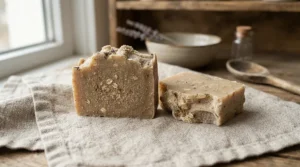
The listing calls it a 100% natural French soap with a minimum of 72% olive oil, designed for hands, body, laundry and dishwashing. It’s the one Marseille-style cube on this list where reviews really split.
Fans report it cleans better than dish liquid, that one swipe of a washcloth handles several plates, and that it lasts a long time. Critics say it smells like old cooking oil or burning tar. One reviewer claims the ingredients show palm oil and wants to report it, and others say it isn’t the “real” savon de Marseille. Others complain of banged-up corners on arrival.
The takeaway from the spec-versus-review tension is simple: read the ingredient panel on the pack you receive, and judge authenticity by INCI, not by the “olive oil” phrase on the front.
Pros:
- ✅ Strong degreasing and laundry performance
- ✅ Large cube lasts through heavy use
- ✅ Multi-purpose from sink to stain pre-treat
Cons:
- ❌ Divisive scent in reviewer comments
- ❌ Some buyers dispute the olive-oil claim
Prices tend to sit around C$10–C$18. The value verdict: fine for cleaning chores, but a riskier choice if you want a face-and-body soap with verified composition.
7. Alépia Pure Olive Marseille Soap — the cross-tradition bridge
Here’s a curious one: a Marseille-style bar from a maker best known for Aleppo soap. The INCI reads sodium olivate, water and sodium hydroxide, with no laurel. The producer notes that Marseille soap is similar to Aleppo soap but differs in water used and technique: Aleppo is made with highly mineralized water, while Marseille uses softer water and a steam cauldron.
That makes Alépia Pure Olive a neat middle path. It’s for people who like the idea of Aleppo’s simplicity but don’t want laurel’s scent. It’s recommended by the maker for the whole family and for normal to sensitive skin. As a purchase, it’s best read as a spec-based pick, because I couldn’t find a meaningful independent review pool.
Pros:
- ✅ Just three ingredients on the INCI list
- ✅ No laurel scent for the herbal-averse
- ✅ Family-friendly everyday bar
Cons:
- ❌ Little independent review data
- ❌ May be harder to find on Amazon.ca
Expect around C$8–C$16. The value verdict is fair, and the best fit if you want to compare Aleppo soap vs Marseille soap using one maker’s recipes.
| Product | Type | Oils | Cure / method | Size | Price range (CAD) | Review depth | Best For |
|---|---|---|---|---|---|---|---|
| Alépia 40% | Aleppo | Olive + 40% laurel | 9+ months | 190 g | C$15–C$25 | Not found | Laurel devotees |
| Tadé 20% | Aleppo | Olive + 20% laurel | About 9 months | 200 g | C$12–C$20 | Small | First-time Aleppo buyers |
| Najel 12% | Aleppo | Olive + 12% laurel | About 9 months | 100 g | Under C$15 | Almost none | Low-risk trial |
| Fer à Cheval | Marseille | Olive-led, check INCI | About 10 days | 300 g | C$10–C$18 | Hundreds | Household benchmark |
| Marius Fabre | Marseille | Olive + coconut | About 10 days | 400 g | C$12–C$22 | Small, positive | Hand-washing |
| Pré de Provence | Marseille-style | Olive claimed, verify | Not stated | 300 g | C$10–C$18 | Mixed | Heavy cleaning |
| Alépia Pure Olive | Marseille | Olive only | Not stated | Varies | C$8–C$16 | Not found | Scent-averse buyers |
The takeaway: Tadé 20% is the safest Aleppo pick and Fer à Cheval the safest Marseille one. Pré de Provence is the cheapest route to a big cube, but the review split means you should inspect the pack. If you only buy one of each for a head-to-head, those two are the cleanest comparison.
Middle Eastern vs French Soap Traditions
The Middle Eastern vs French soap traditions story is really a story of geography versus law. Aleppo’s craft grew out of local resources. According to Syrian Heritage’s account of the laurel soap trade, the first soap factories appeared at the start of the Middle Ages, particularly in the Bab Qinnasrin quarter. Olive oil came from the regions north and west of the city, and laurel oil from the coastal mountains between Antioch and Kasab. Twentieth-century decline thinned the old factories, but export to Europe helped revive the trade.
Marseille’s tradition is more codified. Production records date to 1370, and a royal edict on 5 October 1688 set the rules for what could be labelled Savon de Marseille. Output peaked at around 180,000 tonnes a year in 1913, and today only a handful of traditional producers remain.
Here’s the catch for buyers. According to Olive Oil Times, the name carries no patent or formal protection, so anyone can make a “Marseille” soap anywhere. Look past the stamp and read the ingredients. Some accounts say crusaders carried Aleppo soap home to Europe, which is why many soap histories call Aleppo the ancestor of Marseille soap. Take that with a pinch of salt, since the origin of both traditions is genuinely murky.
Laurel Oil vs Vegetable Oil Soap
The laurel oil vs vegetable oil soap debate comes down to one ingredient. Aleppo soap uses laurel berry oil alongside olive oil, and the percentage is the quality signal. Wikipedia notes laurel concentrations typically of 2–20%, while retailers sell bars up to 40%. One specialist retailer suggests 5–20% for daily use, and higher percentages cost more because laurel is the pricey oil.
Marseille soap leans on olive oil, often rounded out with coconut or palm. Palm oil entered the formula in the late 18th century, according to one Marseille producer, and was used for its hardening effect. That’s why modern cubes vary so much: a “72% vegetable oil” stamp tells you the fat content, not which oils were used.
Practically, laurel gives Aleppo soap its green-herbal scent and slightly boosts lather, but without coconut or palm you still get low foam. Marseille cubes with coconut foam more readily. Laurel oil has traditional use and some lab references for antimicrobial properties. A cleansing bar is not a treatment, though, and anyone with eczema or acne should see a dermatologist rather than rely on soap.
Regional Soap-Making Methods
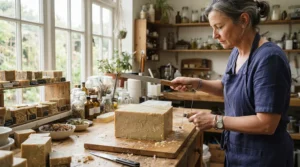
Regional soap-making methods diverge more than the finished bars suggest. Traditional Aleppo soap is made by the hot process, per Wikipedia, while modern versions are often cold process and may include herbs or essential oils. Olive and laurel oils are cooked in a cauldron, poured out, cut into blocks and stamped. The blocks are stacked in towers to dry. One producer says Aleppo uses highly mineralized water, which may subtly affect the character of the bar.
Marseille uses a defined five-step sequence: pasting (saponification), release, cooking, washing and liquidation. In the release step, brine pulls excess soda out of the soap. Repeated washes remove glycerol and impurities, leaving only trace glycerin in the finished cube. According to a French trade source, the whole sequence takes around a week to ten days. One retailer puts the cauldron temperature at 120 °C (about 248 °F).
Think of it this way. Marseille is a refining relay race where each step strips something away. Aleppo is closer to cook, shape, then wait. That difference in philosophy explains why Marseille bars are ready sooner, and why Aleppo bars feel denser and slower to wear down.
Curing Time Differences
Curing time differences are the single most practical gap between the two soaps. Aleppo bars spend six to nine months drying, according to Syrian Heritage, and the Tadé and Alépia listings quote nine months. During that time the exterior turns golden while the core stays green. The Najel listing says about 30% of the water leaves in the first nine months.
Marseille is faster. After roughly ten days in the cauldron, the soap is poured into frames, cut and stamped. It then dries for weeks, with one retailer putting the total at about a month before sale. Fer à Cheval notes on its cube listing that older Marseille soap becomes more concentrated and effective.
What does this mean in a Canadian bathroom? An under-aged Aleppo bar will feel softer and wear down faster. Winter’s dry indoor air will help a cube harden further, while a humid summer apartment can leave it sweating. Cut a corner off an Aleppo bar if you can and look for a green interior. Keep any spare cubes on an open shelf, not wrapped in plastic, so they keep curing.
Heritage Olive Oil Soap Comparison: Versus Everyday Alternatives
This heritage olive oil soap comparison widens the lens beyond the two traditions. How do they stack up against the bars and washes sitting in most Canadian bathrooms?
| Option | Base | Ingredient list | Scent | Best For |
|---|---|---|---|---|
| Aleppo bar (Tadé 20%) | Olive + laurel soap | 4 names | Herbal | Sensitive-feeling skin routines |
| Marseille cube (Fer à Cheval) | Olive-led soap | 4–5 names | Mild, briny | Laundry, hands, household |
| Detergent beauty bar | Synthetic surfactants | Typically longer | Often fragranced | Convenience |
| Body wash | Surfactants + additives | Typically longer | Often fragranced | Quick showers |
Both heritage bars win on simplicity: short ingredient lists, biodegradable soap chemistry and little packaging. Be careful with one marketing claim, though. Sellers often call these “pH neutral,” but true soaps are typically alkaline, often around pH 9–10, which can feel drying on already-dry skin. The loser is lather and convenience. If you want fast foam and a squeeze bottle, the everyday alternatives still win. If you want fewer ingredients and a bar that doubles as a stain remover, heritage soap earns its shelf space.
How to Choose Between Aleppo Soap vs Marseille Soap
- Decide the job first. Face and body favours Aleppo. Laundry, dishes and stains favour Marseille.
- Pick your laurel level. Start at 12–20% if you’re new. Go to 30–40% only once you know you like the scent.
- Read the INCI list. Sodium olivate plus sodium laurate is Aleppo. Sodium cocoate or sodium palmate tells you coconut or palm is in the mix.
- Check the stamp and origin. Marseille has no legal protection, so look for cauldron-cooked, Marseille-region production and a visible oil percentage.
- Match the format. Big cubes suit households. Small bars suit travel and trial.
- Be skeptical of miracle claims. Soap that “cures” a skin condition is making a drug-style claim. See a professional instead.
Features That Actually Matter (And Those That Don’t)
What matters: ingredient transparency, maturing time, and fragrance-free production. A short INCI list and a clear laurel or oil percentage tell you far more than a label full of adjectives. Cure time matters too, because it affects hardness and how fast the bar wears away.
What doesn’t: “pH neutral” slogans, vague “doctor-recommended” blurbs and romantic origin stories on their own. Colour is another red herring. A golden Aleppo exterior is a sign of ageing, not quality in itself, and Marseille cubes can shift colour with light and humidity without any harm. Even the bar shape is mostly aesthetic, apart from the practical point that a cube is easier to hold in a kitchen and a smaller bar is easier to pack.
Long-Term Cost & Value
As a rough illustration, not a measurement, consider the cost logic. A 300 g Marseille cube in the C$10–C$18 range delivers a lot of soap per dollar, especially if it’s doing double duty as laundry stain remover and hand soap. A 190–200 g Aleppo bar in the C$12–C$25 range costs more per gram, but you may be using it as a face-and-body cleanser, replacing two products at once.
Value also depends on storage. Bars sitting in puddles dissolve quickly, regardless of tradition. A draining dish can stretch a bar’s life considerably. Buying a larger Marseille cube and slicing it into pieces is a common budget move, while buying one high-laurel Aleppo bar as a treat is the other end of the spectrum. Prices may vary, so check current pricing before comparing per-gram value.
Practical Usage Guide: Your First 30 Days
Start with a patch test on your inner forearm before using either soap on your face. Store bars on a draining dish so they dry between uses. For Aleppo bars, use a sisal glove or cleansing mitt to build lather, as the low-foam character is normal.
In Canada’s hard-water cities, soap can leave a film. A diluted vinegar rinse after hair washing is a common fix, and one retailer notes an acidic rinse may be needed depending on water hardness. Don’t expect shampoo-style foam.
For Marseille cubes, rub a dry stain with a moistened bar before washing, a use the Canadian Marseille soap importer recommends. Shave a little soap into hot water for a degreasing cleaner. Common first-month mistakes: leaving bars in standing water, starting with a 40% laurel bar, and expecting bubbles. If your skin feels tight, cut back to every second day.
Real-World Scenarios: Who Should Buy What
The Toronto renter with dry winter skin. Budget is tight, the building has hard water and radiators dry the air. Tadé 20% or Najel 12% keeps laurel modest and gives a face-and-body bar. Pair it with moisturizer.
The Vancouver family of four. Hands, school-uniform stains and kitchen duty all in one. Fer à Cheval or Marius Fabre covers it, with the coconut in the latter helping lather at the sink. Check the pack’s INCI if you want olive-only.
The heritage-minded gift buyer. A premium present with a story calls for Alépia 40% or a Marius Fabre cube. The first suits herbal-scent lovers and the second suits people who value Provençal provenance.
The reasoning here comes from specs and reviewer themes, not personal testing.
Canadian Rules, Labels and Shopping Smarts
In Canada, Health Canada regulates cosmetics, and Health Canada does not approve cosmetics before sale. Manufacturers and importers must notify the department within 10 days of first sale. Cleansers like soap fall in this world, so look for an INCI ingredient list and bilingual English and French labelling on products sold here.
One practical consequence: be wary of any listing claiming a soap treats eczema, acne or infection. Drug-style claims push a product outside the cosmetic rules. As a shopper, favour listings with clear ingredient lists, a stated oil percentage and a credible producer. If a cube arrives without readable INCI information, contact the seller, since you’re entitled to know what’s in it.
FAQ
❓ Can I use Aleppo soap on my face?
❓ Is Marseille soap safe for laundry and stains?
❓ Why doesn't my Aleppo soap lather much?
❓ How should I store Aleppo soap and Marseille soap?
❓ Which is better for sensitive skin, Aleppo soap vs Marseille soap?
Conclusion
So, where does Aleppo soap vs Marseille soap land? If you want a slow-aged, laurel-scented bar for face and body, start with Tadé 20% and move up to Alépia 40% only if you love the scent. If you want a hardworking cube for laundry, hands and the kitchen sink, Fer à Cheval is the benchmark and Marius Fabre the lather-friendlier alternative. Najel 12% is the cheap trial, Pré de Provence is the budget cube to verify before you trust, and Alépia Pure Olive is the oddball bridge between traditions.
The deeper lesson is that the label matters less than the INCI list, the stated oil percentage and the producer’s method. Neither soap is magic, and neither is a medical treatment. Both are old, simple, honest ways to get clean, which in 2026 feels almost radical.
Recommended for You
- Marseille Soap Vs Castile Soap: 7 Best Picks In Canada 2026
- Aleppo Soap Laurel Oil: 7 Best Bars For Canadians In 2026
- Olive Oil Soap For Eczema: 7 Honest Picks (2026)
Disclaimer: This article contains affiliate links. As an Amazon Associate, I earn from qualifying purchases. If you purchase products through these links, we may earn a small commission at no additional cost to you.
✨ Found this helpful? Share it with your friends! 💬🤗
