In This Article
Here’s the awkward truth most “natural eczema soap” roundups skip: the science on olive oil and compromised skin is messy. Olive oil soap for eczema gets passed around like a family recipe, yet the best-known study on olive oil and the skin barrier found trouble, not magic. That doesn’t make every bar a bad idea. It does mean you should choose one carefully, not on faith.
This guide is for Canadian shoppers who still want olive oil soap for eczema and want to do it sensibly. We’ll look at what the research says and which seven bars are worth a look in 2026. Some are pure olive, some are blends, and one is a coconut-based bar included for contrast. You’ll also learn how to use a castile bar without turning shower time into a flare-up factory.
Two phrases deserve scrutiny along the way. “Dermatologist-friendly olive oil soap” appears on plenty of labels, so we’ll test what it can and can’t promise. And if you’re hunting for an eczema-safe castile bar, you’ll see why “safe” is a slippery word when your skin barrier is already struggling.
A quick note on method. I haven’t used these bars on my own skin, and I won’t pretend otherwise. I’ve read the ingredient lists, the dermatology guidance and the review sentiment that genuinely exists, then reasoned through what it means for you. Where evidence is thin, I’ll say so. Prices appear as CAD ranges because they move faster than a prairie forecast.
Quick Comparison: Olive Oil Soap for Eczema at a Glance
| Product | Base oils | Scent | Price range (CAD) | Best For |
|---|---|---|---|---|
| Conti Castile Olive Oil Soap | Virgin olive oil (per brand) | Check label | C$15-C$30 (multipack) | Single-oil purists |
| Nabulsi “The Olive” | Olive oil | None stated | C$10-C$20 | Traditional, fragrance-free minimalists |
| Cozy Aleppo Soap (10% Laurel) | Olive 90%, laurel 10% | Natural, none added | C$10-C$25 | Those curious about Aleppo-style bars |
| House of TL Castile Bar | Extra virgin olive oil | Essential oils | C$17-C$20 | Canadian small-batch fans (patch test first) |
| Nanimonai Castile Bar | Olive, coconut, avocado, castor | No synthetic fragrance | C$8-C$12 | Creamier lather, Made in Canada |
| Dr. Bronner’s Baby Unscented | Coconut, palm, olive, hemp, jojoba | Unscented | C$7-C$9 | Easiest to find, lowest cost |
| Kirk’s Original Coco Castile | Coconut oil (no olive) | Fragranced | Under C$30 (multipack) | Contrast pick, not a first choice |
The table shows a pattern that matters more than any single product. The more olive oil a bar contains, the lower and silkier the lather, and the shorter and simpler the ingredient list. Dr. Bronner’s Baby Unscented and Nanimonai Castile Bar trade some olive purity for foam, while Kirk’s Original Coco Castile drops olive entirely and adds fragrance. For eczema-prone skin, unscented and simple generally beats fancy.
💬 Just one click — help others make better buying decisions too!😊
Top 7 Olive Oil Soap for Eczema Picks: Expert Analysis
1. Conti Castile Olive Oil Soap — the purest single-oil bar here
Conti Castile Olive Oil Soap is the closest thing on this list to the textbook idea of castile. The brand describes it as 100% virgin olive oil, sold as 4 oz (about 113 g) bars, often in three-packs, and aimed at sensitive skin. A single-oil bar is essentially sodium olivate, which gives a mild, low, silky lather instead of the squeaky foam coconut-heavy soaps produce. Low foam isn’t weakness. Gentler surfactant action usually means less stripping, although it can feel slimy in hard water.
My honest take: this suits someone who wants the shortest ingredient list possible so any reaction is easy to trace. Skip it during an angry, cracked flare. The brand also credits olive’s oleocanthal with anti-inflammatory benefits, but after saponification and a quick rinse-off wash, I’d treat that as marketing, not treatment.
Review sentiment: I couldn’t verify a large independent pool of Canadian reviews. Treat “extremely gentle” as a manufacturer claim until you read current Amazon.ca feedback.
Pros:
- ✅ Single-oil formula makes patch testing straightforward
- ✅ Low, silky lather avoids harsh-feeling foam
- ✅ Multipacks spread the cost over months
Cons:
- ❌ Can feel slimy and underperform in hard water
- ❌ Independent review evidence is thin
Price: roughly C$15-C$30 for a multipack at the time of research; fair value if it passes your patch test.
2. Nabulsi “The Olive” — old-world, additive-free tradition
Nabulsi “The Olive” comes from the Nablus soap tradition, which the distributor says is the ancestor of Western castile. It’s described as pure olive oil with no fragrance or additives, made from organic, halal-certified ingredients, and the distributor says the factory has cut bars since 1611. That’s marketing history, but the formula itself is a genuine point: nothing here except saponified olive oil, which removes fragrance and colourants from your list of suspects.
What this means in practice: traditionally cured bars tend to be harder and longer-lasting, so one bar may outlast several softer supermarket ones. The trade-off is a light lather that surprises people used to bubbles. For eczema, that’s mostly a feature. Foam isn’t cleaning power, and chasing it often means harsher surfactants.
Review sentiment: I couldn’t find a verified, aggregated review pool I’d trust, and Amazon.ca availability for imported Nabulsi bars tends to shift between sellers. Check the current listing and the seller before ordering.
Pros:
- ✅ No added fragrance or colourants
- ✅ Hard, slow-wearing bar lasts a long time
- ✅ Simple formula is easy to patch test
Cons:
- ❌ Light lather feels odd to bubble lovers
- ❌ Availability and sellers vary on Amazon.ca
Price: around C$10-C$20 per bar; good value if the bar lasts as long as traditional cures suggest.
3. Cozy Aleppo Soap (10% Laurel) — the gentlest laurel ratio
Cozy Aleppo Soap (10% Laurel) is a 200 g bar made from 90% olive oil and 10% laurel oil, and the seller positions it for sensitive, dry skin. Aleppo bars come in ratios up to 60% laurel, and the brand’s other versions are pitched as more clarifying. The 10% bar sits at the mild end of that spectrum, so it behaves much like a pure olive bar with a bit of botanical character.
My analysis: laurel oil is a plant oil, and plant oils can sensitise some people. If your eczema is allergic in nature, the extra ingredient is one more variable. That doesn’t make it unsafe, just worth a 48-hour patch test on a small area, which is standard advice from eczema resources.
Review sentiment: the tracker data I saw suggested a recent listing, so the review history is probably thin. When I checked, the listing also showed as out of stock. Confirm availability before you plan your routine around it.
Pros:
- ✅ Low laurel share keeps it close to pure olive
- ✅ Generous 200 g size lasts for weeks
- ✅ No synthetic fragrance listed
Cons:
- ❌ Laurel oil adds one more potential irritant
- ❌ Thin review history and spotty stock
Price: roughly C$10-C$25 per bar depending on seller; good value only if it stays in stock.
4. House of TL Castile Bar — Canadian small-batch, with a scent catch
House of TL Castile Bar is made in small batches in Uxbridge, Ontario, from extra virgin olive oil, distilled water, lye and sodium lactate, plus essential-oil fragrance. It comes in lavender, winter rose and lemongrass blends, in bars of about 105-135 g. Buying Canadian is a genuine perk, and the short ingredient list is attractive.
Here’s the catch. The scenting is the single biggest red flag for eczema-prone skin. Essential oils are among the most common contact allergens, so I’d be cautious unless an unscented version is available when you shop. The brand’s own directions suggest using a body buff for more lather, and I’d skip that. Scrubbing is exactly what dermatology guidance says to avoid.
Review sentiment: the retailer pages I checked showed no usable review pool, so there’s nothing reliable to aggregate. Wait for real user feedback before treating this as proven.
Pros:
- ✅ Made in Ontario in small batches
- ✅ Four-ingredient base with no synthetic fragrance
- ✅ Rich extra virgin olive oil content
Cons:
- ❌ Essential-oil scenting is a risk for eczema
- ❌ Premium price for a smallish bar
Price: around C$17-C$20 per bar; a premium for a scented bar, so it’s only worth it if you tolerate fragrance.
5. Nanimonai Castile Bar — olive-led blend that actually lathers
Nanimonai Castile Bar is a handmade Canadian bar built on olive oil, with coconut, avocado and castor oils added. The listing shows ingredients as sodium olivate, sodium cocoate, sodium avocadoate and sodium castorate, with no synthetic fragrance or dyes. The bar weighs about 140 g and is described as suitable for face and body.
Why that matters: coconut and castor are what give this bar a creamier, more familiar lather than a pure olive bar. The flip side is that coconut-derived soap tends to be more degreasing, which is the very thing eczema skin doesn’t need in bulk. I’d call this a good middle path for people who find pure castile too slippery, but keep the use light and short.
Review sentiment: all I found was a wholesale listing, so there’s no verified consumer review pool to report. I also couldn’t confirm live Amazon.ca stock, so verify that before you plan around it.
Pros:
- ✅ Made in Canada with a short, clear ingredient list
- ✅ Better lather than single-oil bars
- ✅ No synthetic fragrance or dyes
Cons:
- ❌ Coconut soap can be more stripping
- ❌ No verified consumer reviews or confirmed Amazon.ca stock
Price: around C$8-C$12 per bar; solid value if you can find it.
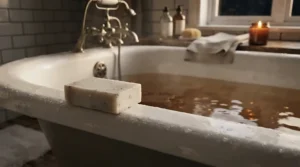
6. Dr. Bronner’s Baby Unscented — easiest to find, least “olive” of the group
Dr. Bronner’s Baby Unscented is a 140 g bar made from coconut oil, palm oil, olive oil, hemp seed oil and jojoba oil, with salt, citric acid and tocopherol. The label lists coconut and palm first, which means this is mostly a coconut-palm soap with olive as a supporting actor. The “double olive oil” line on the box is relative to the brand’s other bars, not to a true castile.
My take: it’s the most accessible bar here and the best-documented in Canadian retail, which counts for something. It’s also unscented, the single most important feature for eczema-prone skin. If your priority is a fragrance-free bar you can find easily, this is the pragmatic pick, even if purists won’t love it.
Review sentiment: on a Canadian retailer’s page, around seven reviewers averaged top marks. They describe a mild bar that lasts a long time, and one says it was the only soap that didn’t bring on redness or itching. That’s a tiny sample, so read it as encouraging, not conclusive.
Pros:
- ✅ Unscented formula with a short ingredient list
- ✅ Widely available and low in cost
- ✅ Reviewers report it lasts a long time
Cons:
- ❌ Mostly coconut and palm, not true castile
- ❌ Small review sample
Price: around C$7-C$9 per bar; the best value on the list.
7. Kirk’s Original Coco Castile — the non-olive control
Kirk’s Original Coco Castile earns its place as a comparison, not as a recommendation. It’s a coconut-oil “castile” with sodium cocoate, water, glycerin, salt, sodium gluconate and fragrance. There’s no olive oil in it, and that’s the point: it shows how loosely “castile” is used on retail shelves.
What the labels won’t tell you: the brand advertises the bar as hypoallergenic, clinically tested and pH balanced. I’d treat those as marketing claims. “Hypoallergenic” isn’t a guarantee, and soap is naturally alkaline, so a “pH balanced” tag deserves a raised eyebrow. The listed fragrance is the bigger problem for eczema-prone skin.
Review sentiment: reviewers on a major retailer’s page praise it as gentle and mention years of loyal use, including some with sensitive skin. That’s real sentiment, but it describes tolerance in general, not eczema outcomes.
Pros:
- ✅ Strong lather even in hard water
- ✅ Decades-old brand with loyal users
- ✅ Multipacks keep the cost low
Cons:
- ❌ Contains fragrance
- ❌ No olive oil, so it misses the keyword entirely
Price: multipacks generally land well under C$30; fine value, but not for eczema-prone skin unless you find an unscented version.
Side-by-Side: What’s Actually in the Bar
| Product | Olive oil role | Fragrance | Other flags | Review evidence |
|---|---|---|---|---|
| Conti Castile Olive Oil Soap | Main oil | Unclear | Marketing claims | Unverified |
| Nabulsi “The Olive” | Only oil | None stated | Import availability | Unverified |
| Cozy Aleppo Soap (10% Laurel) | 90% | None added | Laurel oil | Thin |
| House of TL Castile Bar | Only oil | Essential oils | Allergen risk | None found |
| Nanimonai Castile Bar | Lead oil | None synthetic | Coconut, castor | None found |
| Dr. Bronner’s Baby Unscented | Minor | None | Palm, coconut lead | Small sample |
| Kirk’s Original Coco Castile | None | Fragrance | Coconut only | Positive, general |
The table makes the risk-reward trade-off plain. Nabulsi “The Olive” and Conti Castile Olive Oil Soap give the cleanest ingredient lists but the least verified feedback, while Dr. Bronner’s Baby Unscented has the most review evidence despite being the least olive-heavy. If fragrance is your main worry, House of TL Castile Bar and Kirk’s Original Coco Castile are the two to approach cautiously.
✨ Ready to shop smarter?
🔍 Take your olive oil soap for eczema routine to the next level by comparing these bars side by side. Click any highlighted product to check current pricing and availability on Amazon.ca, then patch test before you commit to a full-body switch.
How to Use Olive Oil Soap for Eczema: A Step-by-Step Bath Routine
A good bar used badly will still sting. Here’s the routine that dermatology sources broadly agree on, adapted for castile soap.
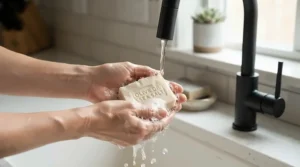
- Patch test first. Lather a small amount on one forearm patch, rinse, and wait 48 hours. No redness or itch means it’s probably safe to try more widely.
- Keep it lukewarm and short. Mayo Clinic’s guidance on bathing with atopic dermatitis recommends lukewarm water for 5 to 10 minutes. Hot water is a known flare trigger.
- Lather in your hands, not on a loofah. Skip scrubbing tools. Apply the foam gently to the areas that actually need cleaning, such as underarms, groin and feet, rather than every inch of skin.
- Rinse thoroughly. Soap residue is irritating on its own. Rinse longer than feels necessary.
- Pat, don’t rub. Leave skin slightly damp.
- Moisturize within minutes. Apply a thick cream or ointment right after you towel off to trap moisture.
The bar is just the first step. The moisturizer after the shower is doing the real barrier work, and a good bar can’t make up for skipping it.
Real-World Scenarios: Which Bar Fits Which Person?
These are illustrative profiles, not case reports.
The student with dry, patchy forearms. Living in a shared residence bathroom with unpredictable water temperature, this person wants a cheap, fragrance-free bar that’s easy to restock. Dr. Bronner’s Baby Unscented is the pragmatic fit: low cost, unscented and widely available. Budget under C$10, used once a day.
The Prairie retiree with hand eczema in winter. Hands get washed constantly, and dry indoor air makes everything worse. A pure bar like Nabulsi “The Olive” has the simplest formula, and a hard, long-lasting bar suits frequent hand washing. Pair it with moisturizer after every wash, as Eczema Society of Canada guidance emphasizes.
The Ontario parent exploring options for a toddler. Before using any soap on a young child’s eczema, ask a doctor, pharmacist or dermatologist. The infant skin-barrier research I found on olive oil involved leave-on oil, not a rinse-off bar, but it’s a reason to be cautious. If a clinician gives the go-ahead, an unscented bar like Dr. Bronner’s Baby Unscented is a reasonable candidate to ask about.
The common thread is that the right bar depends on frequency of use, climate and skin sensitivity, not on a single “best” label.
Problem → Solution: Fixing Common Olive Oil Soap Headaches
Problem: the soap feels slimy. That’s characteristic of high-olive bars, especially in hard water. Let the bar dry fully between uses and rinse longer. If it persists, a blend like Nanimonai Castile Bar may feel better.
Problem: skin feels tight after washing. All true soap is alkaline, and that can leave skin tight. Shorten the wash, cut back to soaping only where needed, and moisturize immediately. If tightness remains, a soap-free cleanser may suit you better.
Problem: the bar turns to mush. Constant moisture is the culprit. Use a draining soap dish and let it dry between uses. Harder, aged bars such as Nabulsi “The Olive” tend to wear more slowly.
Problem: a new bar triggers a rash. Stop using it, rinse well and moisturize. Retry only after your skin calms down, and talk to your doctor if the rash persists. Fragrance is the first suspect, so unscented bars are the safer retry.
What Is Olive Oil Soap for Eczema?
Olive oil soap for eczema is bar soap made from saponified olive oil, such as castile, Nabulsi or Aleppo styles, that people with eczema use as a body or hand cleanser. It is not a medical treatment. Evidence that it helps is limited, and dermatology guidance generally favours soap-free, fragrance-free cleansers.
Saponification is the chemical reaction between oil and lye that makes soap. Once it’s complete, the lye is gone and what remains is soap and glycerin, so you’re not washing with olive oil the way you’d rub it in as a leave-on product. That distinction matters: the olive oil studies on skin barrier damage used leave-on oil applied twice daily, not a rinse-off bar.
Atopic dermatitis is the most common form of eczema, according to the Eczema Society of Canada, and its core problem is a skin barrier that struggles to hold moisture. Anything that dries or irritates, including alkaline soap, can tip a stable stretch into a flare.
How to Choose Olive Oil Soap for Eczema
- Prioritize unscented. Fragrance and essential oils are common irritants, so unscented comes first.
- Read the full ingredient list. The shorter and clearer it is, the easier it is to trace a reaction.
- Check what “olive” really means. Words like “castile” are loosely used, and some bars contain no olive oil at all.
- Respect the lather. Low, silky foam is normal for olive-heavy bars. Big foam usually means more detergent power, which dries skin more.
- Patch test for 48 hours. It’s a simple habit that prevents most regrets.
- Consider bar size and hardness. Harder, larger bars last longer and cost less per wash.
- Match the bar to your water. Hard water can make castile feel slimy or leave residue.
None of these steps replace talking to a doctor, but they give you a sensible starting filter.
Olive Oil Soap for Eczema Flare-Ups: When to Use It and When to Stop
Olive oil soap for eczema flare-ups is where caution matters most. During a flare, the skin barrier is already open and inflamed, so even gentle soap can sting. My analysis, based on the guidance I reviewed, is that an active flare is the time to simplify, not experiment.
Dermatology guidance from the American Academy of Dermatology suggests using cleanser only when needed during bathing and choosing mild, fragrance-free products. That implies less soap, not more. If you do use a bar during a flare, apply it only to the areas that really need cleaning, keep contact brief and rinse thoroughly.
Stop using the bar and talk to a clinician if you notice increased redness, stinging, weeping, or signs of infection like yellow crusting or increasing pain and warmth. Infected eczema needs medical attention promptly, as the Eczema Society of Canada notes. Olive oil soap for eczema flare-ups can be a gentle part of a routine on calm days, but it isn’t a flare treatment.
Dermatologist-Friendly Olive Oil Soap: What the Claim Really Means
“Dermatologist-friendly olive oil soap” sounds reassuring, but the phrase is a marketing term. As far as I could verify, none of the seven bars here carries a named dermatologist endorsement tied to a published study. A recognizable signal is the Eczema Society of Canada’s Seal of Acceptance program at eczemahelp.ca, and I couldn’t confirm that any of these bars has earned it.
What dermatologists actually say is more specific. The American Academy of Allergy, Asthma & Immunology recommends soap-free, fragrance-free cleansers for eczema, and Canadian Dermatology Association guidance, as summarized by Familiprix, notes liquid cleansers are preferable to bars because they rub less and rinse easier. So a truly dermatologist-aligned choice often isn’t a bar at all.
On the regulatory side, a product that claims to treat eczema can fall under drug rules in Canada, which is one reason compliant labels stick to words like “gentle.” If a label promises to cure eczema, be sceptical. Dermatologist-friendly olive oil soap is a phrase to verify, not trust.
Eczema-Safe Castile Bar: A Realistic Checklist
An eczema-safe castile bar doesn’t exist as a guaranteed category. Safety depends on your skin, your triggers and how you use it. What you can do is stack the odds in your favour.
Look for these traits: unscented, no added colourants, a short ingredient list, a mild lather and a hard, long-lasting bar. Avoid bars with essential oils, botanical extras you haven’t tested, and exfoliating add-ins. Be wary of any listing that makes health claims.
Honest limits matter, too. Soap is alkaline, commonly cited around pH 9-10, and alkaline cleansing can impair skin barrier function by raising skin pH. That’s a property of soap itself, not of a particular brand. If you notice dryness despite a clean formula, an eczema-safe castile bar may simply not be the right category for you, and a pH-balanced liquid cleanser could be better.
Castile Bar vs Soap-Free Cleanser: Which Wins for Eczema?
| Option | pH tendency | Rinse ease | Evidence for eczema | Best For |
|---|---|---|---|---|
| Castile bar | Alkaline | Moderate | Limited | People who tolerate bars and prefer simple ingredients |
| Soap-free liquid cleanser | Closer to skin | Easy | Stronger guidance support | Active flares, very dry skin |
| Plain lukewarm water | Neutral | Easy | Good | Mild days, short rinses |
Dermatology guidance leans toward soap-free cleansers, and a Canadian Family Physician review adds nuance: a trial that washed one side of the body with soap and the other with water found no clear difference in eczema outcomes. In other words, the evidence doesn’t prove soap is dangerous or that cleansers are dramatically better.
My reading is that a castile bar is a reasonable option for stable skin, but a soap-free cleanser is the safer default during flares. The review on atopic dermatitis and bathing also notes that frequent bathing followed by moisturizer helped more patients than infrequent bathing, so the routine matters as much as the product.
Common Mistakes When Buying Olive Oil Soap for Eczema
Assuming “natural” means safe. The Danby research was explicit that the belief that all natural oils help skin is unfounded. A plant-based label tells you nothing about irritation.
Ignoring fragrance. A lovely lavender scent is a trade-off, not a feature, for eczema-prone skin.
Judging by lather. Foam feels like cleaning, but in soap it often signals harsher detergent action.
Skipping the patch test. It takes two days and prevents a week of regret.
Using the bar like a scrub. Loofahs, buffs and vigorous rubbing undo any benefit of a gentle formula.
Forgetting moisturizer. The soap isn’t your treatment. The cream you apply right after it is.
Long-Term Cost & Maintenance
Bar soap is usually cheaper per wash than liquid cleansers. As an illustrative estimate, a C$7-C$9 bar that lasts five to six weeks of daily use works out to roughly 15-25 cents a day. Harder, aged bars like Nabulsi “The Olive” may stretch further, while softer bars wear faster.
Maintenance is simple but matters. Keep the bar on a draining dish so it dries between uses, and store spares in a cool, dry spot. Replace a bar that cracks or develops an off smell. Remember too that cheaper isn’t always better for eczema-prone skin. A C$17-C$20 bar like House of TL Castile Bar costs more per wash, but only the fragrance-free options justify the premium for sensitive skin.
Lastly, consider the cost of a mistake. A bar that triggers a flare costs you extra moisturizer, more medication and possibly a doctor’s visit, so a slightly pricier, simpler formula can be the better long-term value. If your eczema is persistent, the Eczema Society of Canada offers Canadian guidance on building a routine that goes beyond soap.
Frequently Asked Questions
❓ Can I use olive oil soap on baby eczema?
❓ Is castile soap better than regular bar soap for dry skin?
❓ How often should I wash with olive oil soap if I have eczema?
❓ Does olive oil soap help with eczema itch?
❓ Where can I buy olive oil soap for eczema in Canada?
Conclusion
So, is olive oil soap for eczema a good idea? Sometimes, with caveats. The research on olive oil and the skin barrier is a real reason for caution, though it studied leave-on oil, not rinse-off soap. Dermatology guidance leans toward soap-free, fragrance-free cleansers, and none of the seven bars here has a verified dermatologist endorsement.
If you want a bar anyway, the sensible path is clear. Pick unscented and simple, which points to Nabulsi “The Olive”, Conti Castile Olive Oil Soap or Dr. Bronner’s Baby Unscented as the most defensible starting points. Be careful with fragrance in House of TL Castile Bar and Kirk’s Original Coco Castile. Keep washes lukewarm and brief, patch test for 48 hours, and moisturize right after. If a flare shows up, stop and speak to a clinician.
The best eczema-safe castile bar is the one your own skin tolerates, and only careful testing will tell you that.
✨ Ready to put this into practice?
Compare the seven bars above, click the highlighted product names to check current pricing and availability on Amazon.ca, and start with a patch test. Your skin barrier will thank you. 💛
Recommended for You
- Pure Castile Soap For Face: 7 Best Gentle Bars (2026)
- Castile Soap Vs Regular Soap: 7 Best Picks
- Castile Soap For Sensitive Skin: 7 Best Bars In Canada (2026)
Disclaimer: This article contains affiliate links. As an Amazon Associate, I earn from qualifying purchases. If you purchase products through these links, we may earn a small commission at no additional cost to you.
✨ Found this helpful? Share it with your friends! 💬🤗
