In This Article
Here’s a strange little fact: the soap sitting in your shower right now has a paper trail. Somewhere behind that bar or bottle is a decision — made in a boardroom, not a bathroom — about whether an animal had to suffer so your skin could feel soft. That’s the whole, slightly uncomfortable premise behind the hunt for cruelty-free soap brands, and it turns out the hunt is messier than it should be. “Cruelty-free” isn’t a protected term in Canada the way “organic” is, which means the label on the front of the bottle and the truth behind the formula don’t always match.
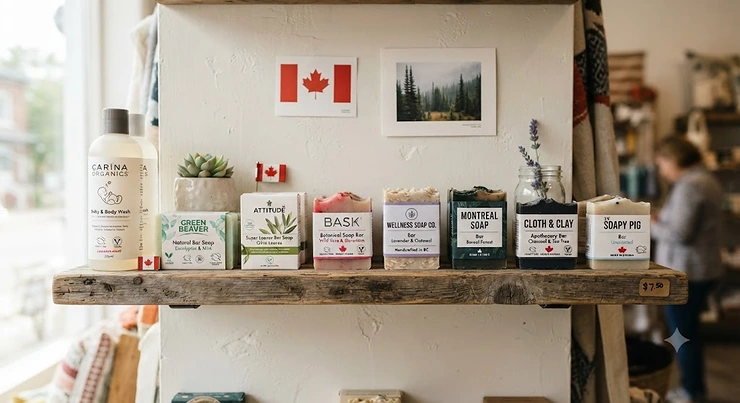
The good news is that Canada actually tightened the rules in a meaningful way. As of December 2023, cosmetic animal testing is federally prohibited under the Food and Drugs Act, and companies making “not tested on animals” claims now have to keep evidence to back it up. That’s a genuine regulatory shift, not marketing fluff — more on that later. For now, this guide walks through seven real, verifiably cruelty-free soap brands sold to Canadians, what actually separates a Leaping Bunny certified soap from one that just slaps a bunny sticker on the label, and how to shop this category without getting fooled. We’ll get into ethical sourcing, brand transparency red flags, and the everyday logistics of switching your bathroom over — no invented reviews, no fabricated five-star raves, just what the research and the aggregated sentiment actually show.
Quick Comparison Table
| Brand | Best For | Price Range (CAD) | Certification Signal |
|---|---|---|---|
| Dr. Bronner’s | All-purpose budget pick | C$4–C$10/bar | Leaping Bunny, Fair Trade |
| ATTITUDE | Canadian-made, EWG Verified | C$5–C$12 | EWG Verified, cruelty-free claim |
| Alaffia | Fair-trade social impact | C$10–C$18 | Vegan, cruelty-free claim |
| Rocky Mountain Soap Co. | Handmade Canadian luxury | C$8–C$14/bar | PETA-listed cruelty-free |
| Kirk’s Castile | Sensitive skin, budget multipacks | C$14–C$26 | Leaping Bunny, Non-GMO Verified |
| Crate 61 Organics | Canadian small-batch scent variety | C$13–C$20 | Cruelty-free, ISO 9001 facility |
| South of France (SoF) | Triple-milled, gift-worthy | C$12–C$22 | Vegan, cruelty-free, Non-GMO |
Looking at the spread above, you’ll notice something: three of these seven — ATTITUDE, Rocky Mountain Soap Co., and Crate 61 Organics — are actually made in Canada, which matters if supply-chain transparency is part of your ethical calculus. The price bands overlap more than you’d expect, too; a Leaping Bunny certified soap from Kirk’s Castile can cost less per bar than a drugstore bar soap that isn’t cruelty-free at all, which quietly demolishes the assumption that ethical shopping always means a premium.
💬 Just one click — help others make better buying decisions too!😊
Top 7 Cruelty-Free Soap Brands: Expert Analysis
Picking seven brands out of a category this crowded meant applying a filter: real, currently available product, a documented cruelty-free position (not just a vibe), and enough variety in price and format that this list actually works for different households. Here’s what came out the other side.
1. Dr. Bronner’s Pure-Castile Bar Soap — the fair-trade workhorse everyone eventually tries
If cruelty-free shopping had a gateway brand, it would probably be this one — the peppermint bar shows up in more medicine cabinets than almost any other “clean” soap on the market. The bars are made with organic, Fair Trade-certified oils (coconut, olive, hemp) and skip synthetic foaming agents entirely, which is why the lather feels thinner than a drugstore bar — that’s the soap doing exactly what it’s supposed to, not underperforming. Based on the ingredient sourcing, this is a brand built for people who want maximum transparency: every oil is traceable, and the company has published its supply chain commitments for years rather than treating them as a recent marketing pivot.
Reviewers consistently report that the bars run out faster than expected because a little goes a long way in the lather department, and a recurring theme in aggregated feedback is that the unscented “Baby Mild” variant works well for eczema-prone skin, while the peppermint can feel intense on the face for first-timers. What most buyers overlook is that this is genuinely an 18-in-1 product — the same bar doubles as a shave soap and a light household cleaner, which changes the math on value considerably.
Pros:
- ✅ Fair Trade organic oils with full ingredient transparency
- ✅ Multi-use — face, body, hair, light cleaning
- ✅ Widely available across Canadian retailers and pharmacies
Cons:
- ❌ Thin lather compared to sulfate-based bars
- ❌ Strong essential oil scents can irritate sensitive facial skin
Expect to pay in the C$4–C$10 range for a single bar depending on size, with better per-unit value on multipacks — a fair trade for a brand this well-documented.
2. ATTITUDE — best Canadian-made pick with third-party clean verification
ATTITUDE is a Montreal-founded company, and that’s not incidental — it’s one of the few brands on this list where “Made in Canada” appears directly on the packaging rather than being something you have to dig for. What makes the brand stand apart on paper is the EWG Verified mark, a third-party seal from the Environmental Working Group that audits the full ingredient list against a strict health-and-safety standard, not just a self-declared “natural” claim. On the spec sheet, that translates into formulas built on plant- and mineral-based surfactants rather than SLS or SLES, with roughly 98% natural-origin ingredients depending on the product line.
Aggregated review sentiment across their hand soap and body wash lines points to two consistent themes: people appreciate the scent range (Earl Grey and cucumber shows up often as a favourite) and the refill/bulk formats that cut down on plastic. A less-discussed advantage: because ATTITUDE manufactures domestically, shipping distances — and the associated carbon footprint — are shorter than for soap imported from Europe or the U.S., something worth weighing if environmental impact is part of your ethical checklist alongside animal welfare.
Pros:
- ✅ Made in Canada with EWG Verified clean-ingredient audit
- ✅ Refill and bulk formats reduce plastic waste
- ✅ Wide scent range including sensitive-skin unscented options
Cons:
- ❌ Liquid/foaming formats generate more packaging than bar soap
- ❌ Some scents rely on fragrance blends that aren’t fully disclosed by name
Price sits around C$5–C$12 for standard bottles, with bulk refill sizes offering noticeably better cost-per-wash.
3. Alaffia — fair-trade shea butter soap with a direct social mission
Alaffia‘s black soap line stands out because the ethical story isn’t limited to “no animal testing” — it extends into who profits from the ingredients. The shea butter is sourced through women-led cooperatives in Togo under a fair-trade model, and the company frames its entire business around community reinvestment rather than treating fair trade as a footnote. On the formulation side, the soap is built on raw, unrefined shea butter and West African palm oil, which explains the earthy, slightly smoky natural scent of the unscented version — that’s the raw ingredients talking, not a fragrance house.
A common thread in aggregated customer feedback is that the black soap works well for acne-prone and sensitive skin, since it’s sulfate-free, though a recurring caution is that it can strip color from dyed hair with regular use, so it’s better suited to body and face than as a daily shampoo for color-treated hair. Based on the spec comparison with other African black soap brands, Alaffia’s is on the gentler end because it skips added synthetic fragrance almost entirely.
Pros:
- ✅ Fair-trade shea butter sourced from women-led cooperatives
- ✅ Sulfate-free, suitable for sensitive and acne-prone skin
- ✅ Transparent social-impact model tied to community reinvestment
Cons:
- ❌ Can fade color-treated hair with frequent use
- ❌ Availability is more limited than mass-market brands
Expect roughly C$10–C$18 depending on format, which lands mid-pack for a soap with this much documented supply-chain accountability.
4. Rocky Mountain Soap Co. — handmade Canadian luxury from the Rockies
Started in Banff in 1995, Rocky Mountain Soap Co. occupies a different lane from the others here — it’s the closest thing on this list to an artisanal, small-batch product, still handmade in Canmore. The bars are “superfatted,” a soapmaking term meaning extra unsaponified oil is deliberately left in the batch to moisturize skin during the wash, and each bar cures for six to eight weeks before it’s sold — a slower, more deliberate process than mass-production castile soap. PETA’s cruelty-free directory lists the company as verified, confirming that neither the brand nor its suppliers test on animals or finished products.
What most buyers overlook is that not every product in the Rocky Mountain lineup is vegan — some bars include goat’s milk or beeswax — so vegan shoppers need to check individual labels rather than assuming the whole catalogue qualifies, even though the whole line is cruelty-free. Aggregated feedback from customers who’ve shopped in the flagship Banff and Canmore stores consistently praises the in-store experience and scent variety, though the brand’s retail footprint outside Alberta remains smaller than its Amazon presence would suggest.
Pros:
- ✅ Handmade in Canada with a slow six-to-eight-week cure process
- ✅ PETA-verified cruelty-free, sourced from fair-trade shea and coconut oil
- ✅ Superfatted formula leaves extra moisturizing oil in every bar
Cons:
- ❌ Not every product in the line is vegan (some contain goat’s milk or honey)
- ❌ Premium pricing relative to mass-market castile soap
Bars typically run C$8–C$14 each, which is a fair premium for a genuinely small-batch, domestically handmade product.
5. Kirk’s Castile — the Leaping Bunny certified budget multipack
Kirk’s Castile has been making coconut oil soap since 1839, which makes it one of the older names in this category, though the modern, woman-owned iteration of the company has leaned hard into third-party verification. It’s Leaping Bunny certified — meaning it’s passed the Coalition for Consumer Information on Cosmetics’ full supply-chain audit, not just a self-reported claim — and it also carries Non-GMO Project Verification. On paper, the formula is about as simple as castile soap gets: coconut oil, water, glycerin, and coconut soap, with a fragrance-free version aimed squarely at sensitive skin.
Reviewers consistently note that Kirk’s works equally well in hard water, which isn’t true of every natural soap (some traditional bars leave a chalky film in hard-water regions, a common Canadian complaint outside major cities). A recurring theme in feedback is that the bars run smaller per-unit than they first appear, so the value case depends heavily on buying the larger multipacks rather than single bars. This is the brand to reach for if third-party certification matters more to you than scent variety or artisanal packaging.
Pros:
- ✅ Leaping Bunny certified with full supply-chain audit history
- ✅ Performs well in hard water, unlike some natural bar soaps
- ✅ Fragrance-free option ideal for sensitive skin and children
Cons:
- ❌ Individual bars are smaller than the price initially suggests
- ❌ Limited scent range compared to boutique competitors
A multipack typically lands in the C$14–C$26 range, which works out to some of the lowest per-bar costs on this list.
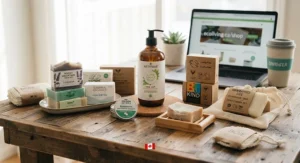
6. Crate 61 Organics — small-batch Canadian variety, 15+ scents deep
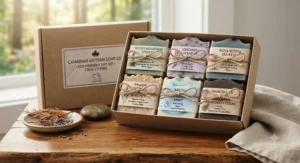
Crate 61 has been hand-crafting cold-process soap in Canada since 2013, and the standout feature here is sheer scent range — north of fifteen options, from cedarwood pine to ginger cardamom, all colored using clays and botanical extracts instead of synthetic dyes. The base formula leans on olive, coconut, and avocado oils with shea butter and kaolin clay, and the company manufactures out of an ISO 9001:2015-certified facility, a quality-management credential that’s more commonly seen in industrial manufacturing than boutique soap — a small but real signal of process discipline.
Based on the ingredient list, this is a genuinely “never synthetic” formula: no phthalates, parabens, sulfates, silicones, micas, or synthetic dyes across the line. Aggregated customer sentiment frequently highlights the variety pack as a good way to sample scents before committing to a favourite, and the recycled kraft paperboard packaging gets mentioned often as a low-waste plus. What the spec sheet won’t tell you, but the packaging philosophy suggests, is that this brand is optimized for gifting — the presentation and scent storytelling are built for that use case as much as for daily bathroom rotation.
Pros:
- ✅ 15+ scent options, colored only with natural clays and botanicals
- ✅ ISO 9001:2015-certified manufacturing facility in Canada
- ✅ Zero synthetic dyes, phthalates, parabens, or silicones
Cons:
- ❌ Cold-process bars can vary slightly batch to batch
- ❌ Priced above mass-market castile soap per bar
A three-bar pack generally runs C$13–C$20, positioning it as an accessible mid-range Canadian option.
7. South of France (SoF) — triple-milled soap for a hotel-spa feel at home
South of France, rebranded simply as SoF on newer packaging, makes triple-milled bar soap — a French soapmaking process where the soap base is repeatedly compressed and milled to remove excess water, producing a denser bar that lasts longer and lathers more like a bath-and-body-shop product than a natural-foods-store one. The line is certified vegan, cruelty-free, and Non-GMO Project Verified, and it’s built around organic, Fair Trade Certified shea butter plus coconut oil, with scent profiles (wild rose, blooming jasmine, sweet almond) that read more “boutique gift set” than “eco pharmacy.”
Here’s what the triple-milling process means in practice: because there’s less water content than a standard cold-process bar, the soap resists turning to mush in a wet shower dish, which is a legitimate durability advantage reviewers mention often. A recurring theme in aggregated feedback is that the scent throw is noticeably stronger than most natural bars — a plus for people who miss the fragrance intensity of conventional drugstore soap, though it’s worth a patch test if you’re sensitive to added fragrance oils, since triple-milled bars generally use more of it than simpler castile formulas.
Pros:
- ✅ Triple-milled process resists melting away in the shower
- ✅ Certified vegan, cruelty-free, and Non-GMO Project Verified
- ✅ Fair Trade Certified organic shea butter in every bar
Cons:
- ❌ Stronger fragrance load than simpler castile-style soaps
- ❌ Less “raw ingredient” transparency than smaller artisanal brands
Multipacks typically fall in the C$12–C$22 range, making this a reasonable premium pick for gifting or a spa-style bathroom upgrade.
Practical Usage Guide: Switching Your Bathroom Over
Swapping to cruelty-free soap brands is less about willpower and more about logistics — here’s how to do it without wasting product or money in the first thirty days.
Start with a travel-size or single-bar purchase before committing to a multipack. Natural bar soaps vary enormously in scent strength and lather, and what reads as “gentle” on a spec sheet can still feel unfamiliar the first time you use it. Buying a single Dr. Bronner’s bar or a three-pack from Crate 61 Organics before scaling up avoids a cupboard full of soap you don’t love.
Store bar soap on a draining dish, angled if possible. Natural bars without synthetic hardening agents soften faster in standing water than mass-market soap does — a soap dish that lets water run off between uses can meaningfully extend how long a bar lasts, sometimes by weeks.
Expect an adjustment period for your skin, not just your nose. Sulfate-based commercial soap strips oils aggressively, and skin that’s used to that can feel “off” — slightly tight or less foamy-clean — for the first week or two on a castile-style formula. That’s not a sign the soap isn’t working; it’s usually a sign your skin’s natural oil balance is recalibrating.
Keep receipts and product photos if you’re testing several brands. Amazon.ca’s return policies vary by seller, and having documentation makes it easier to send back a scent or formula that genuinely doesn’t work for your skin.
Real-World Scenarios: Which Brand Actually Fits Your Life
The budget-conscious student in a shared apartment doesn’t need boutique scent complexity — they need something that lasts, works in whatever water hardness their building has, and doesn’t blow a grocery budget. Kirk’s Castile or a multipack of Dr. Bronner’s solves this cleanly; both scale down to a low per-wash cost and neither requires special storage.
The new parent building a gentler household is usually optimizing for sensitivity over scent. Alaffia’s unscented black soap or Kirk’s fragrance-free bar are the more defensible picks here, since both skip synthetic fragrance almost entirely and have a track record with acne-prone and reactive skin, based on aggregated review themes.
The gift-giver or self-care enthusiast wants something that photographs well and smells like a spa, not a health food store. South of France‘s triple-milled bars and Crate 61‘s scent variety packs are built for exactly this — both come in presentation-friendly formats that don’t scream “eco-conscious substitute.”
The environmentally-minded shopper prioritizing domestic supply chains should lean toward ATTITUDE, Rocky Mountain Soap Co., or Crate 61 Organics — all three manufacture in Canada, which shortens shipping distances and makes supply-chain verification more straightforward than tracing an import from overseas.
How to Choose Cruelty-Free Soap Brands
Shopping this category well comes down to running through the same handful of checks every time, regardless of which brand catches your eye on the shelf.
- Look for third-party certification, not just brand language. A “cruelty-free” claim printed on a label is not the same as Leaping Bunny certified soap, which requires an actual supply-chain audit. PETA’s database is a second, independent way to cross-check a brand’s claim.
- Check whether the claim is vegan, cruelty-free, or both. These aren’t interchangeable — a soap can be cruelty-free (no animal testing) while still containing animal-derived ingredients like goat’s milk or honey, as with parts of the Rocky Mountain Soap Co. lineup.
- Read the fine print on parent companies. Some smaller “ethical” soap lines are owned by parent companies that still test on animals elsewhere in their portfolio, which muddies the ethics even if the specific product line is compliant.
- Match the formula to your skin type before your ethics checklist. A perfectly cruelty-free soap that dries out sensitive skin isn’t a win if it sends you back to a conventional brand within a month.
- Factor in where it’s manufactured. Domestic Canadian production (ATTITUDE, Rocky Mountain Soap Co., Crate 61) shortens the supply chain and generally makes sourcing claims easier to verify.
- Compare price per wash, not price per bar. A denser triple-milled bar from South of France may cost more upfront but outlast two cheaper bars, changing the real-world math.
- Watch for vague sustainability language without specifics. “Eco-friendly” and “natural” have no legal definition in Canada; look for named certifications (EWG Verified, Non-GMO Project Verified, Fair Trade Certified) instead.
Cruelty-Free Skincare Brands Canada: What Sets the Domestic Market Apart
Searching specifically for cruelty-free skincare brands Canada tends to turn up a mix of imported American labels and homegrown companies, and the distinction matters more than it might seem. Canadian-based brands like ATTITUDE, Rocky Mountain Soap Co., and Crate 61 Organics aren’t just convenient for faster shipping — they also fall more directly under Health Canada’s Cosmetic Notification Form requirements and the federal ban on cosmetic animal testing, which took effect in December 2023 and applies to any cosmetic sold in Canada regardless of where it’s manufactured.
That regulatory backstop is a genuinely useful layer on top of voluntary certifications like Leaping Bunny. Where the U.S. still has no federal cosmetic testing ban, Canada’s law now makes false “not tested on animals” claims independently enforceable, with the Minister of Health able to demand evidence directly from a company. For a Canadian shopper, that means a soap brand’s cruelty-free claim carries legal weight it wouldn’t in some other markets — though, as we’ll cover below, the law focuses on testing claims specifically, not broader “ethical” marketing language.
Ethical Soap Companies Canada: Beyond the Bunny Logo
The phrase “ethical soap companies Canada” tends to get used as a catch-all, but it’s worth separating three things that often get bundled together: cruelty-free (no animal testing), fair trade (ingredient sourcing and labour practices), and sustainable (packaging and environmental footprint). A brand can nail one and fall short on another — Dr. Bronner’s, for instance, has an unusually strong Fair Trade sourcing record layered on top of its cruelty-free status, while some boutique Canadian soapmakers focus almost entirely on the manufacturing side and say less publicly about where raw palm or coconut oil actually originates.
What most shoppers overlook is that “ethical” claims about labour and sourcing aren’t covered by the same federal testing-ban legislation — they fall instead under general consumer protection and the Competition Bureau’s rules on deceptive marketing, discussed further down. Genuinely ethical Canadian soap companies tend to be the ones that name their certifications specifically (Fair Trade Certified, Rainforest Alliance, B Corp) rather than using the word “ethical” as an unsupported adjective on the label.
Leaping Bunny Certified Soap: What the Logo Actually Means
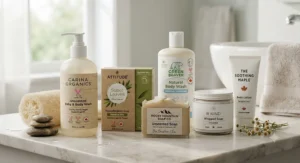
Leaping Bunny certified soap means the brand has gone through the Coalition for Consumer Information on Cosmetics’ Corporate Standard of Compassion for Animals — a process that audits not just the finished product but every supplier in the chain, requires annual recommitment, and is open to third-party verification audits. That’s a meaningfully higher bar than a company simply printing “cruelty-free” on its own packaging, and it’s why brands like Kirk’s Castile and Dr. Bronner’s highlight the Leaping Bunny mark specifically rather than relying on generic language.
The certification isn’t the only credible one, though. PETA’s “Beauty Without Bunnies” list serves a similar function through a self-reporting model with spot verification, and it’s how Rocky Mountain Soap Co.‘s cruelty-free status gets independently confirmed. When a soap carries neither certification but still claims to be cruelty-free, that’s not automatically a red flag — plenty of small, honest brands simply haven’t gone through the (costly) certification process — but it does mean the claim rests more heavily on the brand’s own word.
Animal Testing Policies: Canada’s New Rules Explained
This is worth spelling out clearly, because most shoppers assume Canada always had a cosmetic testing ban and it simply isn’t true. Prior to December 22, 2023, the Food and Drugs Act neither required nor prohibited animal testing for cosmetics sold in Canada. That changed with the Budget Implementation Act, 2023, No. 1, which added three new prohibitions: companies can no longer conduct new cosmetic animal testing in Canada, can no longer sell cosmetics whose safety relies on new animal-testing data (with narrow legacy exceptions), and can no longer make unsubstantiated “not tested on animals” claims on labels or in ads.
That last piece has real teeth — Health Canada can request evidence directly from a company and can forward unresolved claims disputes to the Competition Bureau. In practice, this means every soap brand on this list making a cruelty-free claim in Canada today is operating under legal accountability for that statement, not just a voluntary promise. It’s a genuinely useful backstop for consumers, even if it doesn’t cover every ethical dimension (fair labour, sustainable packaging) that shoppers might care about.
Ethical Sourcing: Where Your Soap’s Ingredients Really Come From
Ethical sourcing gets talked about less than cruelty-free status, but for soap specifically it’s arguably the bigger sustainability question, since palm oil — a common soap base ingredient — has a documented deforestation problem when sourced irresponsibly. Several brands on this list address it directly: Alaffia sources West African palm oil through what it describes as orangutan-safe practices tied to its fair-trade cooperative model, while Dr. Bronner’s has built its entire supply chain around Fair Trade and, more recently, Regenerative Organic Certified palm oil.
Based on the sourcing language each company publishes, the strongest signal isn’t the word “sustainable” itself but whether a brand names a specific certifying body — Fair Trade USA, Rainforest Alliance, or a named cooperative — versus using the term as an unsupported adjective. A soap that simply says “responsibly sourced” without naming who verified that claim is giving you less to actually check than one that names its certification body outright.
Brand Transparency: Spotting Greenwashing vs. Genuine Commitment
Brand transparency has become a bigger legal issue in Canada than most shoppers realize. In June 2024, amendments to the Competition Act under Bill C-59 introduced explicit anti-greenwashing provisions, requiring that environmental benefit claims be backed by “adequate and proper” testing or internationally recognized methodology — and, since June 2025, private parties (not just the Bureau) can bring complaints directly to the Competition Tribunal. That’s a real enforcement mechanism, not a suggestion.
For soap shoppers, the practical takeaway is to treat vague claims with more skepticism than specific ones. “Eco-friendly,” “green,” and “natural” carry no legal definition on their own; a company that instead states its packaging is FSC-certified recycled paperboard, or names its Fair Trade certifier by name, is giving regulators — and you — something concrete to verify. Brands like Crate 61 Organics, which specifies ISO 9001:2015 manufacturing certification, and ATTITUDE, which names EWG Verified specifically, are doing the kind of specific, checkable claim-making that holds up under this newer regulatory scrutiny.
Cruelty-Free Soap vs. Traditional Drugstore Soap
| Factor | Cruelty-Free Soap | Traditional Drugstore Soap |
|---|---|---|
| Animal testing | Verified none (certified brands) | Often untested claim unverified |
| Ingredient transparency | Frequently full disclosure | Often proprietary/vague |
| Lather | Generally gentler, less foamy | Sulfate-boosted, heavy lather |
| Price per bar (CAD) | C$4–C$22 | C$1.50–C$6 |
| Skin barrier impact | Milder, less stripping | Can dry/strip natural oils |
The price gap looks stark on paper, but it narrows considerably once you account for bar density and how long each lasts — a triple-milled bar from South of France or a superfatted bar from Rocky Mountain Soap Co. typically outlasts a thinner drugstore bar by a meaningful margin. Where traditional soap still wins outright is lather volume and shelf availability; if foaminess is a non-negotiable for you, brands like ATTITUDE that use plant-based surfactants close that gap better than pure castile formulas do.
Common Mistakes When Buying Cruelty-Free Soap Brands
The most frequent misstep is assuming “vegan” and “cruelty-free” are the same claim — they’re not, and a soap can be one without the other. A second common mistake is trusting a bunny logo without checking which certification it actually represents, since some brands use generic bunny imagery that isn’t tied to Leaping Bunny or PETA at all. Third, shoppers often buy a large multipack before testing scent and skin compatibility, which wastes money if the formula doesn’t agree with them. Finally, it’s easy to overlook parent-company ownership — a cruelty-free sub-brand owned by a company that tests animals elsewhere in its portfolio is a genuine ethical gray area that a quick search can clarify before you buy.
Long-Term Cost & Maintenance: Is Cruelty-Free Soap Worth the Price?
Run the math over a year rather than a single purchase, and the premium on cruelty-free soap brands looks smaller than it first appears. A dense, superfatted bar from Rocky Mountain Soap Co. at roughly C$10 can outlast two or three thinner drugstore bars combined, especially when stored on a draining dish. Buying multipacks — Kirk’s Castile‘s eight-bar sets or Crate 61‘s bundle-and-save option — also brings the per-wash cost down close to conventional soap, particularly for a household of two or more people sharing bars.
Maintenance-wise, natural bar soap has one real trade-off: without synthetic hardening agents, it softens faster in wet conditions, so a soap dish that drains — rather than a flat shower ledge — meaningfully extends bar life. Liquid and foaming formats from ATTITUDE sidestep that issue entirely but come with ongoing packaging costs (refill pouches, pump bottles) that bar soap avoids. Total cost of ownership, then, depends less on the brand and more on which format — bar or liquid — fits your household’s habits.
FAQ
❓ What makes a soap brand actually cruelty-free?
❓ Is Dove considered a cruelty-free soap brand?
❓ How can I tell if a soap is Leaping Bunny certified soap or just claims to be?
❓ Are cruelty-free soap brands more expensive than regular soap?
❓ Do Canadian laws actually require cruelty-free claims to be true?
Conclusion
The honest takeaway here is that cruelty-free soap brands in Canada have gotten easier to trust, not harder — the December 2023 federal testing ban gave the word “cruelty-free” actual legal weight for the first time, and brands like Dr. Bronner’s, ATTITUDE, Alaffia, Rocky Mountain Soap Co., Kirk’s Castile, Crate 61 Organics, and South of France each demonstrate a different way of proving that commitment, whether through Leaping Bunny audits, EWG verification, or fair-trade sourcing documentation. None of them requires you to choose between ethics and everyday practicality — several cost less per wash than the drugstore bar sitting next to them on the shelf.
What matters most going forward is reading past the front-of-package language: check for named certifications, understand the difference between vegan and cruelty-free, and remember that Canada’s newer greenwashing rules mean specific, checkable claims are now a genuinely better signal than vague ones. Whichever of these seven brands ends up in your shower, you’ll be shopping with more information — and more legal backing — than Canadian consumers had even three years ago.
✨ Don’t Miss These Exclusive Deals!
🔍 Take your bathroom routine to the next level with these carefully selected cruelty-free picks. Click on any highlighted item to check current pricing and availability. These brands make it easy to build an authentic, ethical routine your whole household will love!
Recommended for You
- Certified Vegan Soap vs Regular Soap: 7 Picks Canadians Trust (2026)
- Vegan Soap for Sensitive Skin: 7 Gentle Picks That Won’t Fight Back (2026)
- 7 Best Vegan Soap Gift Sets in Canada (2026): Cruelty-Free Picks
Disclaimer: This article contains affiliate links. As an Amazon Associate, I earn from qualifying purchases. If you purchase products through these links, we may earn a small commission at no additional cost to you.
✨ Found this helpful? Share it with your friends! 💬🤗
