In This Article
Winter in Canada has a way of turning even the toughest skin into sandpaper, and if you’ve ever stepped out of a hot shower feeling tighter than your snow boots, you already know why natural soap for dry skin has become such a hunted-for phrase this year. Here’s the short version: natural soap for dry skin is bar soap made mostly from plant oils and butters — think olive, coconut, shea, or goat’s milk — combined with glycerin instead of synthetic detergents, so it cleans without stripping the thin layer of natural oil your skin actually needs to stay comfortable. That distinction matters more than marketing copy usually lets on.
Most commercial “beauty bars” are actually detergent bars dressed up in soap-shaped packaging, and detergents are ruthlessly efficient at removing oil — including the oil your skin was counting on. The Canadian Dermatology Association explains dry skin, medically known as xerosis, is a very common condition that worsens with age and colder climates, and compares the outer skin layer to a brick wall, where skin cells act as bricks and natural oils act as the mortar holding moisture in. Strip the mortar, and the wall stops doing its job.
This guide skips the fluff and gets straight into seven real, purchasable natural soap bars available to Canadian shoppers, honest pricing in CAD, and the kind of practical advice you won’t find on a product listing page. Whether you’re comparing affordable natural soap bars Canada has to offer or trying to figure out what a soap’s glycerin content actually does for your skin, you’ll have what you need to buy smart before the next cold snap hits.
Quick Comparison: Natural Soap for Dry Skin at a Glance
| Product | Key Ingredient | Price Range (CAD) | Best For |
|---|---|---|---|
| Dr. Bronner’s Pure-Castile Bar Soap | Organic olive & coconut oil | C$5-C$8 per bar | Sensitive, all-over use |
| Caprina by Canus Goat’s Milk Soap | Fresh Canadian goat’s milk | C$3-C$5 per bar | Budget-conscious daily use |
| ATTITUDE Body Soap Bar | Coconut & olive oils | C$5-C$7 per bar | Eco-conscious Canadians |
| Kirk’s Original Coco Castile Soap | Coconut oil | C$3-C$5 per bar | Large households, value packs |
| Nubian Heritage Raw Shea Butter Soap | Fair-trade shea butter | C$6-C$9 per bar | Very dry, mature skin |
| SheaMoisture Raw Shea Butter Soap | Shea butter, pro-ceramides | C$6-C$8 per bar | Daily deep hydration |
| Alaffia African Black Soap | Unrefined shea & plantain ash | C$7-C$10 per bar | Combination or problem-prone skin |
Looking at this table, the pattern that jumps out is price doesn’t track neatly with performance — Caprina by Canus undercuts nearly everything on this list while still delivering genuine moisture, while Alaffia costs more but earns it through a denser, longer-lasting triple-milled bar. If your priority is stretching a grocery budget through a Canadian winter, the goat’s milk and castile options below give you the most washes per dollar without sacrificing the moisturizing basics your skin actually needs.
💬 Just one click — help others make better buying decisions too!😊
Top 7 Natural Soaps for Dry Skin: Expert Analysis
1. Dr. Bronner’s Pure-Castile Bar Soap — the gentlest all-rounder for sensitive, flaky skin
The standout here is simplicity: this is a true castile soap, saponified almost entirely from organic olive and coconut oils with nothing synthetic riding along for the ride. That matters because true soaps tend to leave more residual glycerin behind during processing than commercial “syndet” bars do, and glycerin is the ingredient doing the heaviest lifting for hydration. Reviewers consistently note that the unscented and baby-formula versions are noticeably gentler than the brand’s famous 18-in-1 liquid soap, which can feel a touch stripping on already-compromised skin. Based on the ingredient comparison, this is the pick for people with eczema-adjacent dryness, cracked hands, or a skin barrier that reacts badly to fragrance. Aggregated review sentiment across major retailers repeatedly mentions the bar’s mild, “won’t sting” feel on broken or chapped skin, alongside some complaints that the bar softens quickly if left sitting in standing water.
Pros:
- ✅ Certified organic oils with minimal ingredient list
- ✅ Unscented option suits fragrance-sensitive and baby skin
- ✅ Widely available and recognizable brand in Canada
Cons:
- ❌ Softens fast without a draining soap dish
- ❌ Some scented versions still contain essential oils that irritate very reactive skin
At around C$5-C$8 per bar depending on scent and pack size, this is solid mid-budget value, especially when bought in the 6-pack format that most Canadian retailers stock.

2. Caprina by Canus Goat’s Milk Soap — best homegrown pick for budget-conscious Canadians
What most buyers overlook about goat’s milk soap is that it isn’t just a marketing gimmick — the milk’s naturally occurring fatty acids and lactic acid genuinely help soften and gently exfoliate skin during a wash, which is part of why this Sherbrooke, Quebec-made bar has such a loyal following. Caprina blends fresh Canadian goat’s milk with a traditional soap base, and the result feels closer to a mild moisturizing cleanser than a standard bar. On paper this means less post-shower tightness, particularly for people whose skin reacts to hard tap water common in many Canadian municipalities. A common thread in customer feedback is that this soap performs unusually well for the price, with reviewers frequently comparing it favourably to bars costing two or three times as much. The trade-off is a lighter, more traditional lather than you’d get from a coconut-heavy castile bar.
Pros:
- ✅ Made in Canada with fresh, local goat’s milk
- ✅ Exceptional value in multi-bar packs
- ✅ Gentle enough for daily face and body use
Cons:
- ❌ Lather is thinner than coconut oil-based soaps
- ❌ Scented varieties may not suit strongly fragrance-averse users
Expect a price in the C$3-C$5 per bar range, making it one of the more affordable natural soap bars Canada currently offers on Amazon.ca.
3. ATTITUDE Body Soap Bar — best for eco-conscious households who still want performance
ATTITUDE‘s bar leans on coconut and olive oils in a 99% natural-origin formula, and the standout advantage is its EWG Verified status combined with fully plastic-free, FSC-certified cardboard packaging — a detail that matters if reducing bathroom plastic is part of why you’re shopping natural in the first place. The spec sheet won’t tell you this, but reviewers note the bar holds its shape well through repeated use, which is a genuine advantage over softer castile bars that dissolve into mush by week two. Here’s what to weigh: this is a Canadian-manufactured product, which appeals to buyers actively seeking domestic brands, and the ingredient profile targets dry skin specifically rather than treating moisture as an afterthought. Aggregated sentiment suggests the scent strength is noticeably stronger than unscented castile options, which some buyers love and others find overwhelming in a small bathroom.
Pros:
- ✅ Made in Canada, EWG Verified formula
- ✅ Plastic-free packaging reduces bathroom waste
- ✅ Firm bar holds shape longer than softer soaps
Cons:
- ❌ Fragrance is more pronounced than unscented alternatives
- ❌ Smaller bar size (113 g) means more frequent repurchasing
Prices generally land in the C$5-C$7 range per bar, occasionally lower when bought in multi-scent bundles.
4. Kirk’s Original Coco Castile Bar Soap — best budget bulk buy, with one caveat worth knowing
Kirk’s has been making coconut oil castile soap since 1839, and the standout feature is sheer value: bulk packs bring the per-bar cost down dramatically, which explains why this remains a staple in large households. What most buyers overlook, though, is the soap’s alkalinity — Kirk’s own product documentation notes a pH of roughly 9.6, and that high alkalinity can aggravate already-dry or sensitive skin rather than soothe it. Based on the spec comparison, this bar is a genuinely good fit for normal-to-oily skin on a tight budget, but it’s a more conditional recommendation for someone dealing with active flaking or eczema-prone patches, where a lower-pH bar tends to perform better. Reviewers who use it for hand-washing and general body cleansing report satisfaction with the classic, unfussy lather, while those with more reactive skin occasionally mention a tight, dry after-feel.
Pros:
- ✅ Long-standing heritage brand since 1839
- ✅ Excellent per-bar cost in bulk packs
- ✅ Simple, transparent ingredient list
Cons:
- ❌ Higher pH (around 9.6) may irritate very dry or sensitive skin
- ❌ Less overtly “moisturizing” than shea- or goat’s milk-based bars
Bulk multi-packs bring this down to the C$3-C$5 per bar range, among the cheapest options on this list.
5. Nubian Heritage Raw Shea Butter Bar Soap — best for very dry, mature, or textured skin
The headline advantage is raw, fair-trade shea butter blended with soy milk and glycerin, a combination reviewers repeatedly credit with softening rough patches on elbows, knees, and heels faster than lighter formulas manage. Shea butter is rich in fatty acids that sit closer to the skin’s own lipid composition than mineral oil does, which on paper means better absorption without the greasy film some heavier butters leave behind. Here’s what to weigh: this bar leans genuinely luxurious in feel, and honest analysis suggests it’s best matched to buyers dealing with persistent dryness rather than someone with only mild seasonal tightness, where a lighter bar might suffice. A consistent theme in aggregated reviews is praise for the warm frankincense-and-myrrh scent alongside occasional notes that the fragrance lingers more than some buyers expect from a “natural” product.
Pros:
- ✅ Fair-trade, raw shea butter as the lead ingredient
- ✅ Soy milk and glycerin add extra barrier support
- ✅ Reviewers report visible softening on rough areas
Cons:
- ❌ Fragrance is stronger and more persistent than unscented bars
- ❌ Premium ingredients push the price above budget castile options
Typical pricing sits in the C$6-C$9 per bar range, positioning it as a mid-range to premium choice on this list.
6. SheaMoisture Raw Shea Butter Bar Soap — best daily-use option for consistent hydration
SheaMoisture‘s formula pairs fair-trade shea butter with pro-ceramides, and the standout feature is that ceramide inclusion — ceramides are lipid molecules that help rebuild the skin’s own barrier rather than just sitting on top of it temporarily. What most buyers overlook about ceramide-enhanced formulas is that they tend to compound in effectiveness with consistent daily use rather than delivering an instant fix, so this bar rewards patience over quick results. Based on the ingredient comparison, this is a strong choice for anyone wanting one reliable everyday bar rather than switching formulas seasonally. Aggregated customer sentiment frequently mentions the “24-hour” moisture claim holding up reasonably well through a Canadian winter, alongside a smaller number of reviews noting the bar can feel slightly soft and fast-dissolving compared to firmer castile formulas.
Pros:
- ✅ Pro-ceramide formula supports long-term barrier repair
- ✅ 97% naturally derived, sulfate- and paraben-free
- ✅ Widely available at Canadian drugstores and online
Cons:
- ❌ Softer bar dissolves faster than firmer alternatives
- ❌ Fragrance intensity varies noticeably between scent variants
Expect a price around C$6-C$8 per bar, occasionally lower in the daily-hydration multi-packs.
7. Alaffia Authentic African Black Soap — best for combination, oily-prone, or problem skin needing moisture without heaviness
This triple-milled bar stands out for a genuine paradox: African black soap is traditionally used for its detoxifying, clarifying reputation, yet the unrefined shea butter and palm kernel oil base still deliver real moisture — a combination that suits combination or breakout-prone skin that still runs dry in patches. The triple-milling process compresses the bar into a denser format, and what the spec sheet won’t tell you is that denser bars simply last longer per gram than fluffier cold-processed soaps, improving the real cost-per-wash even at a higher sticker price. Honest analysis suggests this is the pick for buyers juggling both dryness and occasional congestion, rather than someone with uniformly dry skin across their whole body, where a straight shea or goat’s milk bar might feel more targeted. Reviewers frequently mention a noticeably calmer, less reactive complexion after switching, alongside occasional comments that the earthy scent takes some adjustment.
Pros:
- ✅ Triple-milled for a denser, longer-lasting bar
- ✅ Suits combination and problem-prone skin, not just uniformly dry skin
- ✅ Fair-trade, women-led cooperative sourcing
Cons:
- ❌ Earthy natural scent isn’t for everyone
- ❌ Highest price point on this list
Pricing generally runs C$7-C$10 per bar, reflecting the more involved production process.
Practical Usage Guide: Getting the Most Out of Your Natural Soap Bar
Natural soap behaves differently than the detergent bars most Canadians grew up with, and a few small habits make a real difference to both your skin and your wallet. First, keep the bar on a draining soap dish or ridged tray between uses — natural bars, especially castile and goat’s milk varieties, absorb standing water and turn to mush far faster than synthetic bars, which is the single most common complaint in negative reviews across every brand on this list. Second, resist the urge to over-lather; natural soap needs less product per wash than you’d think, and using less actually extends the bar’s lifespan by weeks.
During the first 30 days, pay attention to how your skin responds before switching scents or brands — a genuinely moisturizing bar should leave skin feeling comfortable within a few minutes of drying off, not immediately tight. If tightness persists, that’s often a signal to follow with a barrier-repair cream rather than assuming the soap has failed. A common mistake is applying moisturizer to fully dry skin; for best results, pat skin just barely damp and apply cream within a couple of minutes of stepping out of the shower, which is the same window dermatologists point to for locking in water before it evaporates. Finally, store bars away from direct shower spray when not in use, and cut larger bulk bars into smaller pieces to control both mess and moisture loss.
Real-World Scenarios: Which Natural Soap Fits Your Life
Picture a university student in Waterloo sharing a dorm bathroom with three roommates, a tight budget, and skin that turns flaky the second the campus heat kicks on in October. For that situation, Caprina by Canus or Kirk’s Original Coco Castile in a bulk pack makes the most financial sense — both stretch further per dollar and require no special storage beyond a basic soap dish.
Now consider a new parent in Halifax dealing with eczema-prone skin on both themselves and a toddler, where fragrance sensitivity and gentleness outrank cost. Here, Dr. Bronner’s unscented Pure-Castile bar is the more defensible pick, given its minimal ingredient list and track record with reactive skin.
Finally, picture a remote worker in Winnipeg who spends January and February battling brutally dry indoor heating and genuinely severe skin cracking on hands and knuckles. That’s a scenario built for Nubian Heritage or SheaMoisture‘s richer shea-forward formulas, where the priority shifts from “gentle” to “genuinely rich,” even at a slightly higher per-bar cost. Matching the soap to the actual severity of dryness — rather than defaulting to whatever’s cheapest or most popular — consistently produces better results than a one-size-fits-all approach.
Problem → Solution: Fixing Common Dry Skin Soap Mistakes
Problem: Skin feels tighter after switching to a “natural” bar. This usually points to a high-pH formula like traditional castile soap reacting with already-compromised skin. Solution: switch to a shea butter or goat’s milk-based bar with a gentler pH profile, such as SheaMoisture or Caprina.
Problem: The bar dissolves within a week. Standing water is almost always the culprit. Solution: use a ridged, draining soap dish and cut larger bars into smaller portions to reduce surface exposure to moisture.
Problem: Fragrance triggers irritation despite the “natural” label. Natural doesn’t automatically mean hypoallergenic — essential oils can still sensitize reactive skin. Solution: choose unscented formulations like Dr. Bronner’s baby-unscented bar or Kirk’s fragrance-free variant.
Problem: Winter dryness persists no matter which soap is used. Soap alone can’t fully offset indoor heating and cold outdoor air. Solution: pair soap choice with a humidifier and a barrier-repair moisturizer — the Canadian Dermatology Association notes that replacing indoor humidity through vaporizers or humidifiers helps prevent and treat dry skin, alongside avoiding high-pH bars in favour of gentler, fragrance-free cleansers.
Problem: Budget natural soap Canada options feel like a compromise on quality. They don’t have to be — Caprina and Kirk’s both deliver genuinely moisturizing results at a fraction of premium pricing, provided expectations around scent intensity and lather richness are adjusted accordingly.
What Is Natural Soap for Dry Skin?
Natural soap for dry skin is bar soap crafted primarily from plant-based oils — olive, coconut, shea, or similar — combined with retained glycerin rather than synthetic surfactants, so it cleans the skin while leaving behind a protective, moisturizing residue instead of stripping natural oils away. The key distinction from mass-market “beauty bars” is what’s absent: no harsh sulfates, minimal synthetic fragrance, and typically no added detergents designed purely for aggressive foam. For Canadians dealing with a genuinely harsh climate half the year, that difference between a soap that cleans and a soap that also protects can be the deciding factor in whether winter skin stays comfortable or turns raw.

How to Choose Natural Soap for Dry Skin
- Check the oil base first. Olive, coconut, and shea-based soaps tend to retain more moisturizing byproducts than palm-heavy commercial bars.
- Look for retained glycerin. Soaps that don’t strip out their natural glycerin during processing hydrate noticeably better than glycerin-removed commercial bars.
- Consider pH. Traditional castile soap runs alkaline; if your skin is reactive, a lower-pH, shea- or milk-based bar is usually gentler.
- Match scent strength to sensitivity. Fragrance-free options reduce irritation risk for eczema-prone or highly reactive skin.
- Weigh bar density against price. Denser, triple-milled bars often cost more upfront but last longer per wash.
- Verify sourcing claims. Fair-trade and Made-in-Canada labels aren’t just marketing — they often correlate with more transparent ingredient sourcing.
- Read aggregated reviews for your specific skin type, not just star ratings, since a 4.5-star average can still hide inconsistent results for very dry or very reactive skin.
Understanding Glycerin Content: Why It Matters for Dry Skin
Glycerin is a natural byproduct of the soap-making process, and it happens to be one of the most effective humectants available — meaning it draws moisture from the air (and deeper skin layers) toward the surface. The trouble is that most commercial soap manufacturers extract glycerin during production and sell it separately for use in lotions and pharmaceuticals, leaving the soap itself glycerin-depleted and more drying than it needs to be. Glycerol, more commonly called glycerin, is a simple, colorless, and viscous compound long used across the pharmaceutical and personal care industries specifically for its humectant properties — a chemistry primer worth skimming is available on Wikipedia’s glycerol entry.
Natural, handcrafted-style bars like Dr. Bronner’s and Caprina typically retain more of their original glycerin than mass-produced commercial soap, which is a large part of why they feel less drying despite having simpler ingredient lists. When comparing bars, glycerin content isn’t usually listed as a percentage on packaging, but ingredient order and the absence of “glycerin removed” processing claims are reasonable proxies. If a soap lists glycerin near the top of its ingredient list rather than as an afterthought, that’s typically a good sign for dry-skin performance.
Affordable Natural Soap Bars in Canada: Budget-Friendly Picks
Finding genuinely affordable natural soap bars Canada shoppers can rely on doesn’t mean settling for a lesser product — it means shopping smart on format and ingredient priorities. Caprina by Canus and Kirk’s Original Coco Castile both consistently rank as the most wallet-friendly options on this list, particularly in bulk multi-packs where the per-bar cost drops well below single-bar premium pricing. The trade-off with budget natural soap Canada options tends to be scent complexity and lather richness rather than actual cleansing or moisturizing performance — both brands use straightforward, honest ingredient lists without the added botanical extras that push premium bars higher.
For households managing multiple people’s skincare needs on one budget, buying a large multi-pack of a moderately gentle bar and reserving a smaller, richer shea butter bar for the driest hands and feet often works out cheaper — and more effective — than buying one premium bar for everyone.
Natural Soap for Dry Skin CAD Price: What You’re Really Paying For
When comparing natural soap for dry skin CAD price points, it helps to separate three cost drivers: ingredient sourcing, processing method, and packaging. Fair-trade shea butter and small-batch triple-milling (as with Alaffia) genuinely cost more to produce than a mass-manufactured coconut oil bar, which explains the roughly C$7-C$10 range compared to C$3-C$5 for simpler castile bars. Packaging matters too — ATTITUDE‘s plastic-free cardboard costs more to source and ship than standard plastic wrap, a cost that shows up modestly in shelf price.
| Price Tier | Range (CAD) | Example Products | Best For |
|---|---|---|---|
| Budget | C$3-C$5/bar | Caprina, Kirk’s | Large households, tight budgets |
| Mid-range | C$5-C$8/bar | Dr. Bronner’s, ATTITUDE, SheaMoisture | Everyday moisturizing use |
| Premium | C$7-C$10/bar | Nubian Heritage, Alaffia | Very dry or problem-prone skin |
This tiered breakdown shows that spending more doesn’t automatically buy better moisture — it mostly buys richer ingredient concentrations, denser bars, or more elaborate sourcing stories. For most Canadians dealing with ordinary seasonal dryness, a mid-range bar delivers the best cost-per-comfort ratio, reserving premium picks for genuinely severe or persistent dryness. Always check current price at the time of purchase, since Amazon.ca pricing shifts regularly and these ranges reflect typical, not guaranteed, costs.
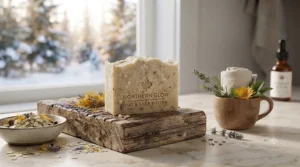
Moisturizing Bar Soap vs Regular Soap: What Actually Changes
| Feature | Moisturizing Natural Bar Soap | Regular Commercial Soap |
|---|---|---|
| Glycerin retention | High — often left in during processing | Low — typically extracted and sold separately |
| Primary cleansing agent | Plant-based oils, saponified | Synthetic detergents (SLS/SLES common) |
| Skin barrier impact | Supports barrier lipids | Can strip natural oils |
| Typical pH | Ranges from mild to alkaline (varies by formula) | Often formulated closer to skin’s pH |
| Best For | Dry, flaky, or barrier-compromised skin | Oily skin needing aggressive degreasing |
The practical difference shows up fastest on hands and lower legs, where skin has fewer oil glands and dries out first — a moisturizing bar soap noticeably reduces that tight, papery feeling within days, while a stripping commercial bar can make it worse even with daily lotion use. That said, regular soap still has its place for genuinely oily skin types or high-grime situations like mechanical work, where a moisturizing bar’s gentler cleansing action may simply not cut through grease effectively.
Winter Skin Dryness in Canada: Why Your Soap Choice Matters More From October to April
Winter skin dryness hits Canadians harder than most climates for a straightforward reason: brutal outdoor cold strips moisture, while indoor forced-air heating drops humidity even further, creating a two-front assault most soap marketing never mentions. Layer a stripping, high-detergent soap on top of that combination, and you’re actively working against your skin rather than supporting it through the season. Worth remembering: the skin’s protective barrier is less than 20 micrometres thick — about half the diameter of a single hair shaft — which makes it a remarkably delicate system to be undermining twice a day in the shower.
Swapping to a genuinely moisturizing natural bar for the coldest months — roughly November through March for most of Canada — while running a humidifier indoors addresses both fronts of the problem simultaneously. For ongoing support beyond soap choice, resources like the Eczema Society of Canada offer additional guidance for anyone whose winter dryness tips into genuinely inflamed or eczema-like territory rather than simple seasonal tightness.
Common Mistakes When Buying Natural Soap for Dry Skin
The most frequent mistake is assuming “natural” and “moisturizing” are interchangeable — plenty of natural-labelled soaps are still formulated with a high pH or minimal glycerin retention, meaning they can dry skin out just as effectively as a synthetic bar. A second common error is over-indexing on star ratings without checking whether reviewers share your skin type; a soap beloved by people with normal or oily skin can perform very differently on someone managing genuine xerosis or eczema. Buyers also frequently underestimate bar density, assuming a larger bar is automatically better value, when a smaller triple-milled bar can outlast a larger, fluffier one. Finally, many people skip checking Health Canada’s ingredient guidance altogether; the Cosmetic Ingredient Hotlist exists specifically to keep the cosmetic industry — and curious consumers — aware of substances that are restricted or prohibited in cosmetics, making it a useful reference for anyone wanting to double-check a formula’s regulatory standing before committing to a full multi-pack purchase.
Natural Soap for Dry Skin vs Body Wash
Body wash tends to win on convenience and lather volume, but it typically relies more heavily on synthetic surfactants than a well-formulated bar soap does, and many liquid formulas include preservative systems that can be more irritating to already-sensitive skin than a simple saponified bar. Natural bar soap generally wins on ingredient simplicity and cost-per-wash, since a single bar like Kirk’s or Caprina often outlasts an equivalent-priced bottle of body wash by weeks. The clearest case for body wash remains shared-shower hygiene concerns or genuinely oily skin needing more aggressive foaming action; for dry or flaky skin specifically, a moisturizing bar soap consistently comes out ahead in both comfort and value.
Long-Term Cost & Maintenance
Thinking beyond the sticker price, cost-per-wash tells a more useful story than cost-per-bar. A C$4 Caprina bar lasting roughly three to four weeks of daily use works out to well under twenty cents per wash, while a denser C$9 Alaffia bar lasting six weeks lands in a similar range despite the higher upfront cost. Maintenance is minimal but matters: a draining soap dish, cutting larger bars into manageable pieces, and storing bars away from direct water spray all meaningfully extend lifespan. Over a full Canadian winter, the total cost difference between budget and premium natural soap is usually smaller than shoppers expect — often just a few dollars across an entire season — which makes ingredient fit for your specific skin the more important deciding factor than price alone.
Frequently Asked Questions
❓ Is natural soap actually better for dry skin than regular soap?
❓ How much does natural soap for dry skin cost in Canada?
❓ Can natural soap help with eczema-prone skin?
❓ What's the difference between glycerin soap and regular natural soap?
❓ Is Made-in-Canada natural soap better than imported brands?
Conclusion
Choosing the right natural soap for dry skin ultimately comes down to matching formula to actual need rather than chasing the trendiest label on the shelf. Budget-conscious households do genuinely well with Caprina by Canus or Kirk’s Original Coco Castile, while anyone battling more stubborn winter dryness will likely see better results from shea-rich options like Nubian Heritage or SheaMoisture. Sensitive and eczema-prone skin tends to respond best to unscented castile formulas like Dr. Bronner’s, and combination or problem-prone skin has a genuine ally in Alaffia‘s triple-milled black soap. None of these seven bars is objectively “the best” in isolation — the right pick depends on your skin’s specific dryness pattern, your budget, and how much you value details like Canadian sourcing or plastic-free packaging. Whatever you land on, pairing the right bar with a humidifier and a barrier-repair moisturizer during Canada’s harshest months will do more for your skin than any single product ever could alone.
✨ Don’t Miss These Exclusive Deals!
🔍 Take your winter skincare routine to the next level with these carefully selected natural soap picks. Click on any highlighted product to check current pricing and availability. These bars will help you build the kind of gentle, moisturizing routine your skin will thank you for all season long!
Recommended for You
- 7 Best Travel Laundry Soap Bar Picks for Canada in 2026
- Stain Remover Laundry Bar: 7 Powerful Picks for 2026
- Laundry Bar Soap: 7 Best Picks for Canadian Homes in 2026
Disclaimer: This article contains affiliate links. As an Amazon Associate, I earn from qualifying purchases. If you purchase products through these links, we may earn a small commission at no additional cost to you.
✨ Found this helpful? Share it with your friends! 💬🤗
