
In This Article
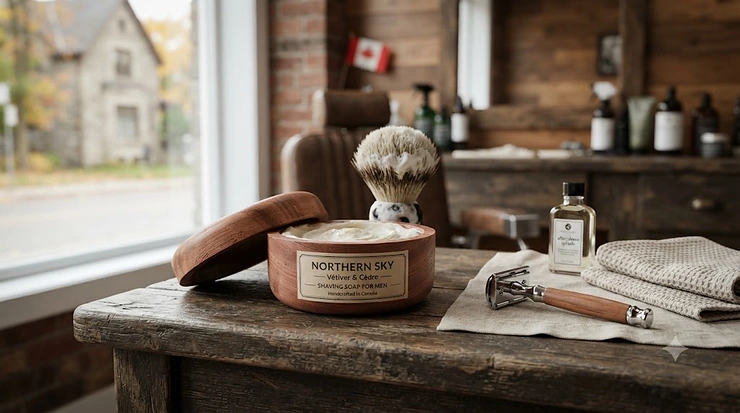
There’s a specific kind of morning defeat that comes from scraping a dry razor across an even drier face, watching your neck turn into a constellation of red dots before you’ve even had coffee. If that sounds familiar, the problem probably isn’t your razor. It’s what’s — or isn’t — cushioning the blade. shaving soap for men is a hard-milled bar of soap, worked up into lather with a brush and water, that coats the beard and skin to soften hair and let a blade glide instead of drag. Unlike canned foam, it’s built for slow mornings and repeat use, often lasting months from a single puck. This guide breaks down seven real products worth your attention, why the ritual is having a genuine comeback, and how to actually get a barbershop-grade lather out of a plastic tub in your bathroom.
We’re not going to pretend every soap on this list is interchangeable. A budget puck from the drugstore and a hand-poured artisan soap from Quebec solve different problems for different faces, and the gap between them is bigger than the price tag suggests. As Wikipedia’s overview of shaving soap explains, the product is defined as a hard soap used to produce lather with a shaving brush, and its manufacture typically differs from ordinary bath soap by blending sodium and potassium hydroxide to control hardness and lather texture. That chemistry is exactly why some soaps feel slick and forgiving while others fight you the whole way through. We’ll walk through honest, spec-grounded commentary on seven products, real aggregated review sentiment (never invented quotes), and the practical know-how — lathering technique, skin-type matching, cost breakdowns — that actually changes your morning. Everything here is priced in CAD ranges, since exact Amazon prices shift too often to quote reliably, and every product recommendation is backed by verifiable specs and sourced review themes rather than guesswork.
Quick Comparison Table
| Product | Type | Price Range (CAD) | Best For |
|---|---|---|---|
| Van Der Hagen Deluxe Shave Soap | Glycerin/tallow blend puck | Under C$12 | Absolute beginners on a tight budget |
| Rocky Mountain Barber Company Glacial Spring | Glycerin-based, 3-pack | C$20–C$25 | Canadians who want a homegrown brand |
| Proraso Green Shaving Soap | Soft soap, eucalyptus & menthol | C$14–C$18 | Classic performance at a fair price |
| Henri et Victoria Shaving Soap | Vegan glycerin-based puck | C$20–C$27 | Sensitive skin, Canadian-made scent |
| Cella Milano Almond Shaving Cream Soap | Tallow-based soft soap | C$16–C$20 | Old-world barbershop lather |
| Mühle Sandalwood Shaving Soap | Plant-based hard puck | C$18–C$22 | Compact, travel-ready luxury |
| Barrister & Mann Seville | Artisan tallow soap | C$28–C$34 | Serious hobbyists chasing the best lather |
Looking at the spread above, there’s no single “best” shaving soap for men — there’s a best one for your skin, your water hardness, and your patience level on a Tuesday morning. Budget-conscious beginners get real value from Van Der Hagen Deluxe Shave Soap, but anyone chasing a longer, creamier lather with more skin conditioning will want to look toward the tallow-based options like Cella Milano or Barrister & Mann Seville. Notice, too, that price doesn’t map perfectly to performance: Proraso Green Shaving Soap consistently punches above its price bracket, which is why it’s stayed a category staple for decades.
💬 Just one click — help others make better buying decisions too!😊
Top 7 Shaving Soaps for Men: Expert Analysis
Choosing among dozens of shaving soap for men options on amazon.ca can feel like picking a wine you can’t pronounce. So we narrowed it down to seven real, currently available products spanning budget, mid-range, and premium tiers, each backed by verifiable formulas and aggregated customer sentiment.
1. Van Der Hagen Deluxe Shave Soap — best entry point for total beginners
The standout here is simplicity: this is the soap most wet-shaving forums point beginners toward because it’s forgiving and nearly impossible to mess up. It’s a glycerin-and-tallow-adjacent puck built around aloe vera and shea butter, designed to microwave-soften and mold into almost any bowl. Based on the spec sheet, the moisturizing content is modest compared to premium tallow soaps, but that’s the point — it’s a low-stakes way to learn brush technique without gambling twenty-plus dollars on your first attempt. Reviewers consistently note that it lathers easily even for first-timers, produces a decent cushion, and rinses clean, though several mention the puck disappears faster than pricier alternatives — one long-time forum reviewer estimated a puck lasts around 20 shaves, versus 50 or more from some other drugstore sticks. What most buyers overlook is that “cheap” here doesn’t mean “bad” — it means basic, and for a first foray into wet shaving, basic is exactly the point.
Pros:
- ✅ Extremely low cost of entry for testing the wet-shave method
- ✅ Easy to lather even with beginner brush technique
- ✅ Widely available in Canadian pharmacies and on amazon.ca
Cons:
- ❌ Puck depletes faster than premium tallow-based soaps
- ❌ Minimal post-shave moisturization compared to higher-tier options
At under C$12, Van Der Hagen Deluxe Shave Soap is close to a no-risk way to test whether wet shaving suits your routine at all.
2. Rocky Mountain Barber Company Glacial Spring — best Canadian-made value pick
The standout feature is right in the name: this is a proudly Canadian formula, glycerin-based and packaged as three individual 2.5 oz bars sized to fit almost any shaving bowl. The cocoa butter, eucalyptus, and peppermint oil blend is designed to hydrate while delivering a cooling finish, which matters if you shave in a heated Canadian bathroom in January and want your face to feel alive afterward. Here’s what to weigh: glycerin-based soaps like this one lather fast and don’t require the “blooming” patience that tallow soaps demand, making them a smart pick for anyone impatient in the morning. Reviewers frequently praise the lather volume and note pride in buying Canadian, though a subset of aggregated feedback flags the menthol as a bit assertive for those wanting a warmer, non-cooling scent profile. On paper, this is a soap built for practicality over ceremony — three bars means months of shaves without reordering.
Pros:
- ✅ Proudly Canadian formulation and manufacturing
- ✅ Three-bar pack delivers extended value per purchase
- ✅ Fast-lathering glycerin base needs less brush time
Cons:
- ❌ Menthol cooling sensation may be too strong for some users
- ❌ Less slick glide than tallow-based premium soaps
Priced around C$20–C$25 for three bars, this is a strong mid-tier pick for anyone who wants to support a homegrown brand without sacrificing performance.
3. Proraso Green Shaving Soap — best classic performer at a fair price
The standout advantage is consistency: Proraso Green Shaving Soap has been refining this eucalyptus-and-menthol formula since the brand’s founding in Florence, and it shows in how predictably it lathers. Made since 1948, this shaving cream soap is built around stearic acid, coconut oil, glycerin, and a menthol-eucalyptus combination, and the “hot soap” pouring process concentrates the formula into a semi-soft, easy-to-load puck. Based on the spec comparison, what separates it from cheaper glycerin soaps is that hot-pour process — it results in a denser, more water-retentive soap that builds lather with noticeably less brush effort. Reviewers consistently describe the lather as thick and slick with great razor glide, and several long-time users specifically call out that they get a closer shave than they expected from a soap in this price bracket. The main gripe found in aggregated feedback is that the classic medicinal-menthol scent isn’t for everyone, though the current formulation has reportedly softened that edge.
Pros:
- ✅ Dense, hot-poured formula lathers efficiently with less effort
- ✅ Cooling eucalyptus-menthol combination refreshes skin
- ✅ Decades-long reputation as a reliable daily driver
Cons:
- ❌ Strong menthol scent may not suit sensitive noses
- ❌ Comes in a soft-soap tub rather than a self-standing puck
In the C$14–C$18 range, Proraso Green Shaving Soap remains one of the best value-per-shave ratios of any soap on this list.
4. Henri et Victoria Shaving Soap — best Canadian artisan pick for sensitive skin
The standout is provenance: this is a small-batch, Canadian-made soap crafted in Quebec, built on a vegan glycerin base rather than tallow. Formulated with potassium stearate, potassium cocoate, glycerin, and shea butter, the ingredient list is short by artisan standards, which matters for buyers managing sensitive or reactive skin. What most buyers overlook about this brand is that it isn’t trying to compete on raw slickness with tallow soaps — it’s optimized for gentle glide and reduced irritation, making it a smart pick for guys prone to razor bumps or ingrown hairs. Aggregated reviewer sentiment is genuinely mixed but leans positive: many describe the lather as rich and the scent lineup — from Cognac and Cuban Cigars to Duc de Santal — as some of the best in the category, though a handful of long-time wet shavers note the performance doesn’t quite match top artisan tallow soaps despite the strong scent. For sensitive skin specifically, that trade-off is often worth it.
Pros:
- ✅ Vegan, Canadian-made formula with a short ingredient list
- ✅ Distinctive, well-regarded scent lineup
- ✅ Gentle on sensitive and reactive skin types
Cons:
- ❌ Less dense cushion than tallow-based premium soaps
- ❌ Premium pricing relative to puck size
At roughly C$20–C$27 for a 114 g jar, Henri et Victoria is a strong pick for anyone who wants a Canadian-made barbershop-style scent without tallow.
5. Cella Milano Almond Shaving Cream Soap — best old-world barbershop lather
The standout feature is heritage performance: this tallow-based soft soap has been a fixture of European barbershops since 1899, and it’s marketed specifically as a favorite of European barbershops for over 125 years. The almond-marzipan scent is distinctive and, based on aggregated review sentiment, either loved instantly or grows on buyers within a few shaves. Here’s what the spec sheet won’t tell you: the tallow content is what gives this soap its notably plush, marshmallow-dense lather texture, closer to whipped cream than foam, which is exactly the barbershop-quality products feel that separates it from glycerin-only alternatives. Reviewers consistently praise the thick lather and comfortable post-shave feel, though a recurring theme in aggregated feedback is that the lather can dry out mid-shave faster than some competitors, requiring a quick water top-up between passes. For guys wanting old-world barbershop texture without a serious price jump, this is the pick.
Pros:
- ✅ Tallow-based formula creates exceptionally dense, rich lather
- ✅ Over a century of barbershop heritage and refinement
- ✅ Strong value relative to other tallow-based soaps
Cons:
- ❌ Lather can dry out faster than some rivals mid-shave
- ❌ Almond scent is polarizing for some users
Around C$16–C$20 for 150 g, Cella Milano delivers barbershop-tier lather density at a mid-range price.
6. Mühle Sandalwood Shaving Soap — best compact luxury for travel
The standout advantage is precision engineering: this German-made, plant-based puck is compact at just 65 g but formulated to be, according to the brand, particularly economical over months of use. The formula is built primarily from potassium and sodium stearate with glycerin and vegetable-derived ingredients, producing a fine-pored, dense lather when worked with a brush. Based on the spec comparison, the smaller format isn’t a downside so much as a design choice — it’s sized to fit Mühle’s own porcelain bowls and most third-party scuttles, which matters if you’re building a travel kit. Reviewer sentiment is largely positive, with many describing the lather as thick and creamy straight off the puck, though the sandalwood, coriander, and star anise scent is noted by some reviewers as fading quickly during the shave itself. That’s arguably by design — it won’t clash with a stronger aftershave scent layered on top.
Pros:
- ✅ Compact, travel-friendly puck size with strong lather yield
- ✅ Vegan, plant-based formulation free of animal ingredients
- ✅ Fits neatly into most standard shaving bowls
Cons:
- ❌ Scent fades faster than some competing soaps
- ❌ Smaller puck size means more frequent repurchasing for heavy users
At roughly C$18–C$22 for 65 g, Mühle Sandalwood is priced per gram closer to premium territory, but the German engineering behind it justifies the tag for travel-focused shavers.
7. Barrister & Mann Seville — best luxury tallow soap for enthusiasts
The standout feature is sheer lather output: this artisan tallow soap is formulated with a tallow-glycerin-lanolin-adjacent base specifically engineered to be “thirsty,” meaning it rewards extra water with disproportionately more lather. The ingredient list includes potassium stearate, glycerin, potassium tallowate, kokum butter, coconut milk, sodium tallowate, and shea butter — a formulation built for slickness and cushion rather than speed. Based on the spec comparison, this is the most technically sophisticated soap on this list, and it shows in how forgiving it is of imperfect brush technique once you’ve dialed in the water ratio. Reviewer sentiment is strongly positive on performance and scent — a bergamot, lemon, rosemary, lavender, and patchouli blend frequently described as “barbershop in a jar” — though a consistent theme in aggregated feedback is that new users initially under-water the lather and get frustrated before finding the right ratio. What most buyers overlook is that the learning curve is temporary; once mastered, it’s widely considered one of the best-performing soaps in this category.
Pros:
- ✅ Exceptional lather volume, slickness, and skin cushion
- ✅ Sophisticated, widely praised barbershop-style fragrance
- ✅ Hand-made in small batches with high-quality tallow base
Cons:
- ❌ Steeper learning curve for lathering technique
- ❌ Highest price point among the seven soaps featured here
At roughly C$28–C$34 for 4 oz, Barrister & Mann Seville is the splurge pick — but for enthusiasts chasing the best possible lather, it’s often worth the premium.
Top 7 Products: Spec & Value Comparison
| Product | Base Type | Size | Price Range (CAD) | Best For |
|---|---|---|---|---|
| Van Der Hagen Deluxe Shave Soap | Glycerin/tallow blend | 2.5–3.5 oz | Under C$12 | Beginners |
| Rocky Mountain Barber Company Glacial Spring | Glycerin | 3 × 2.5 oz | C$20–C$25 | Canadian-made value |
| Proraso Green Shaving Soap | Soft tallow-free soap | 150 ml | C$14–C$18 | Classic reliability |
| Henri et Victoria Shaving Soap | Vegan glycerin | 114 g | C$20–C$27 | Sensitive skin |
| Cella Milano Almond Shaving Cream Soap | Tallow-based | 150 g | C$16–C$20 | Barbershop lather feel |
| Mühle Sandalwood Shaving Soap | Plant-based hard puck | 65 g | C$18–C$22 | Travel and compactness |
| Barrister & Mann Seville | Artisan tallow | 4 oz (113 g) | C$28–C$34 | Enthusiasts, best lather |
Stacking the seven side by side, a pattern emerges: tallow-based soaps (Cella Milano, Barrister & Mann Seville) consistently deliver denser lather and better skin cushion, while glycerin-based options (Rocky Mountain Barber Company, Henri et Victoria) lather faster and suit sensitive skin better. If cost-per-shave is your priority, Van Der Hagen and Rocky Mountain Barber Company win on raw value, while Barrister & Mann Seville wins on performance per gram despite the higher sticker price.
How to Build a Rich, Barbershop-Quality Lather at Home
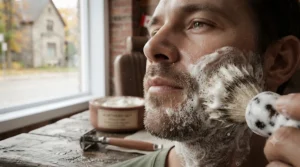
Getting a truly rich lathering shave soap experience isn’t about the soap alone — it’s about technique, and it’s the single biggest reason first-time wet shavers give up too early. Start by soaking your brush in warm water for a full two minutes before you touch the soap; a dry brush simply can’t pick up enough product to build real volume. Load the brush by swirling it directly on the puck for 20–30 seconds, using firm, circular pressure rather than light taps. Then move to a separate bowl (or your face, if you prefer face-lathering) and add water in small increments — a teaspoon at a time — while continuing to swirl. The lather should transition through a “loose bubble” stage before tightening into a dense, shiny, almost meringue-like texture; that transition is where most beginners quit too soon, assuming they’ve done something wrong when they’ve actually just under-hydrated the lather.
Common first-30-days mistakes include using water that’s too hot (it breaks down the lather’s structure), adding all the water at once instead of gradually, and switching soaps too frequently to properly learn any single formula’s water demands. For maintenance, always let your soap and brush air-dry fully between uses to prevent mold and bacterial buildup, and store pucks away from direct sunlight, which can degrade natural oils over time. A rich lathering shave soap experience typically takes five to seven shaves with the same soap before your hands “learn” its specific water ratio — patience here pays off directly in shave quality.
📌 Tip: If your lather collapses mid-shave, don’t reload the brush from scratch — just add a few drops of water directly to your face and re-work it with your fingertips.
Real-World Scenarios: Matching Your Shave to the Right Soap
If you’re a university student commuting to campus on a tight budget and just want to stop using canned foam, Van Der Hagen Deluxe Shave Soap or the value-priced Rocky Mountain Barber Company Glacial Spring pack will get you into proper wet shaving without a big upfront investment, and both are widely stocked at Canadian pharmacies for easy reordering. If you’re a professional with sensitive, reaction-prone skin who’s tired of post-shave redness after every important meeting, Henri et Victoria or Proraso Green offer gentler formulas with strong track records for reduced irritation, particularly for guys who’ve had bad experiences with heavily fragranced aerosol foams. And if you’re an enthusiast who’s already invested in a quality safety razor and badger brush and wants the closest thing to a genuine barbershop experience at home, Cella Milano and Barrister & Mann Seville reward the extra effort with noticeably plusher lather and longer-lasting skin comfort through a full workday.
✨ Don’t Miss These Exclusive Deals!
🔍 Take your grooming routine to the next level with these carefully selected shaving soaps. Click on any highlighted product to check current pricing and availability on amazon.ca. A better shave starts with the right lather!
Problem → Solution: Fixing Common Shaving Soap Mistakes
Problem: Razor burn and post-shave redness. This is usually a preparation issue, not a soap issue. CBC Life’s shaving guide notes that shaving with plain soap and no proper cushioning lather can dry out skin significantly, and recommends products that provide a rich, lubricating cushion instead. Solution: always let hair hydrate for a full two minutes with warm water before applying lather, and choose a tallow or shea-butter-rich soap like Cella Milano if you’re prone to burn.
Problem: Lather that won’t thicken. This is almost always a water-ratio issue, not a defective product. Solution: add water more slowly and in smaller increments while swirling continuously; soaps like Barrister & Mann Seville are intentionally “thirsty” and need more water than glycerin-based options.
Problem: Soap disappearing too fast. Hard-milled tallow soaps like Proraso Green typically outlast soft glycerin pucks. Solution: press the puck into the bottom of your bowl rather than letting your brush rock it loose, which wastes product with every load.
Problem: Skin irritation from fragrance. Solution: switch to a fragrance-light or vegan formula such as Henri et Victoria’s unscented line, and always patch-test a new soap on your jawline for two shaves before committing to a full routine.
How to Choose Shaving Soap for Men
Choosing the right shaving soap for men comes down to five practical criteria:
- Skin type first. Sensitive or reactive skin does better with glycerin-based, fragrance-light formulas; resilient skin can handle richer tallow soaps without issue.
- Water hardness in your area. Hard water (common across parts of Ontario and the Prairies) makes lathering harder across the board — glycerin soaps like Rocky Mountain Barber Company compensate better than some tallow formulas.
- Scent tolerance. If you wear cologne or a scented aftershave, a milder soap like Mühle Sandalwood avoids clashing.
- Puck size versus shave frequency. Daily shavers get better value from larger tallow pucks like Cella Milano; occasional shavers may prefer smaller formats.
- Budget versus ritual. If wet shaving is a quick daily habit, budget soaps do the job; if it’s a deliberate morning ritual, premium options like Barrister & Mann Seville deliver a noticeably more indulgent experience.
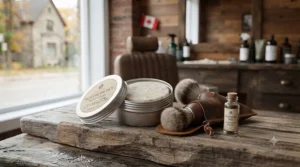
Classic Wet Shaving vs Modern Cartridge Shaving
Classic wet shaving with a soap, brush, and single-blade razor isn’t just nostalgia — it solves specific problems that modern cartridge systems create. As Wikipedia’s entry on shaving explains, wet shaving is generally done in more than one pass with the blade, reducing hair with each pass rather than trying to eliminate it all at once, which lowers the risk of cuts, soreness, and ingrown hairs. Cartridge razors, by contrast, use multiple blades in a single stroke, which can pull hair slightly above the skin before cutting it — a mechanism that increases the likelihood of ingrown hairs for many users. Classic wet shaving also tends to be gentler on skin over time because the lather from a proper shaving soap provides denser cushioning than most canned gel or foam, reducing friction-related micro-tears in the skin’s surface layer.
The trade-off is time and learning curve. A cartridge shave with canned foam takes three minutes; a proper wet shave with soap and brush takes closer to eight or ten, especially while you’re still learning brush technique. For guys managing sensitive skin, frequent razor burn, or a genuine appreciation for morning ritual, that extra time is an investment that pays back in comfort. For guys who just need to be out the door in five minutes, cartridge systems still have their place — but pairing even a cartridge razor with a proper shaving soap instead of canned foam noticeably improves the result.
Benefits vs Traditional Alternatives
| Factor | Shaving Soap + Brush | Canned Foam/Gel |
|---|---|---|
| Lather cushioning | Dense, long-lasting | Thin, dissipates quickly |
| Cost per shave | Lower over time | Higher over time |
| Skin irritation risk | Generally lower | Higher, due to aerosol propellants |
| Environmental footprint | Minimal, reusable packaging | Aerosol cans, more waste |
| Best For | Deliberate morning routines | Fast, low-effort mornings |
The table above makes the long-term math clear: a single puck of shaving soap for men can outlast several cans of foam, and the reduced irritation risk means fewer dollars spent on post-shave balms and treatments down the line. That said, canned foam still wins on pure speed, which matters if your mornings are genuinely rushed rather than ritualistic.
What Makes Barbershop-Quality Products Stand Out
Not every soap marketed with “barbershop” in its description actually delivers that experience. True barbershop-quality products share a few traits: a tallow or high-fat-content base for cushion, a scent profile rooted in classic barbershop notes like bergamot, sandalwood, or bay rum, and a lather that holds its structure through multiple passes without drying out. Cella Milano earns the label through more than a century of actual barbershop use across Europe, while Barrister & Mann Seville earns it through deliberate formulation choices — lanolin, kokum butter, and a “thirsty” base designed specifically to mimic old-world lather density. What most buyers overlook is that barbershop quality isn’t really about scent marketing; it’s about the underlying fat content and saponification process, which is exactly why tallow-based soaps consistently outperform pure glycerin soaps in blind lather tests among enthusiasts.
Common Mistakes When Buying Shaving Soap for Men
The most frequent mistake is buying based on scent description alone without checking the base formula — a soap can smell incredible and still underperform if the fat content is too low. The second is assuming more expensive automatically means better for your specific skin; Henri et Victoria at a mid-range price outperforms some pricier soaps for sensitive-skin buyers specifically. The third is skipping a proper shaving brush entirely and trying to lather with hands only, which almost never produces enough volume regardless of soap quality. Finally, many buyers underestimate how much water tallow soaps like Barrister & Mann Seville actually need, leading to an unfairly negative first impression that a few more shaves would have corrected.
Shaving Soap for Different Skin Types and Audiences
For sensitive or acne-prone skin, fragrance-light, glycerin-based options like Henri et Victoria’s unscented line or Proraso Green minimize the chance of reaction while still delivering solid cushioning. For coarse or thick beard hair, tallow-heavy formulas like Cella Milano and Barrister & Mann Seville provide the extra slickness needed to prevent tugging. For beginners specifically, forgiving, low-cost soaps like Van Der Hagen remove financial pressure while you learn brush technique. For seniors or those with thinner, drier skin, richer moisturizing formulas with shea butter and coconut oil — present in several products on this list — help offset the natural drying effects of daily shaving.
Long-Term Cost & Maintenance
A single puck of shaving soap for men, properly maintained, typically lasts anywhere from three to twelve months depending on shave frequency and soap density. Tallow-based pucks like Cella Milano tend to outlast glycerin-based options gram for gram because their harder structure resists water erosion between uses. Over a year, even a premium C$30 soap like Barrister & Mann Seville can work out to under C$3 per month if used for daily shaving — cheaper than most canned foam subscriptions once you factor in that a can of foam typically lasts two to four weeks. Maintenance costs stay low too: a quality badger or synthetic brush is a one-time purchase that can last years with proper air-drying between uses, meaning the real ongoing cost of classic wet shaving is almost entirely the soap itself.
Safety, Regulations & Ingredient Compliance in Canada
Anyone buying shaving soap for men in Canada benefits from stronger regulatory oversight than many people realize. Health Canada’s Cosmetic Ingredient Hotlist is an administrative tool used to communicate which substances are prohibited or restricted in cosmetics sold in Canada, and any cosmetic manufactured, imported, or offered for sale in the country must meet the safety requirements of the Food and Drugs Act and the Cosmetic Regulations. Practically speaking, this means products legitimately sold on amazon.ca to Canadian buyers are held to a higher ingredient-safety bar than in some other markets, particularly around fragrance allergens and preservative concentrations. If you have known sensitivities, it’s still worth checking a product’s full ingredient list before buying — soaps with lanolin, for example, can cause reactions in a small subset of users despite being broadly considered safe, and several products on this list (like Henri et Victoria) are formulated specifically to avoid lanolin for that reason.
Features That Actually Matter (And Those That Don’t)
What actually matters: fat/oil content (directly affects lather density and skin cushion), puck hardness relative to your water hardness, and fragrance intensity relative to your other grooming products. What matters less than marketing suggests: exotic-sounding ingredient lists with a dozen botanical extracts, since the base saponification chemistry does most of the real work; and elaborate packaging, which adds cost without improving shave quality. A C$16 soap with a well-balanced tallow base will often outperform a C$40 soap padded with trendy but functionally minor additives.

FAQ
❓ What's the difference between shaving soap and shaving cream?
❓ Can I use regular bar soap instead of shaving soap for men?
❓ How long does a puck of shaving soap for men actually last?
❓ Is tallow-based shaving soap safe for vegans?
❓ Why does my shaving soap lather feel thin no matter what I do?
Conclusion
Choosing shaving soap for men doesn’t need to be complicated once you separate the marketing noise from the actual chemistry. Budget-conscious beginners get real value from Van Der Hagen Deluxe Shave Soap or Rocky Mountain Barber Company, while sensitive-skin buyers should look toward Henri et Victoria or Proraso Green. Enthusiasts chasing the closest thing to genuine barbershop-quality products at home should seriously consider Cella Milano or splurge on Barrister & Mann Seville. Whichever puck ends up in your bathroom, remember that technique matters as much as the soap itself — a two-minute hydration soak and patient water additions will improve your results more than switching brands ever will. Wet shaving rewards patience, and once the ritual clicks, it’s genuinely hard to go back to a can.
Recommended for You
- 7 Best Travel Shampoo Bar Picks for 2026 (Tested vs. Liquid)
- Dandruff Shampoo Bar Canada: 7 Picks That Actually Work (2026)
- Shampoo Bar for Curly Hair: 7 Bars That Actually Work (2026)
Disclaimer: This article contains affiliate links. As an Amazon Associate, I earn from qualifying purchases. If you purchase products through these links, we may earn a small commission at no additional cost to you.
✨ Found this helpful? Share it with your friends! 💬🤗
