In This Article
Winter in most of Canada is basically a four-month stress test for your skin barrier, and if you already live with eczema, a harsh bar of soap can turn a mild flare into a full-blown itch-fest by Tuesday. Plant-based soap for eczema is a cleansing bar or wash formulated mostly or entirely from plant oils — think coconut, olive, shea, or hemp seed — rather than synthetic detergents, and it typically skips the sulfates, dyes, and added fragrance that dermatologists flag as common eczema triggers. That’s the textbook definition, but the real question isn’t “what is it,” it’s “which ones actually hold up when your hands are cracked and your patience is thin.”
I’ve spent the past few weeks digging through ingredient panels, aggregated review sentiment, and guidance from the Canadian Dermatology Association to shortlist seven real, purchasable products that fit the plant-based, eczema-friendly brief — not just marketing copy that slaps “natural” on a bottle and calls it a day. Some are budget castile bars you can find for under C$10, a few sit in the mid-range with added shea or oat, and one or two are boutique, small-batch options for people who want every ingredient accounted for.
This guide walks through all seven, compares them head-to-head, and digs into the stuff that actually matters day to day: how to wash without stripping your skin, what to do during an active flare, and where Canadian regulations fit into the picture. No invented reviews, no exact Amazon prices (those change too fast to be useful anyway) — just an honest comparison you can actually use before you check current pricing and availability on amazon.ca.
Quick Comparison Table
Before the deep dive, here’s the scannable version — useful if you’re standing in the shower aisle with five minutes and a decision to make.
| Product | Type | Best For | Price Range (CAD) |
|---|---|---|---|
| Dr. Bronner’s Pure-Castile Bar Soap, Baby Unscented | Bar (castile) | Budget all-rounder | Under C$10 |
| Kirk’s Natural Coco Castile Bar Soap, Fragrance-Free | Bar (castile) | Simplest ingredient list | Under C$8 |
| ATTITUDE Sensitive Skin Foaming Soap with Oat, Unscented | Liquid/foaming | Canadian-made, EWG Verified | C$9-C$13 |
| SheaMoisture African Black Soap Bar | Bar (traditional) | Shea-rich, oily/combination skin | C$9-C$13 |
| Alaffia Authentic African Black Soap Bar | Bar (traditional) | Fair-trade, unrefined shea | C$8-C$11 |
| Puracy Natural Bar Soap, Unscented | Bar (syndet-leaning) | Dermatologist-developed formula | C$9-C$12 |
| Meliora Organic Bath & Body Castile Soap Bar | Bar (castile) | Zero-waste, small-batch premium | C$11-C$15 |
Looking at the spread, the two castile bars from Dr. Bronner’s and Kirk’s anchor the budget end and share a nearly identical oil base, while Meliora sits at the premium end thanks to its small-batch, B Corp production model rather than any exotic ingredient. The African black soap pair — SheaMoisture and Alaffia — trades a slightly higher pH for heavier shea butter content, which matters more for very dry, flaking skin than for oily eczema-prone patches. If you’re brand-new to plant-based cleansing, Puracy and ATTITUDE are the gentlest on-ramp since both were formulated with dermatological input rather than adapted from a traditional recipe.
💬 Just one click — help others make better buying decisions too!😊
Top 7 Plant-Based Soaps for Eczema: Expert Analysis
1. Dr. Bronner’s Pure-Castile Bar Soap, Baby Unscented — the OG castile bar millions swear by
Dr. Bronner’s has been making this bar since long before “clean beauty” was a marketing category, and the baby-unscented version drops the essential oils that flavour the rest of the lineup. The bar is built from organic coconut, palm kernel, olive, and hemp seed oils saponified into a classic castile base, with vitamin E added and nothing synthetic in sight. In practice, that oil blend means a genuinely creamy lather that doesn’t rely on sulfates to foam, which matters because sodium lauryl sulfate is one of the more commonly cited irritants for eczema-prone skin.
Based on the ingredient profile, this is a strong fit for budget-conscious buyers and anyone managing eczema on a whole family’s worth of skin types, since the unscented formula skips the top allergen category (fragrance) entirely. Reviewers across major retail sites consistently mention that the bar can feel slightly drying with extended use in hard-water regions, which tracks with castile soap’s naturally higher pH — a trade-off worth knowing before you commit to it as a daily face wash. A common complaint in user reviews is that the bar dissolves faster in a wet soap dish than firmer syndet bars, so a draining tray extends its life noticeably.
Pros:
- ✅ Fully plant-based with a transparent, short ingredient list
- ✅ Fragrance-free — no added essential oils in this variant
- ✅ Multi-use (body, hands, even light laundry) stretches the value
Cons:
- ❌ Higher pH than syndet bars can feel drying long-term
- ❌ Softens quickly if left sitting in standing water
At under C$10 a bar, this is about as low-risk a starting point as plant-based soap for eczema gets, and the value holds up even if you end up switching later.
2. Kirk’s Natural Coco Castile Bar Soap, Fragrance-Free — no-frills coconut castile for skin that hates everything
Kirk’s takes a narrower approach than Dr. Bronner’s: a coconut-oil-forward castile bar with no dyes, no added fragrance, and a formula the brand has kept largely unchanged for over a century. The coconut-heavy base produces a firmer bar than most castile soaps, which practically means it lasts longer in the shower and doesn’t turn to mush after a couple of weeks.
What most buyers overlook about this model is that “hypoallergenic” on the label doesn’t mean the bar is formulated for eczema specifically — it simply means the ingredient list is short enough that allergic reactions are statistically less likely, which is still genuinely useful information for anyone doing elimination testing on their skincare routine. Aggregated reviewer sentiment skews positive for sensitive-skin and post-shaving use, with recurring praise for how little residue it leaves compared to bar soaps with added moisturizing oils. On the downside, a handful of reviewers with very dry or flare-prone skin note it needs a moisturizer applied within a minute or two of drying off, since the coconut-oil base doesn’t leave much of a protective film behind.
Pros:
- ✅ Extremely short, allergen-conscious ingredient list
- ✅ Firm bar formula lasts longer than softer castile bars
- ✅ No synthetic dyes or fragrance added
Cons:
- ❌ Minimal residual moisture — needs a follow-up moisturizer
- ❌ Plain packaging offers no size variety beyond the standard bar
Priced under C$8 in most cases, Kirk’s is the bar to reach for if you want the castile category’s benefits without paying for the extra oils Dr. Bronner’s includes.
3. ATTITUDE Sensitive Skin Foaming Soap with Oat, Unscented — Canadian-made and EWG Verified for extra-sensitive skin
ATTITUDE is a Quebec-based company, and its sensitive-skin line is one of the few EWG Verified, dermatologically tested plant-and-mineral-based soaps widely available through amazon.ca. The unscented, oat-enriched formula swaps a traditional bar for a foaming pump, which some eczema sufferers actually prefer because it reduces the friction of rubbing a bar directly against inflamed skin.
Here’s what to weigh: the oat extract is included specifically for its barrier-supporting properties, and glycerin in the formula helps offset the drying effect that plagues some plant-based cleansers. Because it’s a liquid rather than a bar, cross-contamination risk between household members is lower too — a small but real consideration if one family member has active eczema and others don’t. Reviewers frequently highlight the “actually unscented” claim as accurate (a genuine sore point with many “fragrance-free” hand soaps that still contain masking scents), though a smaller group notes the pump mechanism can clog if the bottle isn’t rinsed periodically.
Pros:
- ✅ EWG Verified and independently dermatologically tested
- ✅ Foaming format reduces friction on inflamed skin
- ✅ Genuinely fragrance-free, not just “unscented” in name
Cons:
- ❌ Pump bottle occasionally clogs without periodic rinsing
- ❌ Costs more per wash than a comparable bar soap
In the C$9-C$13 range depending on size, this is the pick for anyone who wants Canadian manufacturing and third-party verification in the mix, not just a plant-based ingredient claim.
4. SheaMoisture African Black Soap Bar — traditional African black soap loaded with shea
SheaMoisture’s take on African black soap follows the traditional recipe: plantain skin ash, unrefined shea butter, and palm kernel oil combine into a bar that looks nothing like a typical drugstore soap and behaves differently too. The plantain ash contributes mild natural exfoliating acids, while the shea butter is there specifically to counteract the drying effect that ash-based cleansers can otherwise have.
On paper, this makes it a solid option for combination or oily-eczema skin that still needs a gentle touch — the ash helps with excess oil and rough texture while the shea prevents over-stripping. What the ingredient panel won’t tell you, but aggregated reviewer feedback consistently does, is that the bar’s natural colour and texture vary noticeably batch to batch, which is normal for a product this close to its traditional, minimally processed roots but can catch first-time buyers off guard. Several reviewers report visible improvement in rough, bumpy patches (sometimes mistaken for eczema but closer to keratosis pilaris) within a few weeks of regular use, though people with very dry, cracked eczema patches should moisturize immediately after use since the bar can feel tight-skinned afterward.
Pros:
- ✅ Traditional formula with real shea butter and plantain ash
- ✅ Helps with rough texture and mild excess oil
- ✅ Widely available with a large base of aggregated reviews
Cons:
- ❌ Batch-to-batch appearance and texture can vary
- ❌ Can feel tight on very dry, cracked skin without a moisturizer
Sitting around C$9-C$13, this is a strong mid-range pick if your eczema shows up alongside oilier or bumpier patches rather than uniformly dry ones.
5. Alaffia Authentic African Black Soap Bar — fair-trade black soap with unrefined shea butter
Alaffia’s version leans harder into sourcing transparency than SheaMoisture’s, with fair-trade certified, unrefined shea butter sourced through a women’s cooperative in Togo and a formula that keeps the ingredient list to plantain, cocoa pod ash, coconut oil, and shea. The unrefined shea in particular retains more of its natural vitamin content than the refined shea used in many commercial soaps, which practically translates to a slightly greasier bar but better moisture retention after rinsing.
Based on the spec comparison with SheaMoisture, Alaffia’s bar is softer and more prone to melting in a wet dish, a direct trade-off for the less-processed ingredients. Reviewers consistently note the strong natural cocoa scent (there’s no added fragrance — it’s simply what raw cocoa pod ash smells like), which is worth knowing since “unscented” shoppers sometimes assume all-natural means odourless. A common complaint in user reviews is that the bar’s dark colour can stain light-coloured washcloths or bath mats if left sitting, though this fades with normal laundering.
Pros:
- ✅ Fair-trade, unrefined shea with transparent sourcing
- ✅ No synthetic fragrance — scent comes from raw ingredients
- ✅ Softens and moisturizes well post-rinse
Cons:
- ❌ Melts faster than firmer bars if not kept dry between uses
- ❌ Natural cocoa scent may bother fragrance-sensitive users
At roughly C$8-C$11, Alaffia is the budget-friendly entry point into African black soap for readers who care as much about supply-chain ethics as they do about their skin barrier.

6. Puracy Natural Bar Soap, Unscented — dermatologist-developed syndet bar that won’t strip skin
Puracy positions itself differently from the castile and black-soap categories: it’s a syndet (“synthetic detergent”) bar built with plant-derived surfactants rather than a true oil-and-lye saponification. That distinction matters more than it sounds — syndet bars typically land closer to skin’s natural pH (around 5.5) than traditional soap, which the Eczema Society of Canada notes can meaningfully reduce irritation for people managing atopic dermatitis.
What most buyers overlook is that “syndet” isn’t a red flag — some of the gentlest dermatologist-recommended cleansers on the market use this exact approach, and Puracy’s plant-derived surfactant blend keeps it firmly in plant-based territory rather than relying on petroleum-derived detergents. Aggregated review sentiment is strongly positive for hand and body use in eczema-prone households, with repeated mentions of “no tight, squeaky feeling” post-rinse — a specific and telling detail, since that squeaky-clean sensation is usually a sign a cleanser has stripped too much natural oil. The main knock from reviewers is a shorter bar life relative to its price point, since the syndet formula wears down faster than a firmer castile bar.
Pros:
- ✅ Near skin-pH formula reduces post-wash tightness
- ✅ Plant-derived surfactants, not petroleum detergents
- ✅ Strong aggregated reviewer sentiment for sensitive-skin use
Cons:
- ❌ Wears down faster than firmer castile bars
- ❌ Premium pricing relative to bar size
Expect to pay around C$9-C$12, which is fair given the dermatological reasoning baked into the formula rather than just the ingredient sourcing.
7. Meliora Organic Bath & Body Castile Soap Bar — small-batch, zero-waste castile for eco-conscious skin
Meliora is a certified B Corp, woman-owned company making small-batch castile bars from a short list of organic ingredients — typically organic sunflower oil and coconut oil, with nothing else added to the unscented version. The small-batch production means tighter quality control than mass-manufactured castile bars, and the plastic-free packaging appeals to anyone trying to reduce bathroom waste alongside managing their skin.
Here’s what the spec sheet won’t tell you outright: sunflower-oil-based castile soap tends to produce a slightly softer lather than coconut- or palm-heavy formulas, which some eczema sufferers actually prefer because it feels less “stripping” during application, even though the underlying pH is comparable to other castile bars. Because Meliora is a smaller operation, the pool of aggregated customer reviews is noticeably thinner than for Dr. Bronner’s or SheaMoisture — worth flagging honestly rather than overstating consensus that doesn’t yet exist at scale. The reviews that do exist consistently praise the bar’s minimal ingredient list and lack of any lingering scent, with the main criticism being the higher price for a relatively small bar size.
Pros:
- ✅ Certified B Corp, small-batch quality control
- ✅ Ultra-short organic ingredient list, genuinely unscented
- ✅ Plastic-free packaging for zero-waste routines
Cons:
- ❌ Smaller review pool than mass-market alternatives
- ❌ Higher price per gram than budget castile options
At C$11-C$15, Meliora is the premium pick for readers who want both minimal-ingredient formulation and a sustainability story to match.
Top 7 Plant-Based Eczema Soaps: Full Comparison at a Glance
| Product | Key Ingredients | Format | Price Range (CAD) | Best For |
|---|---|---|---|---|
| Dr. Bronner’s Pure-Castile Bar Soap | Coconut, palm kernel, olive, hemp oils | Bar | Under C$10 | Budget, whole-family use |
| Kirk’s Natural Coco Castile Bar Soap | Coconut oil castile | Bar | Under C$8 | Shortest ingredient list |
| ATTITUDE Sensitive Skin Foaming Soap | Oat extract, glycerin | Foaming liquid | C$9-C$13 | Canadian-made, EWG Verified |
| SheaMoisture African Black Soap Bar | Plantain ash, shea butter | Bar | C$9-C$13 | Combination/oily-eczema skin |
| Alaffia Authentic African Black Soap Bar | Unrefined shea, cocoa pod ash | Bar | C$8-C$11 | Fair-trade, ethical sourcing |
| Puracy Natural Bar Soap | Plant-derived surfactants | Syndet bar | C$9-C$12 | Near skin-pH, dermatologist logic |
| Meliora Organic Castile Soap Bar | Organic sunflower, coconut oils | Bar | C$11-C$15 | Small-batch, zero-waste premium |
Read across the table and a pattern emerges: the products that lean furthest from traditional saponified soap — ATTITUDE and Puracy — are also the ones built around dermatological pH logic rather than ingredient purity alone, while the traditional castile and black-soap bars compete more on sourcing transparency and price. If your eczema flares are triggered mainly by fragrance and synthetic detergents, any of the seven will outperform a standard drugstore bar; if pH and post-wash tightness are your specific pain points, Puracy or ATTITUDE deserve first consideration.
Benefits of Plant-Based Soap vs Traditional Bar Soap
| Factor | Plant-Based Soap | Traditional Commercial Soap |
|---|---|---|
| Common irritants | Rarely contains SLS/SLES, synthetic dyes | Often contains sulfates and synthetic fragrance |
| pH range | Varies (castile higher, syndet closer to skin pH) | Frequently alkaline, can disrupt skin barrier |
| Ingredient transparency | Short, often traceable ingredient lists | Longer lists with proprietary “fragrance” blends |
| Environmental packaging | Frequently plastic-reduced or compostable | Typically standard plastic packaging |
| Best For | Eczema-prone, sensitive, allergy-conscious skin | General use without known skin sensitivities |
The biggest practical difference isn’t “natural versus chemical” — that framing oversimplifies things — it’s that plant-based formulas in this category consistently avoid the two ingredient classes dermatologists flag most often for eczema: synthetic fragrance and harsh sulfate detergents. Traditional commercial soap isn’t inherently bad for everyone, but for skin that’s already compromised by a damaged barrier, the cumulative effect of daily exposure to those irritants adds up fast. That said, “plant-based” alone doesn’t guarantee gentleness — essential oils are plant-derived too, and they’re a common allergen, which is exactly why every product on this list was chosen specifically for its unscented or minimally scented formulation.
Price Range & Value Analysis
| Tier | Products | Typical CAD Range | Value Take |
|---|---|---|---|
| Budget | Dr. Bronner’s, Kirk’s, Alaffia | Under C$11 | Best cost-per-wash for daily whole-body use |
| Mid-range | SheaMoisture, Puracy, ATTITUDE | C$9-C$13 | Balance of formulation science and price |
| Premium | Meliora | C$11-C$15 | Pay for small-batch QC and sustainability |
Cost-per-use tells a slightly different story than sticker price: a firm bar like Kirk’s or Dr. Bronner’s will often outlast a softer bar like Alaffia or Meliora by several weeks under the same shower conditions, which narrows the real-world value gap between budget and premium tiers. If you’re testing a new product for the first time because of an active flare, it’s reasonable to start with the lowest-risk budget option and only move to a premium pick once you know your skin tolerates the broader ingredient category well.
✨ Don’t Miss These Exclusive Deals!
🔍 Take your eczema skincare routine to the next level with these carefully selected picks. Click on any highlighted item to check current pricing and availability on amazon.ca. Small swaps like these can make a real difference for skin that deserves a break from harsh detergents!
Practical Usage Guide: Washing Routine for Eczema-Prone Skin
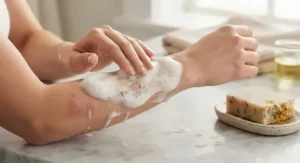
Switching soap is only half the equation — how you use it matters almost as much as what’s in the bottle. Start with lukewarm, never hot, water; hot water strips natural oils and is one of the most commonly cited flare triggers among people managing atopic dermatitis. Keep washing time short, ideally under 5-10 minutes for a full shower and even less for a quick hand wash, since prolonged water exposure alone can compromise the skin barrier regardless of soap choice.
Apply the soap directly to hands or a soft cloth rather than scrubbing a bar aggressively against inflamed patches — friction itself is an eczema trigger, independent of ingredients. Pat skin dry rather than rubbing, and apply a fragrance-free moisturizer within three minutes of stepping out, while skin is still slightly damp, to lock in moisture (a technique often called “soak and seal”). In the first 30 days of switching soaps, patch-test on a small area like the inner forearm for 48 hours before full-body use, since even plant-based ingredients can occasionally trigger a contact reaction in sensitive individuals. Store bar soap on a draining rack between uses — sitting water accelerates both bacterial growth and product waste.
Real-World Scenarios: Which Soap Fits Your Life
The busy parent with a toddler in daycare. Frequent handwashing throughout the day means a liquid, pump-based option makes more practical sense than sharing a bar across small, germy hands. ATTITUDE’s foaming formula and fragrance-free profile fit this scenario well, and the lower cross-contamination risk of a pump matters when one family member has active eczema and others don’t.
The budget-conscious student managing a first eczema diagnosis. Starting with the lowest financial and ingredient risk makes sense while still figuring out personal triggers. Kirk’s or Dr. Bronner’s, both under C$10, offer a low-stakes way to test whether the plant-based, fragrance-free category helps at all before investing in pricier options.
The eco-conscious professional with moderate, well-managed eczema. Someone who has already identified their triggers and wants to minimize both ingredient complexity and packaging waste is a strong match for Meliora’s small-batch, plastic-free castile bar, even at the premium price point, since the value proposition here is about consistency and sustainability rather than treating an active flare.
Soap for Eczema Flare-Ups Canada: Problem → Solution Guide
Problem: Hands crack and bleed from frequent winter handwashing. Solution: switch to a syndet or foaming liquid soap like Puracy or ATTITUDE, apply hand cream immediately after drying, and consider keeping a travel-size moisturizer at every sink in the house.
Problem: A new soap seems to trigger a flare instead of helping. Solution: stop use immediately, patch-test the next candidate on the inner forearm, and favour the shortest ingredient lists on this list — Kirk’s or Meliora — since fewer ingredients mean fewer possible triggers to isolate.
Problem: Dry, tight skin persists even after switching to a gentler soap. Solution: the soap likely isn’t the only variable — check water temperature, shower length, and whether moisturizer is applied within the “soak and seal” window; SheaMoisture or Alaffia’s shea-forward formulas can help but won’t fully offset a hot, long shower.
Problem: Fragrance sensitivity makes even “natural” scented soaps a risk. Solution: stick strictly to the unscented variants featured here — natural fragrance and essential oils are still a top allergen category flagged by dermatology associations, plant-derived or not.
Problem: Kids in the household need something gentle enough for sensitive skin without being a specialty “baby” product at a premium price. Solution: Dr. Bronner’s Baby Unscented and ATTITUDE’s sensitive-skin line are both formulated with broad household use in mind and priced accordingly.
What Is Plant-Based Soap for Eczema?
Plant-based soap for eczema is a cleansing bar or liquid made primarily from plant oils — coconut, olive, shea, sunflower, or similar — rather than synthetic detergents or animal-derived fats, and formulated without the fragrance and sulfate ingredients most commonly linked to eczema flare-ups. It isn’t a medical treatment or a substitute for prescribed eczema medication; it’s a supporting piece of a broader skincare routine that also includes moisturizing and trigger avoidance. The category spans traditional castile soap, syndet bars, and traditional recipes like African black soap, each with slightly different pH and formulation logic behind them.
How to Choose Plant-Based Soap for Eczema: 7 Expert Criteria
- Check for fragrance, including “natural” fragrance. Essential oils are a leading contact allergen for eczema-prone skin, so unscented genuinely means unscented, not masked.
- Look at the surfactant type. Syndet bars sit closer to skin’s natural pH than traditional saponified soap, which can reduce post-wash tightness.
- Favour shorter ingredient lists when troubleshooting a flare. Fewer variables make it easier to identify what’s actually helping or hurting.
- Consider format based on lifestyle, not just ingredients. A shared household bar carries more cross-contamination risk than a pump dispenser.
- Weigh cost-per-use, not sticker price. Firmer bars often outlast softer, pricier ones under identical shower conditions.
- Verify third-party claims where possible. Labels like EWG Verified or dermatologically tested add a layer of independent scrutiny beyond brand marketing.
- Patch-test before committing to full-body use. Even a well-reviewed, plant-based product can trigger a reaction in an individual with specific sensitivities.
Common Mistakes When Buying Plant-Based Soap for Eczema
A frequent misstep is assuming “natural” and “gentle” are interchangeable — plenty of harsh, irritating ingredients (citrus oils, certain essential oils, high-pH lye-heavy castile bars) are entirely plant-derived. Another common mistake is buying scented “eczema-friendly” products because the packaging features soothing imagery like oatmeal or lavender; a genuinely eczema-conscious formula skips added fragrance regardless of how calming the marketing sounds. Shoppers also frequently overlook pH, assuming any bar soap behaves the same on skin, when the real difference between a syndet bar and a traditional castile bar can be the deciding factor in whether skin feels tight afterward. Finally, some buyers switch products too frequently during a flare, making it impossible to tell whether a new soap is helping, hurting, or simply irrelevant to a flare driven by weather, stress, or another trigger entirely.
Eczema-Friendly Bar Soap vs Liquid Soap: Which Wins?
There’s no universal winner here — it depends on the household and the type of eczema being managed. Bar soap tends to have shorter, simpler ingredient lists and produces less plastic packaging waste, which explains why five of the seven products on this list are bars. However, a shared bar in a multi-person household does carry a higher cross-contamination and bacterial-growth risk than a pump-dispensed liquid, particularly relevant if only one family member has active eczema.
Pure castile soap — the category Dr. Bronner’s, Kirk’s, and Meliora all belong to — is traditionally saponified purely from vegetable oils rather than animal fat, which is part of why it shows up so often on plant-based recommendation lists. Liquid and foaming formats, like ATTITUDE’s, generally require added preservatives and thickening agents that pure bar castile soap doesn’t need, which slightly lengthens the ingredient list even in a “clean” formula — worth knowing if you’re trying to minimize ingredient count specifically. For hand-only use in high-traffic areas like kitchens and bathrooms, liquid or foaming soap is usually the more practical, hygienic choice; for full-body washing where ingredient minimalism matters more, a well-chosen bar like Kirk’s or Meliora tends to edge ahead.
Features That Actually Matter (And Those That Don’t)
Actually matters: fragrance-free status (verified, not just implied), surfactant type and resulting pH, ingredient list length, and independent verification like EWG or dermatological testing. Doesn’t really matter for eczema specifically: exotic-sounding botanical additives beyond the core cleansing ingredients, colour or scent marketed as “aromatherapy,” and packaging aesthetics, however appealing. A soap packed with a dozen trendy plant extracts isn’t automatically better for eczema-prone skin than a four-ingredient castile bar — in fact, more additives generally mean more potential triggers, not fewer. The spec sheet detail worth actually scrutinizing is the surfactant base, since that single factor drives more of the tightness-versus-comfort outcome than almost anything else on the label.
Is Plant-Based Soap Dermatologist Recommended? Dermatologist Guidance & Health Canada Rules
Dermatologist guidance on eczema care generally centres on avoiding known irritants rather than endorsing any single brand outright, and plant-based, fragrance-free cleansers fit that guidance well precisely because they tend to exclude the ingredient categories dermatologists flag most consistently. The Canadian Dermatology Association specifically lists fragranced personal care products — including natural fragrances and essential oils — among the common triggers to avoid for atopic dermatitis, which is exactly why every product featured here was selected in its unscented variant.
On the regulatory side, cosmetic products sold in Canada, including soap, fall under Health Canada’s cosmetic labelling framework, which as of 2026 requires clearer individual disclosure of fragrance allergens above set thresholds rather than allowing them to hide under a generic “parfum” listing. You can review the specifics of Health Canada’s cosmetic labelling rules directly if ingredient transparency is a priority for your household. None of this replaces an actual dermatologist visit — if flares are frequent, severe, or not responding to skincare changes alone, a proper diagnosis and possibly prescription treatment should come before any soap swap.
Long-Term Cost & Maintenance
Total cost of ownership for eczema-friendly soap isn’t just the per-bar price — factor in the moisturizer you’ll pair it with, any patch-testing “wasted” product from trial and error, and how frequently a household actually replaces bars versus lets them sit unused after a bad match. Firm bars like Dr. Bronner’s and Kirk’s typically stretch further per dollar in daily multi-person households, while a liquid format like ATTITUDE’s offers more predictable, controlled dosing that can actually reduce waste from over-application, offsetting its higher per-millilitre cost. Over a year, the real cost difference between the budget and premium tiers on this list is usually modest — often under C$50 for a single regular user — which suggests prioritizing fit over price once you’ve found a formula that genuinely works.

FAQ
❓ Is plant-based soap actually better for eczema than regular soap?
❓ What ingredients should I avoid in soap for eczema flare-ups Canada residents deal with in winter?
❓ Is castile soap safe for eczema-prone skin?
❓ How do I know if a soap is truly dermatologist recommended?
❓ Can I use plant-based bar soap on my face if I have eczema?
Conclusion
Eczema-friendly soap isn’t about chasing the trendiest ingredient list — it’s about consistently avoiding the handful of triggers that show up again and again in dermatology guidance: fragrance, harsh sulfates, and excessive pH swings. Among the seven products covered here, Dr. Bronner’s and Kirk’s remain the lowest-risk, lowest-cost entry points for anyone just starting to test the plant-based category, Puracy and ATTITUDE bring genuine dermatological formulation logic to the table, and SheaMoisture, Alaffia, and Meliora each offer a distinct value proposition depending on whether shea content, ethical sourcing, or small-batch minimalism matters most to you.
None of these replace a dermatologist’s advice for moderate-to-severe eczema, and none are marketed here as miracle cures — they’re honest, comparable options within a category that genuinely tends to be gentler on compromised skin barriers than standard commercial soap. Whichever one you land on, pair it with lukewarm water, a short wash time, and a fragrance-free moisturizer applied while skin is still damp, and you’ll get more consistent results than any single soap swap could deliver on its own.
✨ Ready to Find Your Match?
🧼 Compare the seven picks above, check current pricing and availability on amazon.ca, and give your skin the gentler routine it’s been asking for. A small switch today could mean fewer flare-ups tomorrow!
Recommended for You
- Natural Soap vs Organic Soap: 7 Picks Canadians Trust (2026)
- Natural Soap for Sensitive Skin: 7 Gentle Picks for 2026
- Natural Soap Under $25 CAD: 7 Best Picks for Canadians (2026)
Disclaimer: This article contains affiliate links. As an Amazon Associate, I earn from qualifying purchases. If you purchase products through these links, we may earn a small commission at no additional cost to you.
✨ Found this helpful? Share it with your friends! 💬🤗
