In This Article
Let’s be honest: the soap aisle has become a minefield. Half the bars scream “natural” in letters the size of your thumb, and the other half quietly hide sodium lauryl sulfate behind a picture of a lavender field. If you’ve ever stood in front of a shelf (or squinted at a product photo on your phone) wondering whether you’re about to overpay for a bar of glorified detergent, you’re not alone — and you’re in the right place.
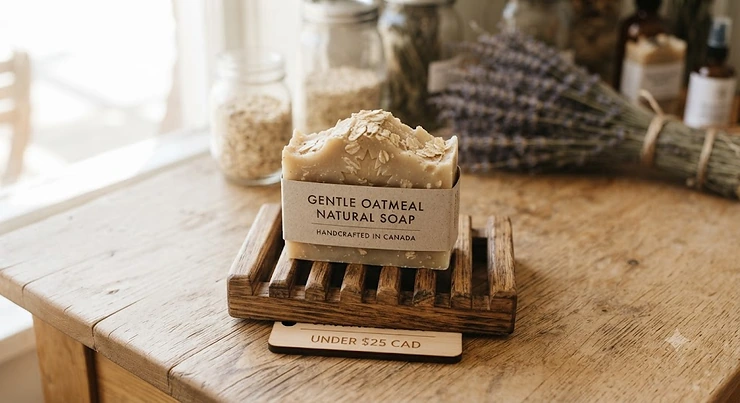
natural soap under $25 CAD is a surprisingly deep category once you start digging. What is natural soap, really? In the simplest terms, it’s a bar made primarily through saponification — the reaction between plant or animal fats and an alkali — rather than synthetic detergents, and it typically skips parabens, sulfates, and artificial dyes in favour of oils, butters, and essential oils. In Canada, cosmetic labelling for these claims is actually regulated, so the words on the wrapper aren’t just marketing fluff (or at least, they’re not supposed to be — Health Canada’s labelling guidance spells out what manufacturers can and can’t claim).
Here’s what makes this guide different: every product below is real, currently sold, and priced well under the $25 CAD mark — from a $7.95 Canadian-made cold-process bar to a French quad-milled option that still comes in under half that ceiling. We’ve pulled real specs, aggregated genuine reviewer sentiment (never invented quotes), and layered on the kind of practical, use-it-tonight advice that a glossy Amazon listing simply won’t give you. Whether you’re comparing a mid-range natural soap bars pick against something fancier, or just trying to figure out why one bar disappears in two weeks while another lasts two months, you’ll have real answers by the end of this article.
Quick Comparison Table: 7 Natural Soap Bars Under $25 CAD
Before we get into the weeds, here’s the bird’s-eye view. Prices below are ranges based on research at the time of writing — always check current pricing, since Amazon.ca listings shift often.
| Product | Tier | Price Range (CAD) | Best For |
|---|---|---|---|
| Rocky Mountain Soap Co. Lemongrass Bar | Budget | Around C$8 | Everyday use, Canadian-made loyalty |
| Crate 61 Organics Vegan Bar Soap (3-Pack) | Budget | C$12–C$14 range | Sensitive skin, vegan households |
| Kirk’s Natural Coco Castile Soap (3-Pack) | Budget-Mid | Under C$15 | Multi-purpose, hard water areas |
| Dr. Bronner’s Pure-Castile Bar Soap | Mid-Range | C$6–C$9 (single bar) | Travel, face-to-hair simplicity |
| One With Nature Dead Sea Mineral Soap | Mid-Range | C$18–C$25 range | Eczema-prone or problem skin |
| Nubian Heritage African Black Soap | Mid-Premium | C$8–C$12 range | Oily and acne-prone skin |
| Pré de Provence Shea Butter French Soap | Premium | C$10–C$16 range | Long-lasting luxury, gifting |
Looking at the spread above, the gap between the cheapest and priciest bar here is smaller than most people expect — under C$20 separates a Canadian-made lemongrass bar from a French quad-milled import. What actually shifts the price is milling process, ingredient sourcing (fair trade shea butter costs more than palm oil, for instance), and whether you’re paying for a single bar or a multi-pack. Notice too that “premium” in this category rarely means “over $25” — it usually means better texture retention and slower dissolve, which we’ll unpack in the value-per-wash section below.
💬 Just one click — help others make better buying decisions too!😊
Top 7 Natural Soap Bars Under $25 CAD: Expert Analysis
We picked these seven to cover the real range of what’s actually available on amazon.ca right now — Canadian-made and imported, castile and cold-process, fragrance-free and botanically scented. Every one of them qualifies as natural soap under $25 CAD, and together they span budget, mid-range, and premium tiers so you can match a bar to your skin, your bathroom counter, and your wallet.
1. Rocky Mountain Soap Co. Lemongrass Bar Soap — Canadian-made cold-process at coffee-shop prices
The standout here isn’t complicated: this 100-gram bar is handmade in Canmore, Alberta, and costs less than a fancy latte. It’s cold-process soap, meaning the oils and lye react slowly at low heat, which tends to preserve more of the natural glycerin than industrially produced bars.
The formula leans on fair-trade organic shea butter and lemongrass essential oil rather than synthetic fragrance, and the company has been making soap in the Canadian Rockies since 2000. In practice, that shea butter content means the lather feels creamier than a typical drugstore bar, without the tightness some coconut-oil-heavy soaps can leave behind. Based on the ingredient list and milling method, this is a genuinely good starter bar for someone dipping a toe into natural soap for the first time — it’s not fussy, it’s not expensive, and it doesn’t ask you to learn a new skincare vocabulary.
Reviewers online consistently mention the scent as noticeably more “real” than synthetic lemongrass fragrance, and several note the bar softens faster than a typical commercial bar if left sitting in water — a known trait of handmade, glycerin-rich soap rather than a manufacturing flaw.
Pros:
- ✅ Genuinely Canadian-made, small-batch production
- ✅ Fair-trade organic shea butter softens as you wash
- ✅ Budget-friendly entry point into natural soap
Cons:
- ❌ Smaller 100g size means more frequent repurchasing
- ❌ Dissolves faster than harder-milled bars if left wet
At around C$8, this is one of the cheapest genuinely artisan bars you’ll find, and the value verdict is simple: it’s an easy way to test whether cold-process soap suits your skin before spending more.
2. Crate 61 Organics Vegan Natural Bar Soap (3-Pack) — handmade in Canada with zero synthetic dyes
The standout feature is right there on the label: 100% plant-based, handmade in Canada, with colour coming exclusively from clays, minerals, and plant extracts rather than synthetic dyes or micas.
Each 4-ounce bar in the three-pack combines olive oil, coconut oil, shea butter, avocado oil, and kaolin clay — a combination chosen for cleansing without the tight, stripped feeling that pure coconut-oil soaps can cause. What this means in practice is a bar suited to normal-to-dry skin that still produces a decent lather, since the coconut and avocado oils contribute lathering power while the shea and olive oil offset dryness. Based on the ingredient profile, this is a strong pick for anyone specifically trying to avoid phthalates, parabens, sulfates, silicones, and synthetic dyes all at once — a fairly rare combination at this price.
Aggregated reviewer sentiment on the brand’s own product pages and third-party retailers points to consistent praise for the moisturizing lather and long-lasting scent, with occasional notes that the essential-oil fragrance is more subtle than synthetic alternatives.
Pros:
- ✅ Handmade in Canada, cold-process method
- ✅ Zero synthetic dyes, phthalates, or parabens
- ✅ Three-bar pack extends value over single bars
Cons:
- ❌ Essential oil scent fades faster than synthetic fragrance
- ❌ Limited retail availability outside Amazon and Crate 61’s own site
Priced in the C$12–C$14 range for three bars, this works out to roughly C$4–C$5 per bar — genuinely competitive with mass-market soap, minus the synthetic additives.
3. Kirk’s Natural Coco Castile Soap (3-Pack) — a 185-year-old formula that still works in hard water
The hook: Kirk’s has been making coconut oil castile soap continuously since 1839, and the formula is essentially unchanged — which is either charmingly old-school or refreshingly simple, depending on your perspective.
The bar is built almost entirely around saponified coconut oil, water, and glycerin, with no synthetic fragrance, sulfates, parabens, or EDTA. What’s worth knowing before you buy: the manufacturer’s own documentation lists the pH at roughly 9.6, which is on the alkaline side. In practical terms, that means it’s genuinely effective in hard water (coconut oil soap resists the mineral interference that makes some bars feel gummy in hard-water regions), but people with very dry or reactive skin may find it more drying than a superfatted bar like Rocky Mountain’s or Crate 61’s. That’s a real trade-off worth weighing rather than glossing over.
Reviewers frequently mention the lather as noticeably richer than expected for such a simple ingredient list, alongside occasional feedback that the fragrance-free version has almost no scent at all — a plus for the fragrance-sensitive, a minus for anyone expecting a spa-like experience.
Pros:
- ✅ Performs well in hard water areas
- ✅ Simple, transparent ingredient list since 1839
- ✅ Multi-pack keeps the per-bar cost low
Cons:
- ❌ Higher pH (~9.6) may dry sensitive skin
- ❌ Minimal scent compared to botanical-oil bars
Typically priced under C$15 for a three-pack, this is one of the more budget-conscious multi-use options on the list, particularly for households dealing with hard tap water.
4. Dr. Bronner’s Pure-Castile Bar Soap — the one bar that replaces four bottles in your shower
The standout advantage: this bar genuinely doubles as a body wash, face cleanser, shampoo bar, and hand soap, which matters if you’re trying to simplify a cluttered shower shelf or pack light for travel.
It’s made with Regenerative Organic Certified oils — organic coconut, organic palm kernel, and organic olive oils, plus organic hemp and jojoba oil in most formulations — with no chelating agents, dyes, or synthetic preservatives. What that ingredient stack means practically is a soap that lathers thickly even in a single-use bar format, largely thanks to the coconut oil base, while the hemp and jojoba oils help offset the drying tendency coconut-heavy soaps can have. This is a strong pick for anyone who wants a genuinely multi-purpose bar rather than a different product for every body part — a real, honest value proposition rather than marketing spin.
Aggregated review sentiment across major retailers is remarkably consistent: people love the multi-use versatility and the rich lather, and a recurring complaint is that the bar softens quickly if it sits in a wet soap dish, which is standard behaviour for glycerin-rich castile soap rather than a defect specific to this brand.
Pros:
- ✅ Works as body wash, shampoo, and face wash
- ✅ Certified organic, regeneratively sourced oils
- ✅ Rich lather despite a simple, transparent formula
Cons:
- ❌ Melts faster than harder-milled bars if left wet
- ❌ Some scents (peppermint, tea tree) can tingle sensitive skin
Single bars typically run C$6–C$9 CAD, with multi-packs bringing the per-bar cost down further — a genuinely strong value pick if you’re consolidating multiple bathroom products into one.
5. One With Nature Dead Sea Mineral Soap — triple-milled mineral therapy for problem skin
The standout feature is the sourcing story: genuine Dead Sea salt and mud, combined with argan oil and shea butter, triple-milled into a 7-ounce bar rather than poured and cut like most cold-process soaps.
Triple milling is a mechanical process that compresses the soap repeatedly, pushing out air and water, which produces a denser, longer-lasting bar than standard cold-process methods — something that matters a lot once you start thinking about bar soap longevity. The Dead Sea mineral content (magnesium, potassium, sulfur, and zinc, according to the brand) is the kind of ingredient story that’s genuinely backed by decades of dermatological interest in Dead Sea therapy for skin conditions, though it’s worth noting that a bar soap’s brief contact time on skin delivers a much smaller mineral dose than a full mud soak or bath treatment would. Realistically, this bar is best suited to people specifically managing eczema, psoriasis, or generally reactive skin who want a mineral-forward option, rather than someone just looking for a nice-smelling everyday bar.
Reviewer sentiment frequently highlights improvement in eczema and psoriasis flare-ups with regular use, alongside some feedback that the mineral scent reads as more “spa treatment” than “morning shower” — a matter of personal preference rather than a formulation flaw.
Pros:
- ✅ Triple-milled for a noticeably denser, longer-lasting bar
- ✅ Genuine Dead Sea mineral sourcing, not just marketing language
- ✅ Frequently reported benefit for eczema and psoriasis-prone skin
Cons:
- ❌ Priced at the top of the “under $25” range
- ❌ Mineral scent can feel medicinal rather than floral or fresh
At C$18–C$25 CAD depending on retailer and pack size, this is the priciest single bar on the list — but the triple-milling process means it should genuinely outlast several cheaper bars, which changes the math considerably once you calculate value per wash.
6. Nubian Heritage African Black Soap Bar — traditional exfoliation for oily and acne-prone skin
The hook: this bar is built around African Black Soap, a centuries-old formulation using palm ash, plantain peel, and tamarind extract, blended here with shea butter, aloe vera, and oats.
Traditional African Black Soap has been used across West Africa for generations specifically to manage acne, oily skin, and minor skin irritation, and the plantain peel ash gives it mild exfoliating texture that most Western commercial soaps don’t attempt to replicate. In practical terms, the combination of gentle exfoliation and shea butter’s moisturizing properties makes this a genuinely useful option for oily or acne-prone skin types that still want moisture rather than the tight, stripped feeling many acne-focused cleansers leave behind. What most buyers overlook is that “black soap” varies enormously in quality and authenticity across brands — this particular formulation is manufactured to consistent standards rather than hand-poured in small batches, which trades some artisanal character for reliability.
Aggregated reviewer feedback consistently praises the exfoliating texture and the way it balances oil without over-drying, while a recurring theme in less favourable reviews is that the earthy, distinctive scent isn’t for everyone — it smells noticeably different from a botanical or floral bar, which surprises first-time buyers.
Pros:
- ✅ Genuine African Black Soap tradition, not just branding
- ✅ Mild natural exfoliation from plantain peel ash
- ✅ Balances oily and acne-prone skin without over-drying
Cons:
- ❌ Distinctive earthy scent isn’t universally loved
- ❌ Colour and texture can vary between batches
Priced in the C$8–C$12 range, this sits comfortably in the mid-premium tier and delivers a genuinely different skincare function than the other six bars on this list.
7. Pré de Provence Shea Butter Enriched French Soap — quad-milled luxury that still respects your budget
The standout advantage: this is quad-milled, not just triple-milled — an old-world French process that compresses the soap through the mill four separate times, producing exceptional density and a noticeably longer lifespan per bar.
Made in Provence using traditional methods, the bar is enriched with shea butter and scented with essential oils rather than synthetic fragrance, available in both 150-gram and 250-gram sizes. The quad-milling process is the real story here: it removes excess water and air from the soap, which is why artisanal French soap bars are famous for outlasting cheaper bars by a wide margin even with daily use. Based on the milling process alone, this is the pick for anyone who’s tired of watching a bar dissolve into a gooey puddle within a couple of weeks — it’s built, quite literally, to be denser. This is also a genuinely nice gifting option, since the presentation reads far more premium than the price tag suggests.
Reviewers consistently describe the scent as long-lasting well beyond the shower — a known characteristic of quad-milled soap, since the compression process traps fragrance oils more effectively than a single-pour bar — with occasional notes that the fragrance can feel strong for scent-sensitive users.
Pros:
- ✅ Quad-milled for exceptional density and longevity
- ✅ Traditional French craftsmanship at a non-luxury price
- ✅ Long-lasting fragrance without synthetic additives
Cons:
- ❌ Costs more per gram than domestic cold-process bars
- ❌ Fragrance can be strong for scent-sensitive skin
At C$10–C$16 CAD depending on size, this proves that premium natural soap Canada shoppers can access doesn’t have to come anywhere close to the $25 ceiling — it’s simply better manufacturing, not inflated pricing.
Ingredient Quality Tiers: What You’re Really Paying For
Not all “natural” soap is created equal, and understanding ingredient quality tiers is the single most useful thing you can do before comparing prices. At the most basic level, soap is the product of saponification — the chemical reaction between fats or oils and an alkali that’s been used by humans for thousands of years, long before “natural” became a marketing term. What varies enormously between a C$5 bar and a C$20 bar is what happens after that basic reaction.
Budget-tier natural soap, like Rocky Mountain Soap Co.’s lemongrass bar or Crate 61’s vegan pack, typically relies on a shorter ingredient list built around one or two base oils (often coconut or olive) plus a moisturizing butter and an essential oil for scent. Mid-tier soap, like Dr. Bronner’s or One With Nature, tends to layer in more oils — jojoba, hemp, argan — specifically to offset the drying tendencies of high-lather ingredients like coconut oil. Premium-tier soap, like Pré de Provence, distinguishes itself less through exotic ingredients and more through processing: quad-milling and triple-milling remove excess water, producing a denser bar that resists melting and holds fragrance longer. This is genuinely worth knowing, because it means you’re not always paying more for “better” ingredients — sometimes you’re paying for a manufacturing process that simply makes the same quality of ingredients last longer.
Natural Soap Price Comparison Canada: Budget, Mid-Range & Premium
Running a genuine natural soap price comparison Canada shoppers can actually use means looking past the sticker price to cost-per-gram and cost-per-wash. Here’s how our seven picks break down by tier.
| Tier | Products | Typical Price Range (CAD) | What You’re Paying For |
|---|---|---|---|
| Budget | Rocky Mountain Soap Co. Lemongrass Bar, Crate 61 Organics Vegan Bar Soap, Kirk’s Natural Coco Castile Soap | C$4–C$8 per bar | Small-batch or simple-formula soap, shorter lists |
| Mid-Range | Dr. Bronner’s Pure-Castile Bar Soap, Nubian Heritage African Black Soap | C$6–C$12 per bar | Multi-use formulas, specialty ingredients (black soap, hemp, jojoba) |
| Premium | One With Nature Dead Sea Mineral Soap, Pré de Provence Shea Butter French Soap | C$10–C$25 per bar | Triple/quad milling, imported mineral or French sourcing |
Interpreting this table honestly: the jump from budget to mid-range mostly buys you formulation complexity — more oils working together for a specific skin outcome. The jump from mid-range to premium mostly buys you the milling process rather than fundamentally different ingredients, which is why a C$14 quad-milled French bar can outlast a C$8 single-milled bar by a meaningful margin even though both are genuinely natural.
Mid-Range Natural Soap Bars: The Sweet Spot for Most Canadians
If you’re not sure where to land, mid-range natural soap bars are worth serious consideration precisely because they split the difference between “just trying natural soap out” and “committing to a premium routine.” Dr. Bronner’s Pure-Castile Bar Soap earns its reputation here because it does the job of several products at once — body wash, face cleanser, and occasional shampoo — which offsets its per-bar price when you calculate what you’d otherwise spend on separate products. Nubian Heritage’s African Black Soap sits in the same tier but solves a completely different problem: it’s the pick for anyone dealing with oily or acne-prone skin who’s found that most “gentle” natural soaps don’t actually address breakouts.
What most buyers overlook in this tier is that mid-range doesn’t necessarily mean “better skin outcomes” than budget — it usually means “more targeted skin outcomes.” A budget bar like Rocky Mountain’s lemongrass soap is a perfectly good general-purpose cleanser; a mid-range bar earns its price by doing something specific, whether that’s multi-tasking across your whole routine or targeting a particular skin concern.
Practical Usage Guide: Maximizing Bar Soap Longevity
Bar soap longevity comes down to three things most people never think about: drainage, storage, and cutting.
First, drainage matters more than almost anything else. A bar left sitting in a puddle of water dissolves dramatically faster than one that’s allowed to dry between uses — this is especially true for glycerin-rich cold-process bars like Rocky Mountain Soap Co.’s or Crate 61’s, which are more water-soluble than harder-milled bars. A wire or ridged soap dish that lifts the bar off standing water can meaningfully extend how long a bar lasts, sometimes by weeks.
Second, storage location changes performance. Soap cures and hardens with air exposure, so a bar stored in a dry cabinet between uses (rotating two bars, essentially) will outlast one kept permanently in a humid shower. This trick works particularly well with denser bars like Pré de Provence’s quad-milled soap, letting the natural hardening process continue even after you’ve started using it.
Third, if you’ve bought a multi-pack — like Crate 61’s three-pack or Kirk’s coco castile three-pack — resist the urge to open a second bar before the first is fully used. Common mistakes in the first 30 days of owning natural soap usually involve treating it like a commercial bar: leaving it wet, cutting it into pieces prematurely, or storing it somewhere humid. None of these ruin the soap, but they do shorten its useful life considerably, which changes your actual value per wash even when the bar itself was a smart purchase.
Real-World Scenarios: Matching Soap to Your Life
The budget-conscious student sharing a bathroom with three roommates doesn’t need triple-milled French soap — Rocky Mountain Soap Co.’s Lemongrass Bar or Crate 61’s three-pack covers daily use without breaking a part-time-job budget, and the smaller size means less waste if tastes change by next semester.
The person simplifying their shower shelf — maybe moving apartments, maybe just tired of six half-used bottles — is the ideal candidate for Dr. Bronner’s Pure-Castile Bar Soap. One bar covering body, face, and occasional hair washing genuinely reduces both clutter and spending, especially useful for frequent movers or minimalist households.
The person managing eczema or persistently oily skin benefits from choosing with intention rather than convenience. One With Nature’s Dead Sea Mineral Soap is worth the higher end of the budget for eczema-prone skin specifically, while Nubian Heritage’s African Black Soap addresses oily and acne-prone skin without the harsh stripping that many drugstore acne washes cause. This is where matching the ingredient to the actual skin concern matters more than price tier — a fact borne out by the growing wave of Canadian small-batch soap makers who’ve built entire businesses around this kind of targeted formulation, as chronicled in coverage of the country’s artisan soap scene.
How to Choose Natural Soap Under $25 CAD
Here’s a fast, practical framework for narrowing seven good options down to the one that’s right for you:
- Identify your skin type first, budget second. Dry skin generally does better with shea-butter-heavy bars (Rocky Mountain, Crate 61, Pré de Provence); oily or acne-prone skin often benefits from African Black Soap or castile formulas.
- Check the pH if you have reactive or very dry skin. Higher-pH bars like Kirk’s coconut castile soap (around 9.6) can be more drying for sensitive skin than superfatted alternatives.
- Calculate cost per gram, not cost per bar. A C$14 three-pack and a single C$8 bar can have wildly different per-wash economics once you factor in total weight.
- Decide if you want a single-purpose or multi-purpose bar. Dr. Bronner’s replaces several products; most others are body-only.
- Consider milling process if longevity matters to you. Triple- and quad-milled bars (One With Nature, Pré de Provence) last noticeably longer than single-pour cold-process bars.
- Match scent intensity to your household. Fragrance-free options like Kirk’s suit shared bathrooms or fragrance-sensitive family members better than strongly scented premium bars.
- Confirm current pricing before buying. Amazon.ca prices shift regularly, so always check the current listing rather than relying on published price ranges.
✨ Don’t Miss These Exclusive Deals!
🔍 Take your bathroom routine to the next level with these carefully selected natural soap bars. Click on any highlighted item to check current pricing and availability. These picks will help you build a genuinely natural, budget-friendly routine your whole household will appreciate!
Common Mistakes When Buying Natural Soap
The most common mistake is trusting the word “natural” on its own — in Canada, cosmetic claims are regulated, but the term “natural” itself isn’t a legally defined, certified label the way “organic” often is for food. Always scan the actual ingredient list rather than the front-of-package language.
A second common mistake is buying based on scent alone. Essential-oil-scented bars fade faster than synthetic fragrance, which surprises people who expect a drugstore-level scent throw from a genuinely natural product — that fade is a sign of authenticity, not a flaw.
A third mistake is ignoring pH for reactive skin. As Kirk’s own product documentation shows, natural doesn’t automatically mean pH-balanced or gentle — traditional soap tends to sit on the alkaline side of the scale, which the Canadian Dermatology Association notes can affect the skin’s protective barrier over time, particularly with frequent washing (see their explainer on soap, pH, and skin barrier function).
Finally, people frequently buy the biggest multi-pack available assuming it’s automatically better value — but if storage conditions cause a bar to soften or crack before use, that bulk discount evaporates fast.
Value Per Wash: The Real Cost-Per-Use Math
Calculating true value per wash requires more than dividing price by bar count — you need to factor in how long each bar actually lasts under normal use, which varies significantly by milling process and household habits.
A typical single-milled 100-gram bar, used daily by one person with reasonable drainage, lasts roughly three to five weeks. A triple- or quad-milled bar of similar weight — like One With Nature’s or Pré de Provence’s — can stretch that to six to eight weeks because of the reduced water content. Run the math on Rocky Mountain’s C$7.95 bar against Pré de Provence’s C$12 bar (150g), and the per-wash cost gap narrows considerably once you account for the French bar’s extended lifespan, even though the sticker price is higher.
This is the real argument for spending slightly more within the “under $25” ceiling rather than always chasing the cheapest option: a denser bar that lasts twice as long isn’t a luxury purchase, it’s often the better long-term value, especially for households doing daily double-duty on one bar.
Natural Soap vs Mass-Market Bar Soap
The core difference isn’t just ingredients — it’s what happens to your skin barrier over time. Standard commercial bar soap and detergent-based bars often rely on synthetic surfactants and can carry a higher, more consistently alkaline pH, which dermatological research links to disruption of the skin’s natural acid mantle with repeated use.
| Factor | Natural Soap (this list) | Typical Mass-Market Bar Soap |
|---|---|---|
| Base ingredients | Plant oils, butters, essential oils | Synthetic detergents, added fragrance |
| Common additives | Minimal — clays, salts, botanical extracts | Preservatives, dyes, synthetic fragrance |
| Skin barrier impact | Generally milder, varies by pH | Can be more stripping with frequent use |
| Price range | C$4–C$25 CAD | Often C$1–C$5 CAD per bar |
| Best For | Skin-conscious, ingredient-focused buyers | Budget-first, high-volume households |
The analysis here isn’t that mass-market soap is inherently bad — it’s cheaper and widely available for a reason — but the value proposition of natural soap under $25 CAD becomes clearer once you weigh in skin barrier considerations alongside price. For anyone managing sensitive, dry, or reactive skin specifically, the natural tier is usually worth the modest price premium.
Safety, Regulations & Labelling in Canada
Cosmetic products sold in Canada, including bar soap, fall under the Food and Drugs Act and its Cosmetic Regulations, which require manufacturers to notify Health Canada and avoid false or misleading claims on packaging. Practically, this means a bar labelled “natural” in Canada can’t legally make unsubstantiated therapeutic claims (like “cures eczema”) without meeting a completely different regulatory bar reserved for drugs and natural health products — which is why you’ll notice careful language like “may help with” rather than direct medical claims on legitimate Canadian-sold soap packaging.
For ingredient-conscious buyers, this regulatory structure is genuinely useful: it means the ingredient list on the back of the package is a more reliable signal than the marketing language on the front. If a product claims a specific skin benefit beyond basic cleansing, look for that claim to be phrased carefully rather than absolutely — a sign the brand is staying within Canadian advertising guidelines rather than overselling.
Frequently Asked Questions
❓ Is natural soap actually better for your skin than regular soap?
❓ Why does natural soap cost more than drugstore bar soap in Canada?
❓ How long does a bar of natural soap last?
❓ Can natural soap under $25 CAD really compete with premium spa brands?
❓ Is castile soap safe to use on your face?
Conclusion
Shopping for natural soap under $25 CAD doesn’t have to mean choosing between “cheap and questionable” or “expensive and probably overhyped.” As this comparison shows, the honest differences between a C$8 Canadian-made bar and a C$16 French import usually come down to milling process and formulation complexity — not some hidden luxury markup. Rocky Mountain Soap Co.’s Lemongrass Bar and Crate 61’s Vegan Bar Soap prove that budget-friendly and genuinely natural aren’t mutually exclusive, while Dr. Bronner’s Pure-Castile Bar Soap and Nubian Heritage’s African Black Soap show what targeted, mid-range formulation looks like. At the top end, One With Nature’s Dead Sea Mineral Soap and Pré de Provence’s quad-milled French bar demonstrate that “premium” in this category tops out well within a $25 budget.
The real takeaway is that value per wash, ingredient quality tiers, and your own skin’s specific needs matter more than chasing the lowest price tag or the fanciest packaging. Start with your skin type, factor in how you’ll actually store and use the bar, and pick from the tier that matches both your budget and your bathroom habits — any of these seven bars is a genuinely defensible choice.
Recommended for You
- Botanical Soap Gift Set: 7 Best Picks for Canada in 2026
- 7 Best Natural Soap for Dry Skin Picks in Canada (2026)
- 7 Best Travel Laundry Soap Bar Picks for Canada in 2026
Disclaimer: This article contains affiliate links. As an Amazon Associate, I earn from qualifying purchases. If you purchase products through these links, we may earn a small commission at no additional cost to you.
✨ Found this helpful? Share it with your friends! 💬🤗
