In This Article
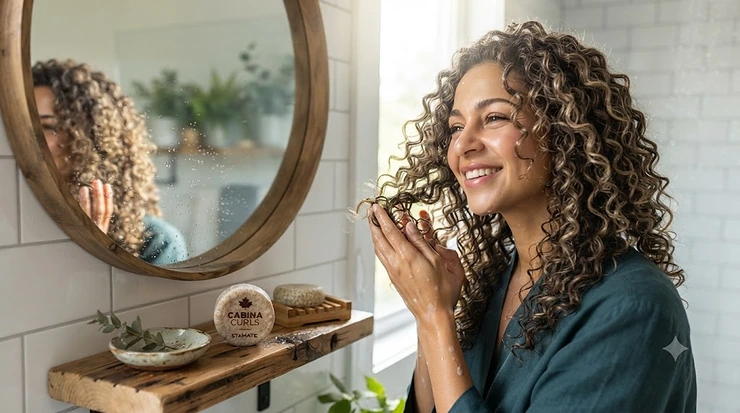
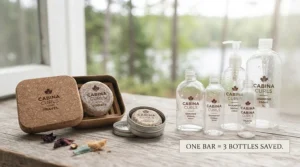
Somewhere between “I want to save the planet” and “I refuse to have a frizz halo by 10 a.m.,” a lot of curly-haired Canadians hit a wall with liquid shampoo. Bottles pile up under the sink, sulfates strip the very curl pattern you’re trying to protect, and half the ingredient list reads like a chemistry exam you didn’t study for. That’s the gap a well-formulated shampoo bar for curly hair is built to fill — a concentrated, low-waste bar that cleanses without the harsh detergents that leave ringlets dry, dull, and rebellious. A shampoo bar for curly hair is essentially a solid, water-reduced version of shampoo: the cleansing agents, conditioning oils, and curl-supporting proteins are compressed into a bar instead of diluted in a bottle, which means one bar often outlasts two or three 250 mL liquids while cutting way down on bathroom plastic.
That said, not every bar deserves a spot in your shower caddy. Curly and coily hair is naturally drier than straight hair (the twists and bends in the hair shaft make it harder for scalp oils to travel down the strand), so the wrong bar — one built for oily or “normal” hair — can leave curls squeaky, tangled, and frizzed out within a day. This guide breaks down seven real bars available through amazon.ca, what actually separates a good one from a mediocre one, and how to fold a bar into a curly hair routine without sabotaging your definition. We’ll get into curl-defining cleansers, frizz-control formulas, and the moisture-rich bars that keep thirsty curls fed, so by the end you’ll know exactly which bar (or two) is worth the switch.
Quick Comparison Table: Shampoo Bars for Curly Hair at a Glance
| Bar | Best For | Key Ingredient | Price Range (CAD) |
|---|---|---|---|
| HiBAR Curl Shampoo Bar | Best all-around curl definition | Fermented tomato extract, babassu oil | mid-C$20s |
| Ethique Professor Curl Shampoo Bar | Bounce and shine on 3A-3C curls | Shea butter, cocoa seed butter | around C$20 |
| The Earthling Co. Curl Shampoo Bar | Dry, frizz-prone curls on a mid budget | Coconut oil, rice protein | C$15-C$18 range |
| Kitsch Castor Oil Nourishing Shampoo Bar | Scalp health plus lather lovers | Castor oil, hydrolyzed rice protein | under C$15 |
| Brixy Curl-Defining Shampoo Bar | Large bar, budget-conscious households | Cocoa butter, coconut butter | C$12-C$16 range |
| J.R. Liggett’s Moisturizing Formula | Sensitive scalps, minimalist ingredients | Coconut oil, aloe vera | under C$14 |
| KinKind Give me MORE! Shampoo Bar | Travel-sized trial, colour-treated curls | Wheat bran extract | under C$12 |
Looking at the lineup, there’s a clear split between bars formulated with curl-specific actives (HiBAR, Ethique, The Earthling Co.) and general-purpose moisturizing bars that happen to work reasonably well on waves and loose curls (J.R. Liggett’s, Kitsch). If you’ve got tighter 3B-4C curl patterns, lean toward the top three; if you’re 2C-3A with more moisture flexibility, the mid-tier options can save you a few dollars without sacrificing much. The KinKind bar is the honest budget pick here — small format, but a legitimate way to trial the bar-shampoo switch before committing to a bigger bar.
💬 Just one click — help others make better buying decisions too!😊
Top 7 Shampoo Bars for Curly Hair: Expert Analysis
1. HiBAR Curl Shampoo Bar — best all-around curl definition
The standout here is the fermented tomato extract, which HiBAR’s own formulation testing ties to a measurable boost in curl hold compared to bars without it. Specs-wise, the bar pairs that fermented extract with rice protein and hydrolyzed corn starch for strand elasticity, plus babassu and pracaxi oils for deep conditioning — in practice, that combination means the bar cleanses the scalp thoroughly (it’s genuinely soap-free, which matters for pH balance) while depositing enough lipid content that curls don’t rebound into frizz the second they dry. Based on the spec sheet, this is the bar for someone with 3A-3C curls who wants shampoo-level cleansing without stripping the styling products already in their hair from the last wash day. Reviewers consistently describe the lather as lighter than a bar-soap lather but still sufficient to feel clean, and several dry-hair users report needing to dial back their leave-in conditioner because the bar itself is that rich. On the downside, a formula this specialized isn’t the cheapest bar on this list, and the “beveled” shape takes a wash or two to get used to holding.
Pros:
- ✅ Curl-specific actives instead of generic “for all hair types” formula
- ✅ Rich enough to skip a separate deep conditioner some weeks
- ✅ Plastic-free, FSC-certified packaging
Cons:
- ❌ Premium price point compared to general-purpose bars
- ❌ Lather is lighter than what bar-shampoo newcomers expect
At around C$20-C$25, the HiBAR Curl Shampoo Bar sits at the premium end of this list, but for curl definition specifically, it’s arguably the most targeted formula here — check current price on amazon.ca before you commit.
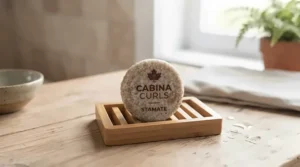
2. Ethique Professor Curl Shampoo Bar — richest lather for bouncy definition
Ethique built its curl range around the idea that curls “will take as much moisture as they can get,” and the standout feature is a shea butter and cocoa butter combination dense enough to rival a co-wash in terms of slip. The spec sheet leans on glycerine as a humectant alongside those butters, which in practice means the bar draws in ambient moisture rather than just coating the strand — useful in humid Canadian summers where frizz is less about dryness and more about hair grabbing extra water unevenly. What most buyers overlook about this bar is that it’s genuinely a two-in-one in terms of feel: reviewers report a noticeably creamy, almost conditioner-like lather, and Ethique’s own testing claims a 70% shine increase after a single wash, which lines up with what reviewers describe as “glassy” ends on wash day. This bar is best suited to buyers with looser to medium curl patterns (2C-3B) who want shine and bounce over maximum hold; very tight coily hair may want to pair it with a heavier leave-in.
Pros:
- ✅ Creamy, almost co-wash-like lather that curls tolerate well
- ✅ B Corp certified with a transparent sourcing story
- ✅ Works across a wide range of curl patterns, not just tight coils
Cons:
- ❌ Users with very oily roots may find it slightly too rich
- ❌ Scent profile is stronger than some fragrance-sensitive users prefer
Priced around C$20, the Ethique Professor Curl Shampoo Bar earns its spot for anyone chasing shine and bounce specifically — check current price on amazon.ca since Ethique periodically adjusts bar sizing.
3. The Earthling Co. Curl Shampoo Bar — best mid-range pick for dry, frizzy curls
The Earthling Co. built this bar around fermented date fruit extract and coconut oil, and the standout feature is how the brand tunes formulas by hair type rather than shipping one generic bar with different scents. In practical terms, the coconut oil and rice protein combination means the bar penetrates the hair shaft rather than just sitting on the cuticle, which reviewers tie to noticeably softer, bouncier results by the third or fourth wash as product residue clears out. A common theme in aggregated reviews is that the lather itself is only “decent” rather than luxurious, but that cleansing performance doesn’t come at the cost of moisture — hair feels clean without the tight, stripped sensation that pushes curls into frizz. Based on the ingredient profile, this is a strong pick for buyers managing dry or damaged curls on a moderate budget who don’t need the premium price tag of the top two bars but still want a formula built specifically for texture, not an afterthought “curly” label slapped on a generic bar.
Pros:
- ✅ Formulated specifically for curly and coily textures, not generic
- ✅ Vegan, Leaping Bunny certified, made in Minnesota
- ✅ Noticeably better results after 3-4 uses as buildup clears
Cons:
- ❌ Lather is functional rather than luxurious
- ❌ Some batches run smaller than competitors at a similar price
At roughly C$15-C$18, The Earthling Co. Curl Shampoo Bar delivers real curl-specific formulation without HiBAR-level pricing — check current price on amazon.ca for the latest bar size and scent options.
4. Kitsch Castor Oil Nourishing Shampoo Bar — best for scalp health and rich lather
Kitsch leans on hydrogenated castor oil and guar hydroxypropyltrimonium chloride, and the standout feature reviewers repeatedly flag is the sheer volume of lather this bar produces for a soap-free formula — the “painting method” (running the bar directly along the scalp in sections) is specifically recommended by the brand because the lather builds so quickly. What most buyers overlook is that castor oil isn’t primarily a curl-definition ingredient; it’s a scalp-conditioning oil, meaning this bar’s real strength is supporting a healthier scalp environment (which indirectly helps hair grow in with better texture) rather than styling the curl itself. Reviewers consistently note detectable improvement in scalp itchiness and flaking within a few weeks, alongside softer, more manageable strands, though a handful of long-term users mention Kitsch reformulated older versions to remove silicones, so it’s worth double-checking current packaging matches the silicone-free formula. This bar suits buyers whose main complaint is an irritated or flaky scalp underneath their curls, more than buyers chasing maximum ringlet definition.
Pros:
- ✅ Exceptionally rich lather for a bar shampoo
- ✅ Castor oil supports scalp health, not just hair strands
- ✅ Reformulated to remove silicones from earlier versions
Cons:
- ❌ Not curl-definition-focused the way HiBAR or Ethique are
- ❌ Some older stock may still carry the discontinued silicone formula
Sitting under C$15, the Kitsch Castor Oil Nourishing Shampoo Bar is a smart budget entry point for scalp care — check current price on amazon.ca and confirm the ingredient list reflects the current silicone-free version.
5. Brixy Curl-Defining Shampoo Bar — best value for larger households
Brixy’s standout feature is sheer size and value: this is one of the larger vegan bars on the market, built with organic, fair-traded cocoa butter and creamed coconut butter, and priced to compete with drugstore liquid shampoo rather than boutique hair care. Key specs worth flagging are the B Corp and palm-oil-free certifications, plus a formula that skips sulfates and parabens entirely — in practice, that means a gentler cleanse that won’t over-strip colour-treated curls, though it also means the lather builds more slowly than a sulfate-based bar. Reviewers consistently frame this as the “does more than it should for the price” bar, noting genuine curl definition without the premium cost, and the brand’s donation model (2% of sales) adds a values-based reason to choose it over a similar-priced competitor. Based on the spec comparison, Brixy is best suited to households with more than one curly-haired person, since the larger bar size means it won’t run out mid-rotation the way smaller bars do.
Pros:
- ✅ Larger bar size than most competitors at a similar price
- ✅ Palm-oil-free and B Corp certified
- ✅ Genuinely curl-specific formula, not a generic bar with a curl label
Cons:
- ❌ Slower to lather than sulfate-based bars
- ❌ Scent selection is more limited than boutique competitors
In the C$12-C$16 range, the Brixy Curl-Defining Shampoo Bar delivers strong value for the bar size — check current price on amazon.ca, since Brixy periodically runs multi-bar bundle pricing.
6. J.R. Liggett’s Moisturizing Formula Shampoo Bar — best for sensitive scalps and minimalist ingredients
J.R. Liggett’s has been hand-cutting bars in Cornish, New Hampshire since 1982, and the standout feature of the Moisturizing Formula is its short, simple ingredient list built around virgin coconut oil, aloe vera, almond oil, and mango butter. In practice, that simplicity is the point: this bar skips synthetic fragrance, sulfates, and preservatives almost entirely, which the brand and reviewers alike position as ideal for scalp sensitivities, allergies, or anyone trying to eliminate unnecessary additives from their routine. What the spec sheet won’t tell you, but aggregated reviews suggest, is that a genuinely natural, soap-based bar like this one is more likely to react with hard water and leave mineral buildup on curls — something several reviewers mention needing an occasional diluted vinegar rinse to counteract. For colour-treated or naturally curly hair specifically, the brand notes the gentle formula preserves colour vibrancy better than harsher cleansers, which lines up with why permed and curly-hair customers show up repeatedly in the brand’s own customer feedback.
Pros:
- ✅ Short, minimalist ingredient list for sensitive scalps
- ✅ Handmade in small batches with a 40-plus-year track record
- ✅ Gentle enough for permed and colour-treated curls
Cons:
- ❌ Can build up with hard water without an occasional clarifying rinse
- ❌ Less curl-specific than newer, texture-focused competitors
At under C$14, J.R. Liggett’s Moisturizing Formula is one of the most affordable legacy brands on this list — check current price on amazon.ca, particularly if you’re on hard water and want to plan for an occasional rinse.
7. KinKind Give me MORE! Shampoo Bar — best small-format trial size
KinKind’s standout feature is its wheat bran-based active ingredient, a silicone-free component the UK brand developed specifically to protect hair fibres for curly, damaged, and frizzy textures, finished with a geranium and ylang-ylang scent. At 50 grams, key specs put this among the smaller bars on this list — good for roughly 50 washes — but reviewers consistently frame that smaller size as a feature rather than a flaw, since it functions as a low-commitment way to test whether bar shampoo suits your curls before buying a larger bar. Based on the spec comparison, the gentler sodium coco-sulfate cleanser (rather than harsher sulfates) makes this suitable for colour-treated hair, and aggregated reviewer sentiment describes surprisingly rich lather from such a small bar, alongside soft, nourished-feeling curls that don’t feel weighed down. The trade-off is straightforward: this bar simply won’t last as long per dollar as the larger-format bars on this list, so treat it as a trial size rather than a long-term staple.
Pros:
- ✅ Ideal low-commitment size for first-time bar-shampoo users
- ✅ Silicone-free wheat bran active suited to curly, frizzy hair
- ✅ Gentle cleanser safe for colour-treated curls
Cons:
- ❌ Smaller format means a higher cost per wash long-term
- ❌ Imported from the UK, so shipping times may vary
Priced under C$12, the KinKind Give me MORE! Shampoo Bar is a low-risk way to sample the format — check current price on amazon.ca and current shipping estimates before ordering.
How to Choose a Shampoo Bar for Curly Hair
Picking the right shampoo bar for curly hair comes down to matching the formula to your specific curl pattern and hair condition, not just grabbing whatever bar is labelled “curly” on the shelf. Here’s the framework:
- Identify your curl pattern first. Looser 2C-3A curls need lighter moisture than tight 3C-4C coils, which can tolerate — and usually need — heavier butters like shea or cocoa.
- Check for sulfates before anything else. A bar built around sodium lauryl sulfate will clean thoroughly but strips the natural oils curls depend on for definition; look for sodium cocoyl isethionate or similarly gentle cleansers instead.
- Match moisture level to porosity. High-porosity curls (the kind that absorb product fast but dry out just as quickly) generally do better with richer bars like Ethique or HiBAR; low-porosity curls can get buildup from overly heavy formulas.
- Consider your water hardness. Hard water reacts differently with soap-based bars versus surfactant-based bars, so if you’re on well water, lean toward a bar like Kitsch or KinKind that uses a milder synthetic surfactant rather than true saponified oils.
- Factor in scalp sensitivity. If you deal with an itchy or flaky scalp, prioritize a shorter ingredient list and fragrance-light formula, similar to J.R. Liggett’s.
- Weigh bar size against your household. A single curly-haired user can get by with a smaller bar like KinKind; multiple users or thick, long hair will burn through a small bar fast, making larger bars like Brixy more economical.
- Read aggregated reviews for your specific texture, not just star ratings — a 4.5-star average tells you little if most reviewers have straight hair and you have 4A coils.
Curl-Defining Cleansers vs Traditional Liquid Curl Shampoo
The core difference between curl-defining cleansers in bar form and their liquid counterparts comes down to concentration and what that concentration does to your curl pattern over time. Liquid curl shampoos are roughly 70-80% water, which means every bottle you buy is mostly water you’re paying to ship and store; a solid curl-defining cleanser skips that water almost entirely, packing the same active ingredients — proteins, botanical extracts, conditioning oils — into a fraction of the volume. In practice, this means a well-formulated bar like HiBAR or Ethique often outlasts two to three bottles of liquid curl shampoo, which changes the cost-per-wash math significantly over a year of use.
Where liquid shampoo still has an edge is consistency and ease of use for very large or extremely dense curl types, since pouring shampoo into your palm is a more predictable dose than judging how much product you’ve transferred by rubbing a bar. Reviewers who’ve made the switch consistently report an adjustment period of two to four washes as their scalp recalibrates its oil production, a transition period liquid shampoo doesn’t require. For buyers prioritizing plastic reduction and travel convenience, curl-defining bars are the clear winner; for buyers who want zero learning curve and don’t mind the bottle, liquid curl shampoo remains a reasonable, if less sustainable, choice.
Frizz-Control Shampoo Bars: What Actually Fights Frizz
Frizz happens when the outer cuticle layer of the hair shaft lifts, letting moisture escape unevenly and causing strands to swell and separate from the curl clump — so a genuinely effective frizz-control shampoo bar needs ingredients that smooth that cuticle back down, not just a marketing label. Based on the spec comparison across this list, the ingredients that actually move the needle on frizz are hydrolyzed proteins (rice, corn, or wheat), which temporarily fill gaps in a damaged cuticle, and emollient oils like babassu, coconut, or castor oil, which coat the shaft and reduce the friction between strands that causes flyaways.
What most buyers overlook is that frizz control and moisture are two sides of the same coin for curly hair — a bar that’s genuinely “frizz-control” almost always needs to also be moisture-rich, because dry hair is frizz-prone hair. That’s why bars like HiBAR (fermented tomato extract plus babassu oil) and The Earthling Co. (coconut oil plus rice protein) show up on frizz-focused review roundups even though they’re marketed primarily as curl-definition bars. A bar that promises frizz control through stripping ingredients alone — heavy clarifying agents with no conditioning oils — will typically make frizz worse over time, not better, because it’s drying out the exact hair type that needs extra moisture to stay smooth.
Moisture-Rich Hair Bars for Dry, Thirsty Curls
Curly and coily hair is structurally drier than straight hair because the bends in the hair shaft slow down the natural transfer of scalp oil along each strand — so for a lot of curly-haired people, “moisture-rich” isn’t a nice-to-have feature, it’s the entire point of switching to a bar in the first place. The moisture-rich hair bars on this list lean on humectants (glycerine, aloe vera) to draw water into the strand and emollients (shea butter, cocoa butter, coconut oil) to seal that moisture in — Ethique’s Professor Curl bar is the clearest example, combining both categories at a high enough concentration that reviewers describe results comparable to a leave-in treatment.
Here’s what the spec sheet won’t tell you directly: moisture-rich bars generally need a slightly different application technique than standard bars. Rather than rubbing the bar straight onto dry scalp, most brands recommend running the bar between wet hands first to build a cream-like lather, then working that lather through mid-lengths and ends where curls dry out fastest, saving direct scalp contact for roots only. This “hands-first” method distributes the richer oils more evenly and avoids the heavy, weighed-down feeling that can happen when a moisture-dense bar is applied straight to already-oily roots.
Practical Usage Guide: Your First 30 Days With a Curl Shampoo Bar
Switching from liquid to bar shampoo goes more smoothly with a plan, since curly hair in particular tends to react to the transition period. In week one, soak the bar briefly before first use (this softens it enough to lather easily) and apply using the “hands-first” method rather than rubbing it directly on dry scalp, which can feel harsh on textured hair. Expect a slightly different lather than liquid shampoo — less foamy, more of a light cream — and resist the urge to overcompensate by scrubbing harder, since that can rough up the cuticle and trigger frizz.
By weeks two and three, your scalp is recalibrating its natural oil production, which is normal and usually settles by wash four or five; if curls feel unusually dry during this window, follow with a conditioner bar or leave-in rather than switching bars prematurely. A simple maintenance habit that extends bar life dramatically: always store the bar on a well-draining dish, standing upright if the shape allows, away from direct water spray — a bar left sitting in a puddle can lose noticeable volume within a couple of weeks. One of the most common first-month mistakes is using too much product per wash out of habit from liquid shampoo; because bars are concentrated, 8-10 firm passes through wet hair is usually plenty for shoulder-length curls, more for longer or denser hair. By day 30, most curly-haired users report the bar performing at least as well as their previous liquid shampoo, with noticeably less bathroom clutter to show for it.
Real-World Scenarios: Which Curl Bar Fits Your Life
If you’re a university student in a shared dorm bathroom with 3B curls and a tight budget, a bar like Brixy or KinKind makes sense — both keep cost per wash low, and the smaller KinKind bar is easy to stash in a shower caddy without it turning to mush from someone else’s water spray. If you’re a busy parent with 2C-3A curls trying to simplify a morning routine, Ethique’s Professor Curl bar pulls double duty as a near-conditioner, cutting a step out of the routine on days when there’s no time for a separate deep treatment.
For someone managing colour-treated 3C curls who travels frequently for work, HiBAR or KinKind both make sense for their solid, TSA-friendly format, though the frequent traveller should lean toward HiBAR for the richer curl-specific actives if checked-bag weight isn’t a concern. And for a household with more than one curly-haired family member sharing a bathroom, Brixy’s larger bar size and gentler cleanser make it the most economical shared option, stretching further across multiple heads of hair than the smaller specialty bars on this list.
Common Problems With Bar Shampoo (and Fast Fixes)
Problem: The bar leaves a filmy residue on curls. This usually happens with true soap-based bars reacting to hard water; switch to a surfactant-based bar like Kitsch or KinKind, or follow with a diluted apple cider vinegar rinse to dissolve mineral buildup.
Problem: Hair feels dry the first week. This is typically the scalp recalibration period, not a sign the bar is wrong for your hair; follow with a conditioner bar and give it through wash four or five before switching products.
Problem: The bar turns to mush between uses. Storage is almost always the culprit — a bar left sitting in standing water breaks down fast; a draining dish or rack solves this within days.
Problem: Curls feel weighed down instead of defined. This usually means too much product for your hair density, or a moisture-rich bar (like Ethique) being used on already-fine, low-density curls; scale back to fewer passes or switch to a lighter formula like The Earthling Co.
Problem: Bar runs out faster than expected. Smaller-format bars like KinKind are genuinely meant as trial sizes; for long-term use, a larger bar like Brixy delivers more washes per dollar.
Common Mistakes When Buying Shampoo Bars for Curly Hair
The single most common mistake is buying a bar labelled “for all hair types” and expecting curl-specific results — general-purpose bars are formulated for average scalp oil production and straight-to-wavy textures, not the drier, more porous structure of tighter curl patterns. A second frequent misstep is judging a bar purely by star rating without checking whether reviewers share a similar curl type; a bar beloved by straight-haired reviewers for its clarifying power can be far too stripping for 3B-4C curls.
Buyers also commonly underestimate the adjustment period, abandoning a genuinely good bar after one disappointing wash instead of giving the scalp two to four washes to recalibrate. On the flip side, some buyers over-correct by choosing the richest, most heavily conditioning bar available regardless of their actual curl density, which can leave finer or looser curls looking greasy rather than defined. Finally, skipping ingredient labels in favour of marketing claims is a mistake worth avoiding — “natural” and “clean” aren’t regulated terms, so checking for actual sulfates, silicones, or heavy fragrance loads tells you far more than the front-of-package copy.
Long-Term Cost & Maintenance: Is a Shampoo Bar Actually Cheaper?
On a per-bar basis, curl-specific shampoo bars in this roundup range from under C$12 to the mid-C$20s, which can look pricier than a bottle of drugstore shampoo at first glance. The real math shows up in washes per dollar: a typical 3.5 oz bar like J.R. Liggett’s replaces roughly two large bottles of liquid shampoo, and premium curl-specific bars like HiBAR are formulated to last just as long despite their higher upfront cost, since a little goes a long way with a genuinely concentrated formula.
Maintenance costs matter too — a bar stored properly on a draining dish can last months longer than one left sitting in a wet shower caddy, meaning the “cheaper” small-format bars like KinKind don’t necessarily stay cheaper if they’re not stored well. Total cost of ownership also includes what you’re not buying: no plastic bottle replacement, less frequent restocking, and in many cases lighter shipping costs if you’re ordering online. For curly-haired buyers washing two to three times a week, a single mid-range bar like The Earthling Co. or Brixy typically works out to a lower cost per wash than an equivalent-quality liquid curl shampoo over a six-month period.
Safety, Regulations & Ingredient Transparency in Canada
Cosmetic products sold in Canada, including shampoo bars, fall under Health Canada’s Cosmetic Regulations, and manufacturers are expected to check their formulas against the Cosmetic Ingredient Hotlist, which flags substances that are prohibited or restricted for use in personal care products sold here. This matters for curly-haired buyers specifically because ingredient transparency is inconsistent across smaller and imported brands — a bar imported from the UK or US, like KinKind or HiBAR, should still list ingredients clearly enough to check against known irritants, sulfates, or silicones you’re trying to avoid.
Beyond formal regulation, a growing number of Canadians are simply choosing bars for the plastic-reduction angle; as reported in CBC’s coverage of small businesses moving away from single-use plastic, the shift toward solid soap and shampoo bars has been driven as much by consumer demand as by manufacturer initiative. Practically speaking, that means reading labels still matters even for “clean” or “natural” branded bars — no regulation currently requires those specific words to meet a defined standard, so the ingredient list itself remains the most reliable safety check available to shoppers.
What to Expect: Real-World Curl Performance
On paper, most of the bars in this roundup promise definition, frizz control, and moisture — but real-world performance depends heavily on your specific curl pattern, water type, and how closely you follow the “hands-first” lathering method rather than rubbing the bar directly on dry scalp. Curl typing systems, like the one popularized by Andre Walker’s hair chart, classify hair from straight (type 1) through tightly coiled (type 4), and while the system has drawn valid criticism for oversimplifying texture diversity, it’s still a useful shorthand for matching a bar’s richness to your actual curl density.
In practice, tighter coil patterns (3C-4C) generally see the clearest before-and-after difference with the richer bars on this list — HiBAR and Ethique in particular — because those curls need the extra lipid content those formulas provide. Looser wave-to-curl patterns (2B-3A) often get equally good results from lighter, less concentrated bars like Kitsch or J.R. Liggett’s, and using a heavier bar on that hair type can result in limp, weighed-down curls rather than definition. The honest takeaway: no single bar on this list is universally “the best” — real-world performance is a function of matching formula richness to your specific curl pattern, not chasing the highest-rated bar in isolation.
Frequently Asked Questions
❓ Are shampoo bars actually good for curly hair?
❓ Do shampoo bars cause more frizz than liquid shampoo?
❓ How long does a curly hair shampoo bar last?
❓ Can I use a shampoo bar on colour-treated curly hair?
❓ Do I still need conditioner after using a curl shampoo bar?
Conclusion
Choosing the right shampoo bar for curly hair really comes down to being honest about your curl pattern, your scalp’s needs, and how much you’re willing to adjust your routine during that first two-to-four-wash transition period. The HiBAR Curl Shampoo Bar and Ethique Professor Curl Shampoo Bar lead this list for tighter, thirstier curl patterns that need real conditioning power, while The Earthling Co., Kitsch, and Brixy offer strong mid-range performance for buyers balancing quality against price. Budget-focused shoppers or first-timers testing the format have solid entry points in J.R. Liggett’s and KinKind, both of which deliver genuine curl-friendly formulas without the premium price tag.
Whichever bar you land on, remember that switching away from bottled shampoo isn’t just a sustainability choice — done right, with the correct formula for your specific texture, it can genuinely outperform the liquid shampoo sitting in your shower right now. Give your curls the adjustment period they need, store your bar properly, and pay closer attention to the ingredient list than the marketing on the wrapper.
✨ Don’t Miss These Exclusive Deals!
🔍 Ready to make the switch? Check current pricing and availability on any of the bars above, and give your curls the moisture-rich, low-waste routine they deserve. These bars are a genuinely simple swap toward healthier curls and a lighter bathroom shelf!
Recommended for You
- Best Shampoo Bar 2026: 7 Top Picks for Plastic-Free Hair
- Travel Soap on a Rope: 7 Genius Picks for 2026 (No More Mush)
- Soap on a Rope Men Can Rely On: 7 Best Picks for 2026
Disclaimer: This article contains affiliate links. As an Amazon Associate, I earn from qualifying purchases. If you purchase products through these links, we may earn a small commission at no additional cost to you.
✨ Found this helpful? Share it with your friends! 💬🤗
